Global Partners Gather in Japan to Advance Electron-Ion Collider
International funding agencies and researchers deepen collaboration on the future Electron-Ion Collider
July 8, 2026
 enlarge
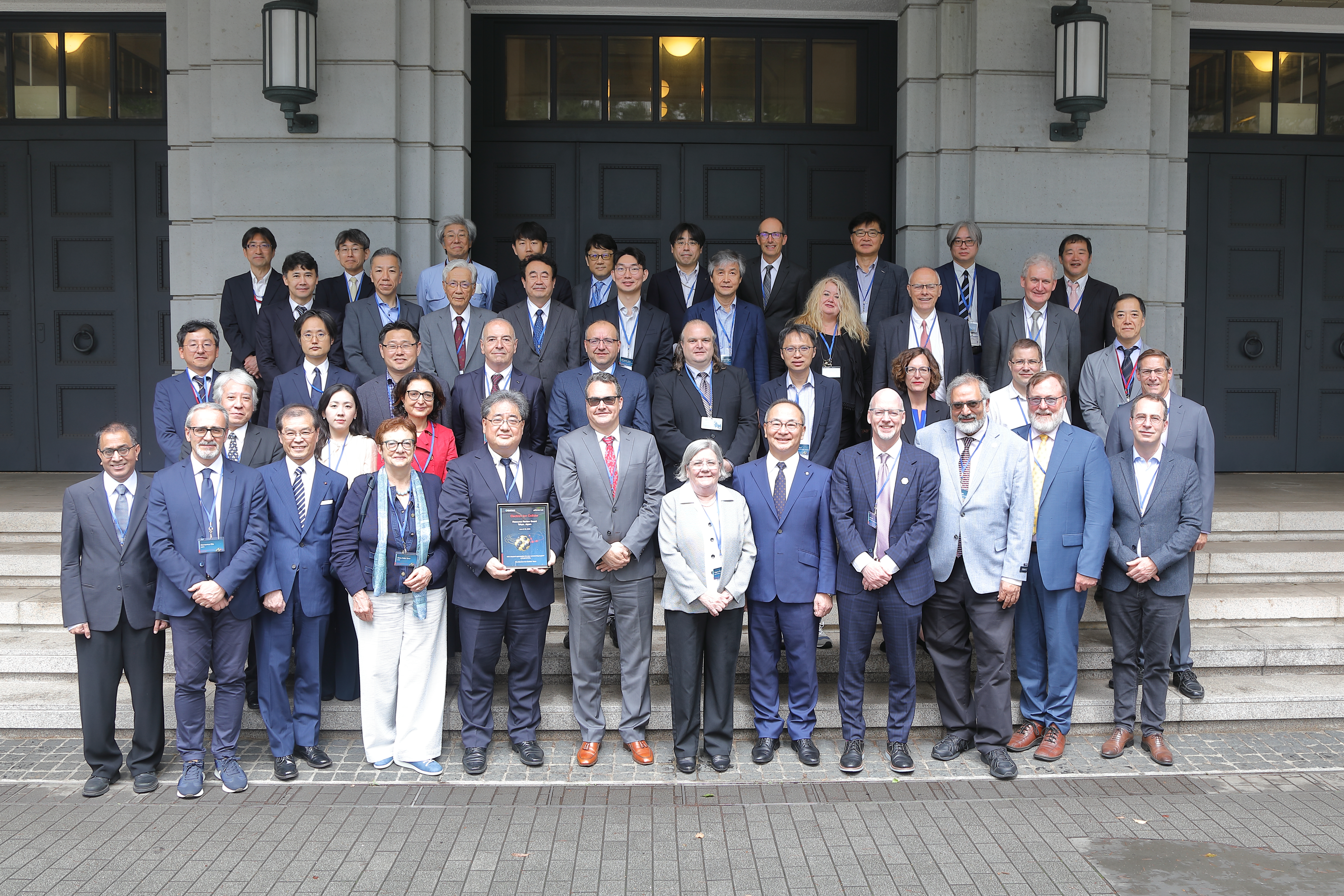
Representatives from funding agencies and research institutions from around the world gather in Tokyo, Japan, for the seventh Electron-Ion Collider (EIC) Resource Review Board meeting in June 2026. The meeting brought together international partners to review progress, coordinate contributions to the future EIC and its flagship ePIC detector, and strengthen the global collaboration building the world's first polarized electron-ion collider. (MEXT)
International momentum behind the Electron-Ion Collider (EIC) was on full display in Tokyo in June as representatives from funding agencies, research institutions, and scientific collaborations convened for the seventh EIC Resource Review Board (RRB) meeting and the fifth EIC Asia Workshop.
Hosted by Japan's Ministry of Education, Culture, Sports, Science and Technology (MEXT), the RRB brought together leaders from organizations supporting the EIC and its flagship detector, ePIC. The meeting provided an opportunity to review project progress, discuss international contributions, and strengthen coordination among the growing global partnership supporting construction of the EIC at the U.S. Department of Energy's (DOE) Brookhaven National Laboratory.
The EIC is a next-generation nuclear physics facility being built at Brookhaven Lab in partnership with DOE’s Thomas Jefferson National Accelerator Facility (Jefferson Lab). The EIC will enable scientists to probe the fundamental building blocks of matter with unprecedented precision, revealing how quarks and gluons combine to form the protons, neutrons, and atomic nuclei that make up the visible universe.
"By bringing together expertise, resources, and talent from many nations, we are building a facility that will serve as a destination for the world's best scientists."
— Regina Rameika, Office of Science Acting Associate Director for Nuclear Physics
“This meeting highlighted the strong international partnership supporting the EIC,” said Brookhaven Lab Director John Hill. “I was impressed at the depth of interest and commitment from around the world from both funding agencies and scientists alike in being part of the EIC. Our international partners strengthen and enrich this wonderful facility, and I am looking forward to seeing them grow further in the coming years.”
Prominent leaders in government and science attended the meeting, including Regina Rameika, Office of Science Acting Associate Director for Nuclear Physics; Office of Science Facilities and Project Management Division Director for Nuclear Physics Paul Mantica; and Brookhaven National Laboratory Director John Hill. Japanese leadership included representatives from MEXT, the University of Tokyo, RIKEN, and other institutions that play key roles in advancing Japan's contributions to the EIC program.
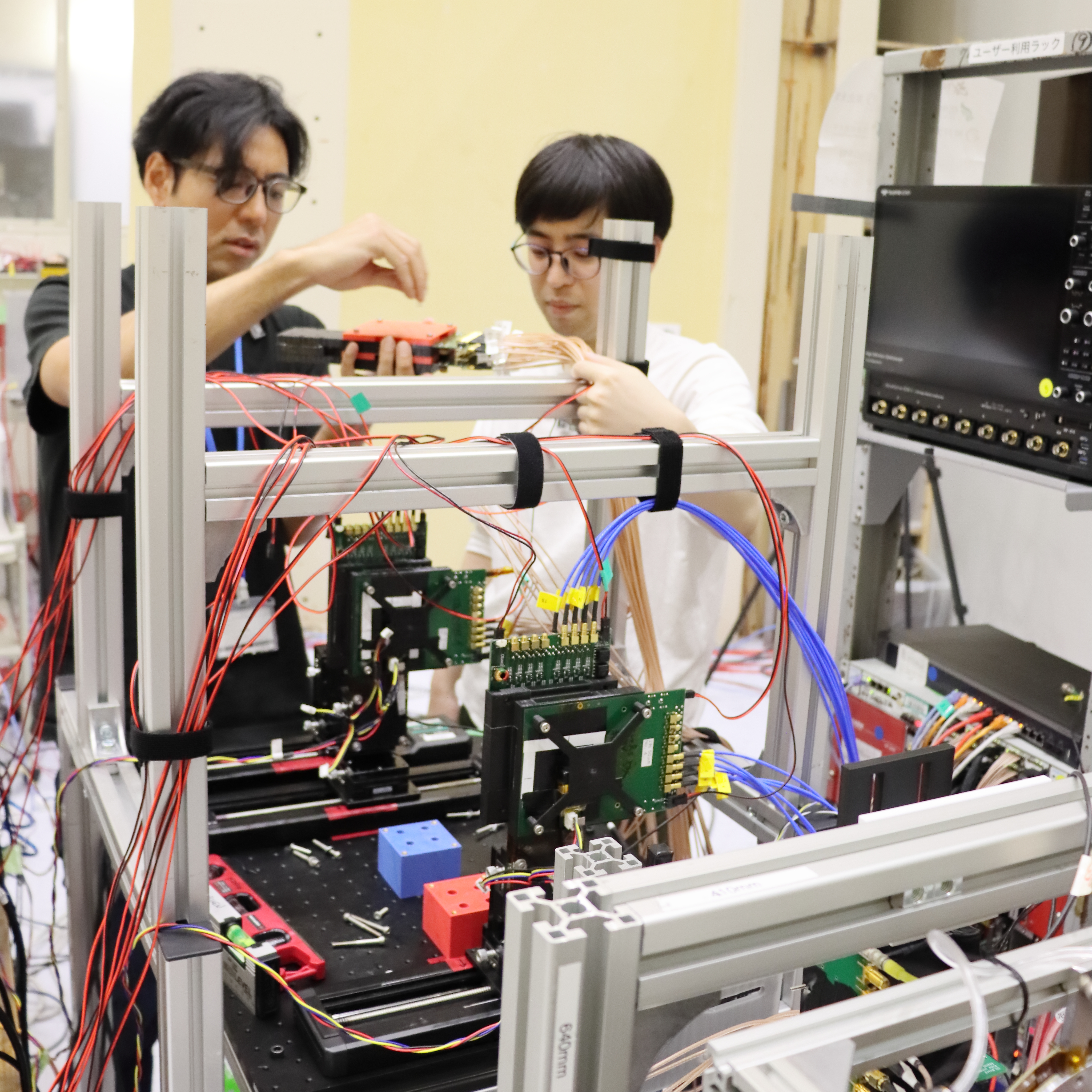 enlarge
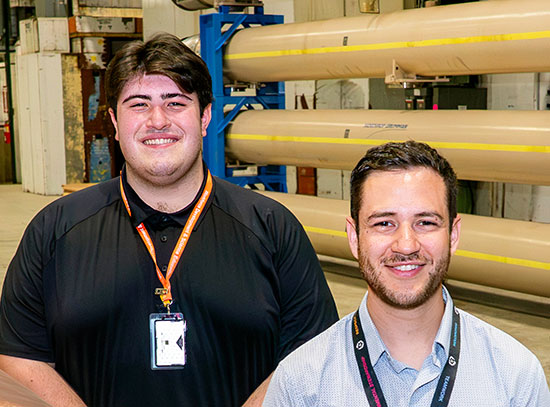
Researchers at the High Energy Accelerator Research Organization (KEK) test a prototype silicon timing sensor for the future ePIC detector using KEK's Photon Factory Advanced Ring test beamline in Tsukuba, Japan, in June 2026. The sensor will help identify particles created in high-energy collisions, allowing scientists to better reconstruct the collisions and understand how matter is built from its smallest components. (Masashi Kaneta/Tohoku University)
“The EIC will be a transformational facility for nuclear physics and plays a vital part in maintaining U.S. leadership in this field,” Rameika said. “At the same time, it is very much an international endeavor. The enthusiasm and commitment we see from our partners around the world reflect the unique scientific opportunities the EIC will provide. By bringing together expertise, resources, and talent from many nations, we are building a facility that will serve as a destination for the world's best scientists and enable discoveries that no single institution or country could achieve alone."
The RRB serves as a key forum for aligning technical, financial, and workforce contributions from partner nations as the project advances toward major construction milestones. Discussions reflected the strong commitment of institutions from eight countries to deliver the world's first polarized electron-ion collider.
Immediately following the RRB, scientists gathered at the University of Tokyo for the fifth EIC Asia Workshop, hosted by the University of Tokyo and RIKEN. The workshop attracted researchers from across Asia, the United States, and Europe to discuss detector technologies, accelerator developments, and the scientific opportunities that will be enabled by the EIC.
"We in the Japanese nuclear physics community have recently launched a new framework for an international quantum physics network, and we increasingly view the EIC as a catalyst not only for advances in nuclear physics but also for broader developments across related scientific fields,” said Taku Gunji, a professor at the Quark-Nuclear Science Institute at the University of Tokyo. “Hosting both the EIC Resource Review Board meeting and the EIC Asia Workshop provided an excellent opportunity to showcase the strong and growing commitment from Japan, Korea, Taiwan, and other countries to the EIC through detector development, computing, and physics expertise. The participation of nearly 100 researchers in the workshop highlights the broad interest in the EIC throughout Asia and reinforces the region’s important role in the success of the project."
"We increasingly view the EIC as a catalyst not only for advances in nuclear physics but also for broader developments across related scientific fields."
— Taku Gunji, Quark-Nuclear Science Institute Professor at the University of Tokyo
Sessions highlighted Japanese and South Korean contributions to critical detector systems, including tracking, timing, calorimetry, and computing, while providing opportunities for researchers to identify new areas for collaboration. The workshop also showcased the growing engagement of Asian institutions in the ePIC Collaboration and the broader EIC scientific program.
Together, these two events underscore the increasingly international nature of the EIC effort, with strong participation reflecting broad enthusiasm for the project and confidence in its scientific mission.
As international partnerships grow stronger, the meetings reinforced a shared commitment to delivering a world-leading research facility that will unlock new scientific discoveries and inspire generations of researchers around the world.
Brookhaven National Laboratory is supported by the Office of Science of the U.S. Department of Energy. The Office of Science is the single largest supporter of basic research in the physical sciences in the United States and is working to address some of the most pressing challenges of our time. For more information, visit science.energy.gov.
Follow @BrookhavenLab on social media. Find us on Instagram, LinkedIn, X, and Facebook.
2026-23019 | INT/EXT | Newsroom