 RIKEN BNL Research Center

RIKEN BNL Research Center
How was matter formed after the Big Bang? Scientists at the RBRC are pursuing this ultimate question of modern physics to understand the origin of matter and the universe. Their goal is to establish a new field of physics by coordinating theoretical and experimental research.
Physics Fellowship Program
The RIKEN BNL Research Center offers a Fellow system at Brookhaven's Relativistic Heavy Ion Collider (RHIC) allowing joint appointments with universities and research laboratories throughout the world, enabling talented researchers to hold tenure track positions at their home institution as well as a Fellow position with the Center.
This system was established to increase the research potential of the Center and to disseminate its research activities and results. To date, nine RHIC Physics Fellows have received the U.S. Department of Energy Outstanding Junior Investigator Award and over 50 Fellows have received tenure at their home institutions since the inception of the program.
Institutions interested in initiating a new RHIC Physics Fellow position may obtain details on how to proceed by contacting Maureen McNeill-Shea, 1(631) 344-2758.
RBRC Research Groups

Theory
Y. Hatta, Group Leader
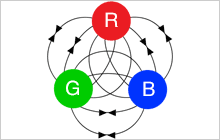
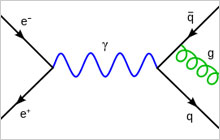
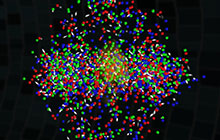
This group conducts QCD related research that includes heavy ion physics, the quark gluon plasma, color glass condensate and hard QCD/spin physics.

Computing
T. Izubuchi, Group Leader
This group's mission is to solve the dynamics of QCD from first principle lattice simulations using in-house computer resources.
Experimental
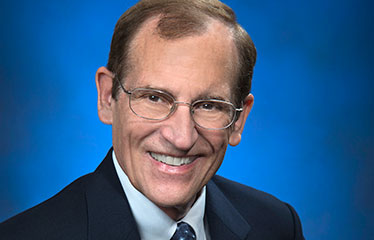
R. Tribble, Group Leader
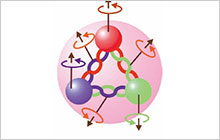
This group studies the spin structure of the proton via polarized p+p collisions at RHIC as well as the properties of quark gluon plasma.
More about RBRC Research Groups
The RIKEN BNL Research Center is part of Brookhaven's Nuclear & Particle Physics Directorate.
RBRC News

Empowering Women to Explore Nuclear Physics
Friday, March 29, 2024
Stony Brook students from the Women in Science and Engineering program got a glimpse into life as a scientist while exploring theoretical and applied nuclear physics.
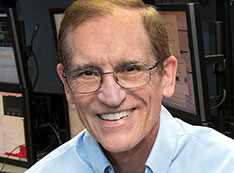
Robert Tribble Named RIKEN BNL Research Center Director
Friday, October 20, 2023
Tribble, an experimental physicist, previously served as deputy director for science and technology at Brookhaven Lab.

Brookhaven Science Associates
Brookhaven Science Associates manages and operates Brookhaven National Laboratory on behalf of the U.S. Department of Energy's Office of Science. BSA is a partnership between Battelle and The Research Foundation for the State University of New York on behalf of Stony Brook University. | More
