


Intrinsic Nonlinearity of PtSi Constriction Josephson Junctions
C2QA researchers built constriction junctions using a silicon-compatible material — and showed that they have substantial intrinsic nonlinearity
April 6, 2026
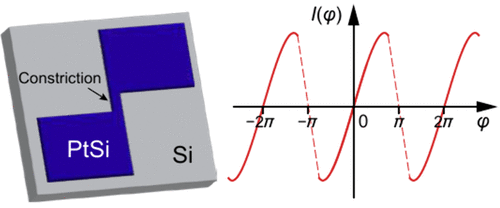 enlarge
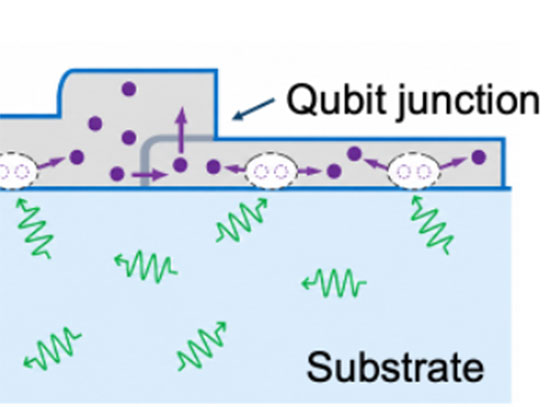
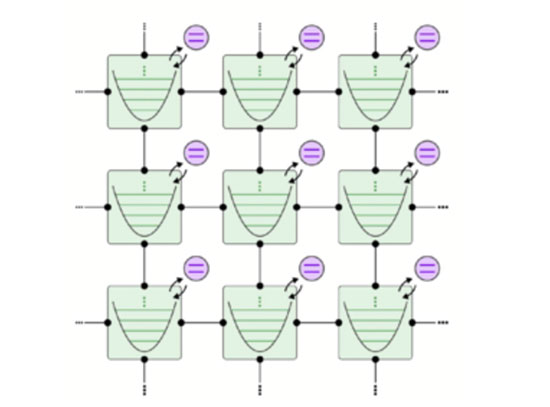
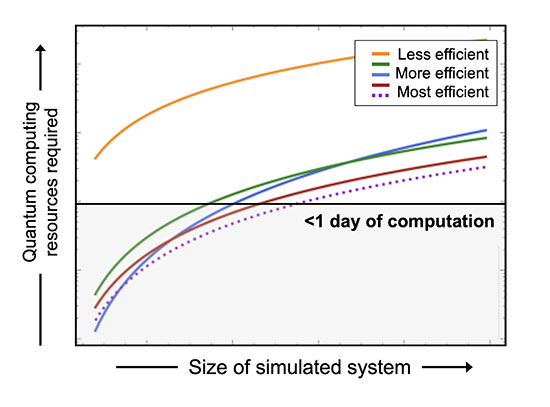
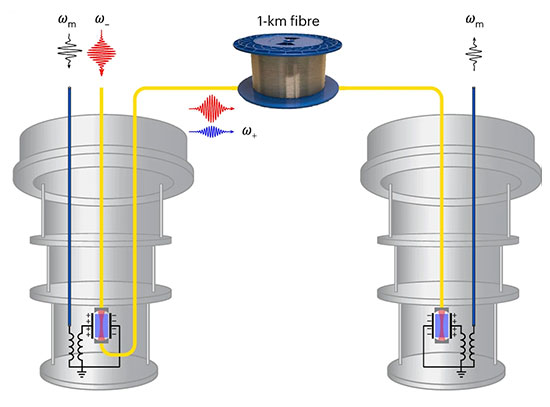
Schematic platinum silicide constriction junction and non-linear current-phase relationship.
Scientific Achievement
C2QA researchers fabricated and measured the current–phase relations of nanoscale constriction Josephson junctions made from platinum silicide superconductors. Using SQUID interferometry and modeling, they quantified the intrinsic junction nonlinearity.
Significance and Impact
Junction nonlinearity is essential for superconducting qubits. This work shows that constriction junctions can have substantial intrinsic nonlinearity, and clarifies how geometry reduces effective nonlinearity, thus informing device design.
Research Details
- Constrictions were fabricated with ~50 nm widths, comparable to the superconducting coherence length.
- Nonlinearity deduced using dc-SQUID interferometry.
- Compared measurements with simulations to separate intrinsic junction nonlinearity from lead inductance effects.
Collaborating Institutions
- Brookhaven National Laboratory
- NY Creates
Publication
Nanayakkara, T. R., Bollinger, A. T., Musick, K., Murray, T., Bhatia, E., Papa Rao, S., Black, C. T., Liu, M. Z.
Current-phase relations of superconducting PtSi constriction Josephson junctions.
Nano Letters 26, 707-712 (2026)
https://doi.org/10.1021/acs.nanolett.5c04738
Related Links
Brookhaven Lab feature article: "A Silicon-Compatible Path Toward Scalable Quantum Systems"
Acknowledgements
This material is based upon work supported by the U.S. Department of Energy, Office of Science, National Quantum Information Science Research Centers, Co-design Center for Quantum Advantage under contract number DE-SC0012704. This research used Materials Synthesis & Characterization, Electron Microscopy, and Nanofabrication facilities of the Center for Functional Nanomaterials (CFN), which is a U.S. Department of Energy Office of Science User Facility, at Brookhaven National Laboratory under Contract No. DE-SC0012704. The authors gratefully acknowledge the TEM support provided by the NY CREATES Physical Analysis group.
2026-22887 | INT/EXT | Newsroom