High-Luminosity LHC Upgrade Gains Momentum at Brookhaven Lab
Brookhaven Lab's accelerator and detector contributions to the High-Luminosity Large Hadron Collider have reached major milestones
July 29, 2026
 enlarge
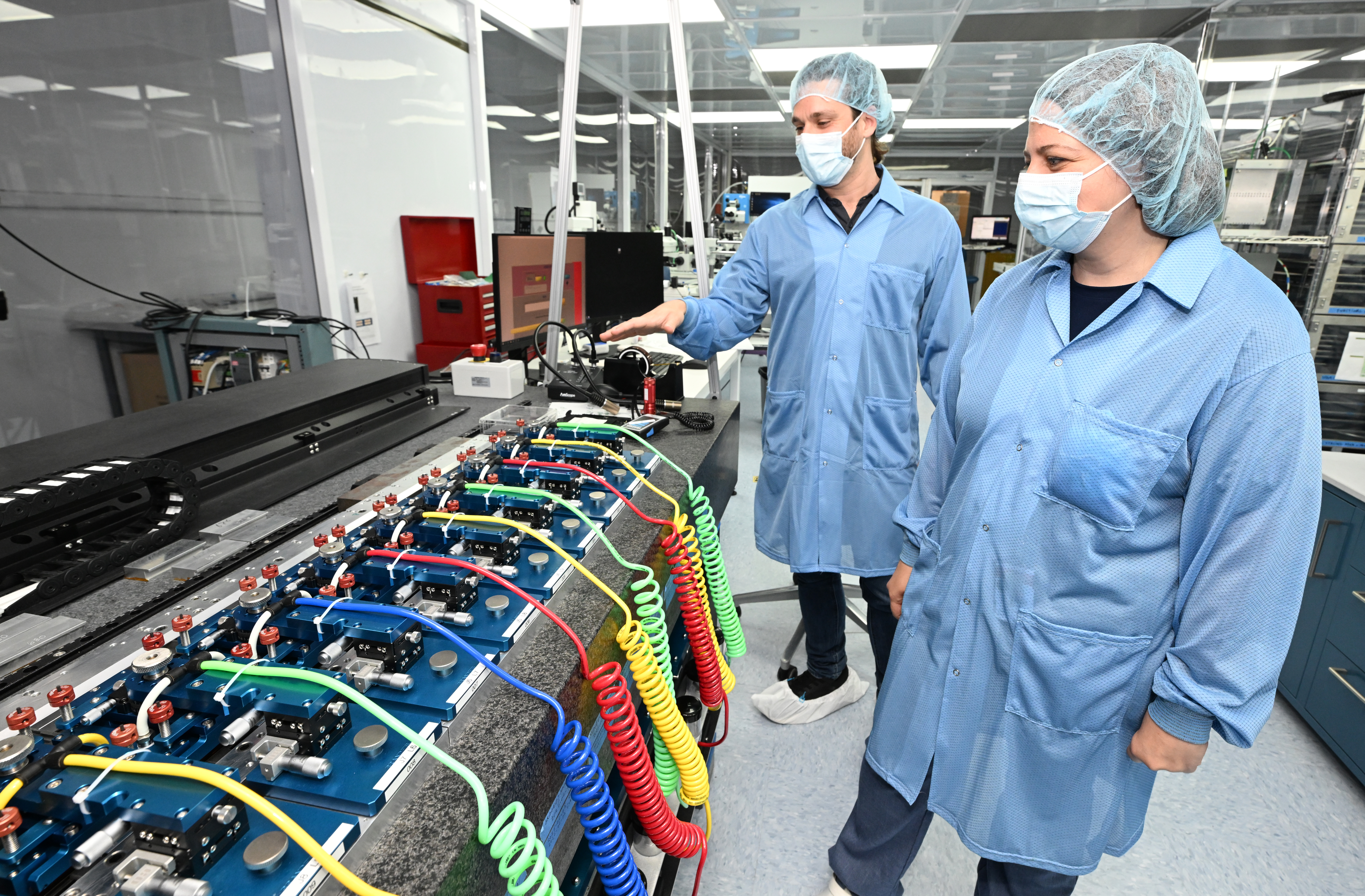
Gabriele D'Amen and Stefania Stucci stand in a cleanroom in Brookhaven Lab's Physics Department, next to an in-progress portion of the inner tracker for the High-Luminosity upgrade to the ATLAS detector at CERN. (Kevin Coughlin/Brookhaven National Laboratory)
The Large Hadron Collider (LHC) at CERN, the European Laboratory for Particle Physics, has recently ended its final run and begun a four-year shutdown period. But this pause will be anything but a quiet time for the lab. Instead, parts of the LHC will be taken apart and rebuilt for its High-Luminosity (HiLumi) upgrade, a project that has been in the works for more than 15 years.
The U.S. Department of Energy’s (DOE) Brookhaven National Laboratory is making significant contributions to the project, developing new accelerator and detector components — and both just reached major production milestones. The work upholds the Lab’s long-standing position as a U.S. leader for the LHC and its reputation of outstanding research, design, and production capabilities.
More luminosity, more physics
The LHC accelerates two opposing beams of protons to nearly the speed of light, circulating them through an almost 17-mile ring before smashing them together. Each collision produces a firework of particles that can tell scientists about the basic structure of matter, down to the origin of the universe.
The goal of the HiLumi LHC upgrade is to dramatically increase the number of particle collisions per second, otherwise known as the luminosity. The more collisions, the higher chance of recording rare interactions.
“We need to figure out where the next revolution in particle physics lies,” said Gabriele D’Amen, a staff physicist at Brookhaven. “The HiLumi LHC will tell us where to look next. Without this extra direction, we would be stuck looking for a needle in a haystack of haystacks.”
To achieve that luminosity, laboratories and universities around the world have been working nonstop on various projects to upgrade the collider’s accelerator and its four detectors. Brookhaven led multiple projects that underwent an extensive, decade-long research and development process before starting production.
Superconducting magnets for a superior accelerator
A team of U.S. laboratories has been collaborating on LHC accelerator magnet upgrades since the early 2000s, and Brookhaven has played a large role in developing the next-generation magnets for the HiLumi LHC. The upgrade calls for superconducting beam-focusing magnets that are twice as strong as the originals to give particles a higher chance of colliding. Think of these focusing magnets like shooting an arrow through a cardboard tube at a target. The narrower you make that tube, the higher the chance of hitting the bullseye; the more focused the beam becomes, the higher chance of particles colliding. In this way, stronger focusing magnets will increase the collision rate by a factor of about 10.
 enlarge
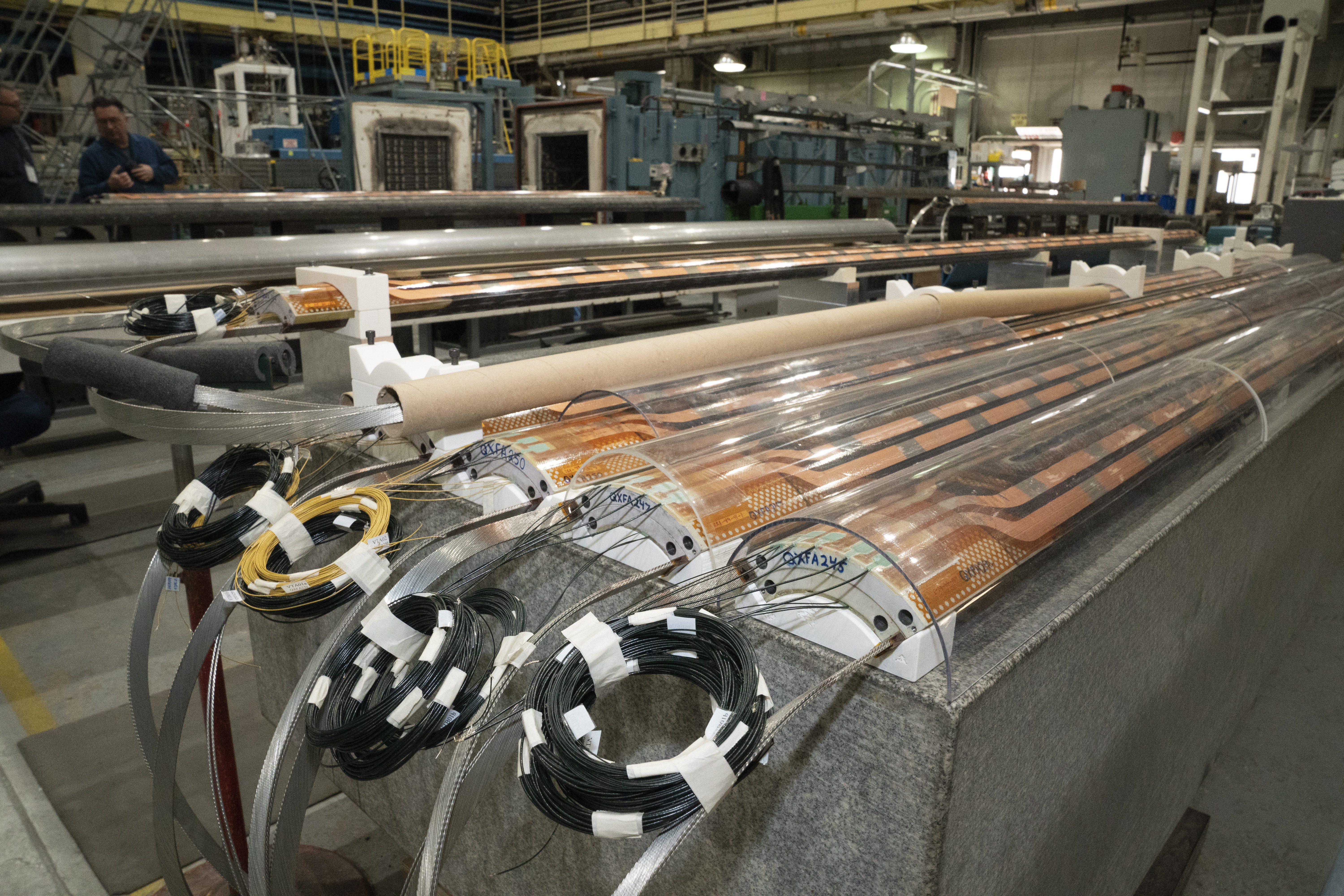
Fabricated coils at Brookhaven Lab's Superconducting Magnet Division await shipment to Berkeley Lab to be assembled into magnets for the HiLumi LHC. (Jessica Rotkiewicz/Brookhaven National Laboratory)
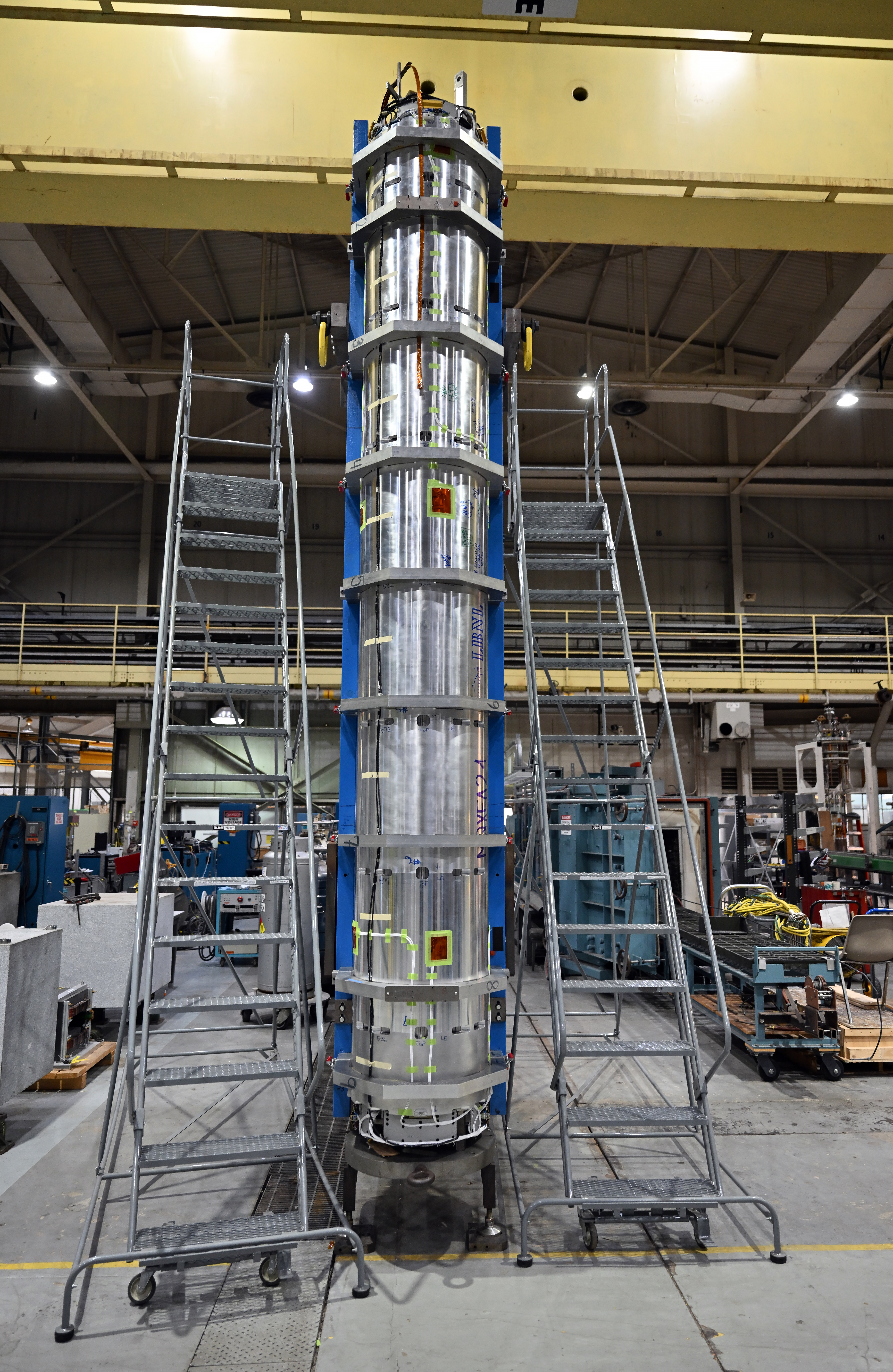
The advanced magnet testing facility at Brookhaven’s Superconducting Magnet Division positioned the Lab as an ideal collaborator for the project. The facility can test with currents up to 25,000 amps, which is about 5,000 times more than what a household refrigerator uses and significantly exceeds the 17,000 amps needed for the HiLumi LHC magnets. The facility’s exceptionally high ceilings and powerful crane are also essential for lifting the approximately 15-foot-long magnets vertically and dipping them into a liquid helium bath for testing.
In addition to world-class facilities, the Lab also has longstanding expertise in creating superconducting magnets and highly skilled staff to carry out that work. Brookhaven produced many of the magnets currently in use at the LHC, as well as the magnets for the Relativistic Heavy Ion Collider — a DOE Office of Science user facility at Brookhaven Lab that recently concluded 25-plus years of operations in February 2026.
“We have a strong reputation of making world-leading magnets here,” said Piyush Joshi, manager of cold testing magnets. “After our HiLumi LHC work is done, this facility will be dedicated to the Electron-Ion Collider (EIC) construction, and we’ll continue producing best-in-class magnets.”
 enlarge
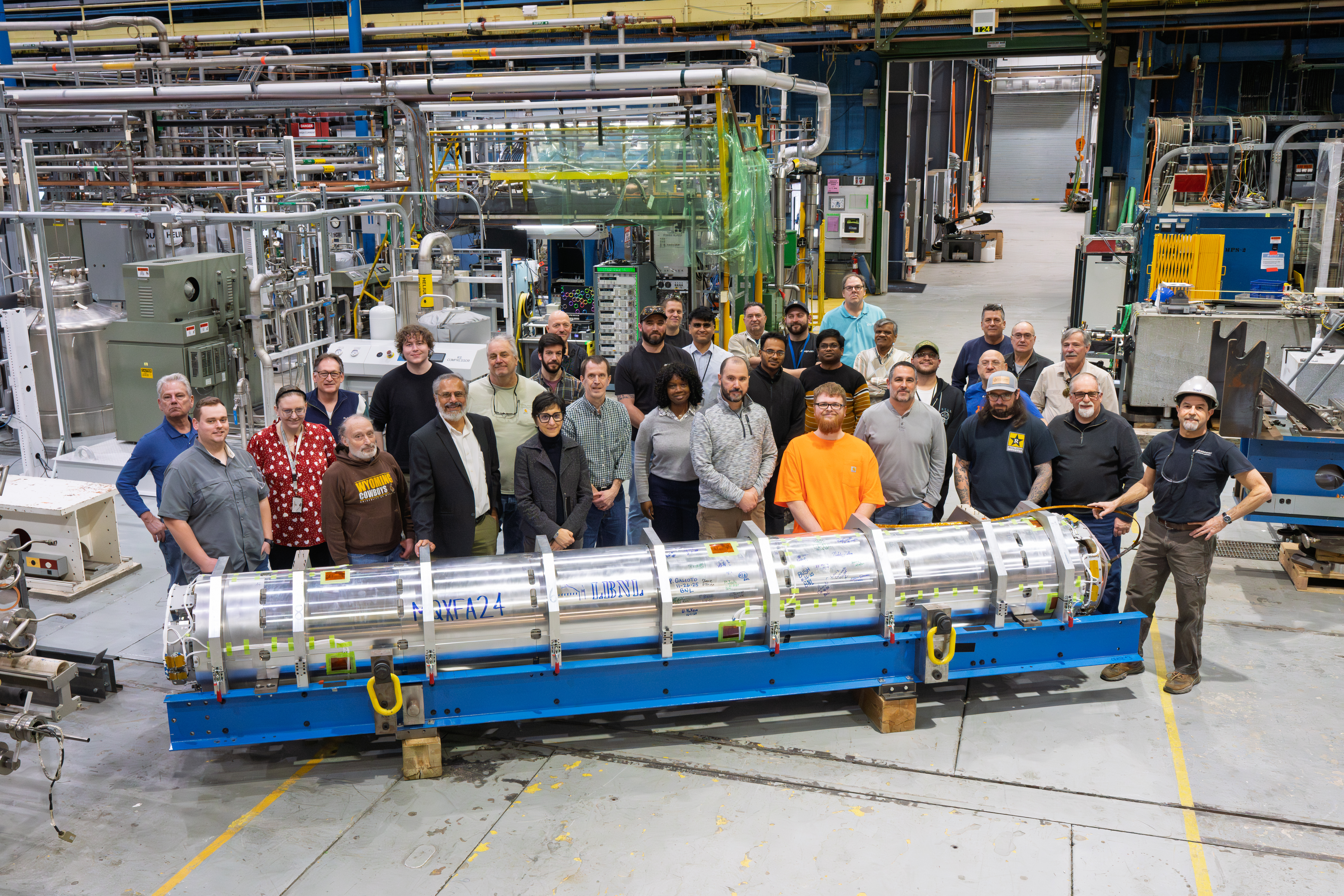
Members of Brookhaven's Superconducting Magnet Division involved in testing and fabrication stand next to a new magnet for the HiLumi LHC. This was the last magnet cold-tested at Brookhaven before being sent to Fermilab for assembly into a cryostat. (Timothy Kuhn/Brookhaven National Laboratory)
The HiLumi LHC magnets relied on expertise from a team of National Laboratories. Scientists, engineers, and technicians at Brookhaven Lab’s Superconducting Magnet Division spent 10 years working with DOE’s Lawrence Berkeley National Laboratory and DOE’s Fermi National Accelerator Laboratory to figure out how to fabricate the magnets from a new material: niobium-tin. Compared to niobium-titanium, this material can carry higher currents and produce stronger magnetic fields, but it is also much more delicate.
Ultimately, they designed a multi-step, multi-laboratory process. First, the niobium-tin coils are wound and cured in a precise shape at Brookhaven or Fermilab. Small imperfections in the winding of the coil can have a significant impact on the quality of the magnetic field.
“Every aspect of coil fabrication is controlled to extremely tight tolerances, down to a few thousandths of an inch,” said Jesse Schmalzle, manager of superconducting coil fabrication at Brookhaven.
 enlarge
A new magnet for the HiLumi LHC stands upright in the Superconducting Magnet Division's advanced magnet testing facility at Brookhaven Lab. This was the last magnet cold-tested at Brookhaven before being sent to Fermilab for assembly into a cryostat. (Kevin Coughlin/Brookhaven National Laboratory)
The coils then spend over a week in an oven at temperatures up to 1,220 degrees Fahrenheit, reacting the niobium-tin to become superconducting. This process makes the niobium-tin extremely brittle, to the point that it can be broken with fingertip pressure. Technicians must take great care to prevent damage while installing and soldering on additional components, all of which must then be impregnated together with the coils in protective epoxy. The team then sends the coils on a cross-country road trip to Berkeley Lab, where they are assembled into quadrupole magnets. Then magnets are shipped to Brookhaven to be tested in liquid helium at nearly absolute zero, which takes about two months per magnet.
“We thoroughly tested the magnets here at Brookhaven. Almost all of them passed with flying colors,” Joshi said. “The few magnets that did not pass were returned to Berkeley for rework, validating Brookhaven’s cold tests as an essential quality control element of the project.”
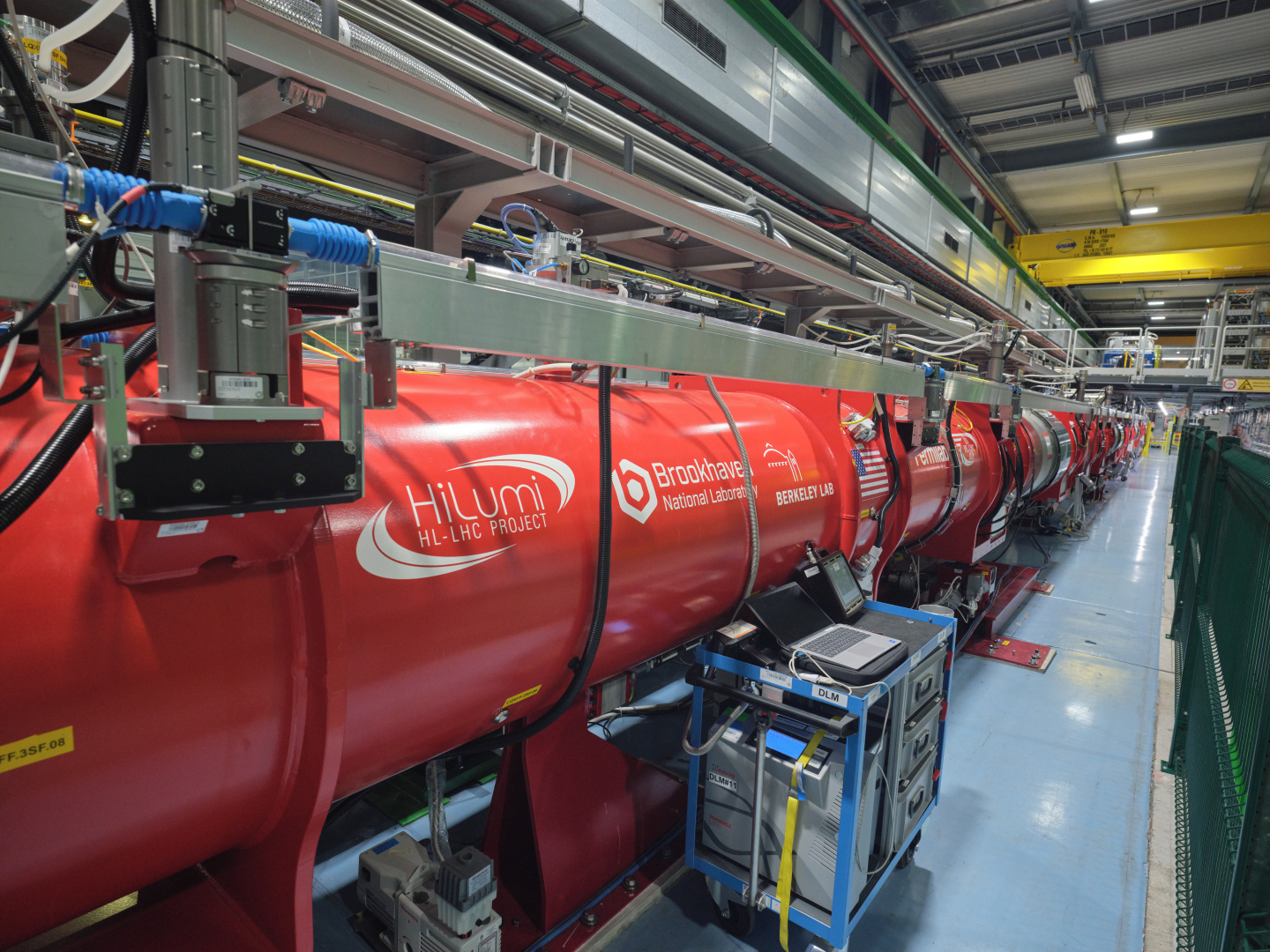
The magnets’ penultimate stop is Fermilab, where pairs of magnets are put into cryostats — pipes that maintain ultra-cold temperatures — before being delivered to CERN.
Together, the team produced 24 magnets ahead of schedule and under budget. Some of the magnets, now installed in pairs in cryostats, are currently undergoing a full-scale test at CERN, which is expected to finish this summer.
A new and improved ATLAS detector
At one of the LHC’s four interaction regions resides the ATLAS experiment, a huge detector tasked with capturing which particles are produced by each collision. At about 130 feet long and weighing several thousand tons, ATLAS is constructed like an onion. It is made up of layers of detectors, each designed to detect different particle properties such as energy, mass, or charge.
The innermost layer is called the inner tracker, and its job is to track particles’ paths and measure their charges and momenta. As the layer closest to the collision, the inner tracker requires a re-design to handle the overwhelming amounts of data and radiation levels the HiLumi LHC will produce.
 enlarge
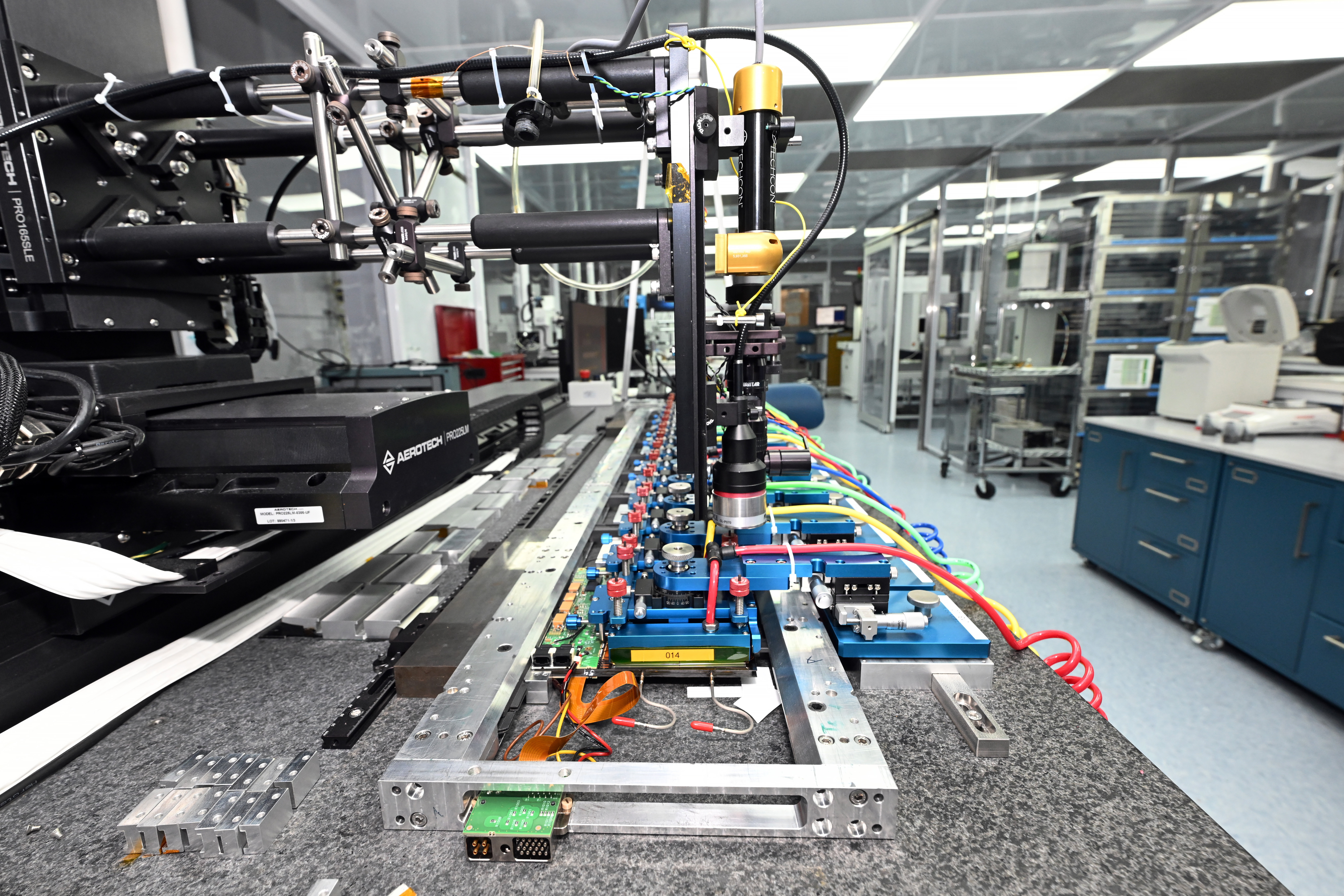
Inner tracker modules are loaded onto a carbon fiber support by a robotic assembly system. The blue vacuum loading bridges hold everything in place while the robot dispenses adhesive and makes position measurements. (Kevin Coughlin/Brookhaven National Laboratory)
Scientists across the ATLAS collaboration, which spans 170 institutions and 40 countries, contributed to the detector’s upgrade. As the U.S. host laboratory for ATLAS, Brookhaven has a leading role. Researchers at the Lab designed and produced key components of the detector, including a significant portion of the new inner tracker and other layers such as a liquid argon calorimeter, which measures particles’ energies.
Designing parts of the inner tracker was a lengthy process led by the Physics Department. Many of the components are made of silicon, which is capable of tracing particle tracks as they stream out of collisions — but it’s also a fragile material. One challenge was finding a way to prevent the silicon components from cracking in the frigid temperatures of the ATLAS detector. The electronics also needed layers of insulation to function in the cold, and every component had to be ultra radiation-resistant.
The production scale of these detectors was as large of a challenge as the design itself; Brookhaven’s contributions to the inner tracker will make up almost 650 square feet of silicon and contain more than 20 million sensors. Creating the industrial process was intensive work, from collaborating with institutions all over the world to developing robots to automate procedures.
Just a year after starting production, the team has already produced and shipped 10% of the total components they will be delivering to the ATLAS experiment. This is a major milestone that demonstrates proof of process, with production and shipment of the remaining 90% expected to be completed much more quickly.
“We’ve demonstrated that we can take an innovative technology and scale it to extremely large volumes,” D’Amen said.
 enlarge
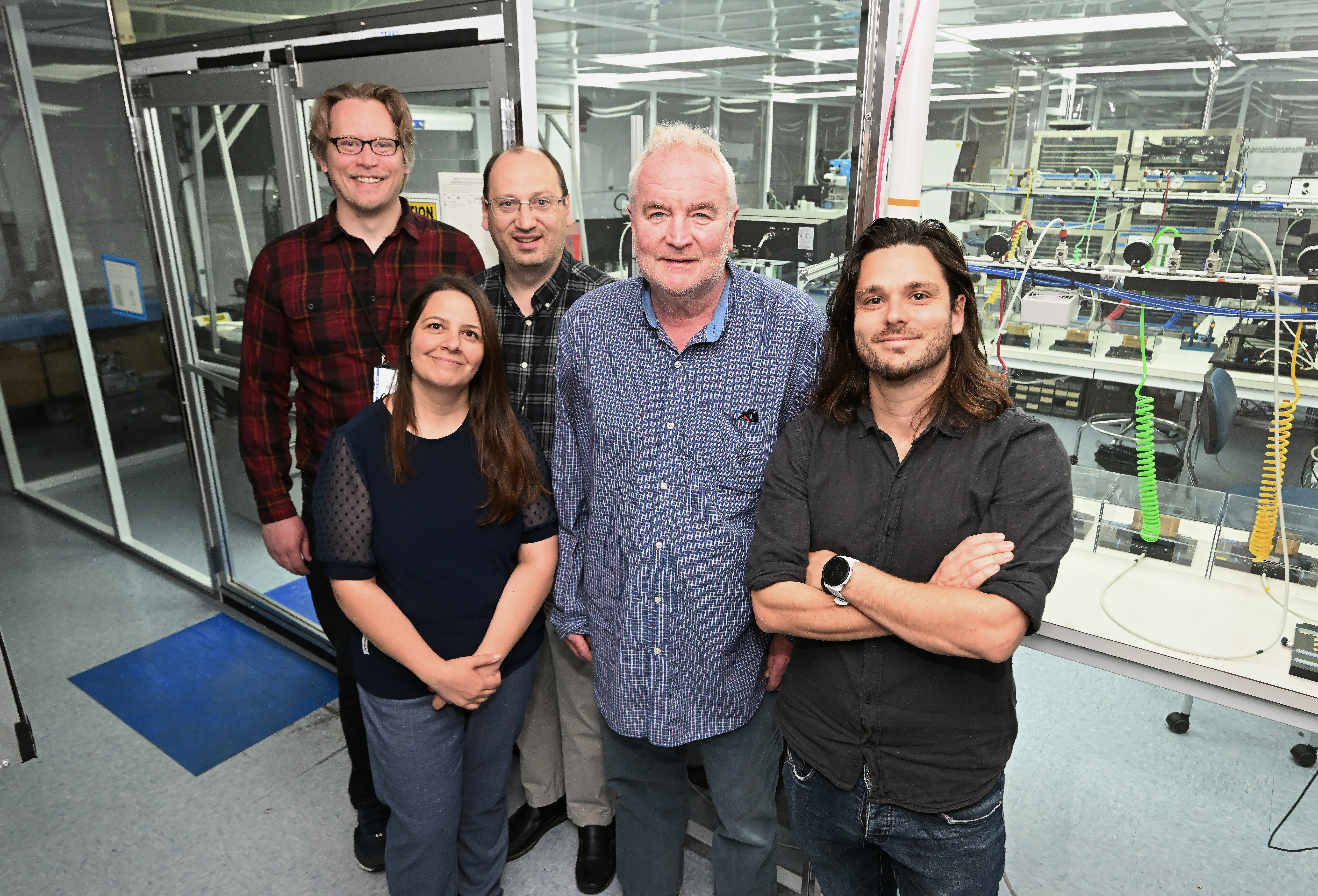
Matthew Kurth, Stefania Stucci, Alessandro Tricoli, David Lynn, and Gabriele D'Amen stand outside of the cleanroom in Brookhaven Lab's Physics Department where researchers developed the Inner Tracker. (Kevin Coughlin/Brookhaven National Laboratory)
A particle physics revolution
According to D’Amen, projects like these are essential for future physics research. A successful HiLumi LHC will point researchers in the direction of the next breakthrough in particle physics — and potentially positive impacts on people’s daily lives. Detector technologies from the 80s and 90s led to new ways to find cancer in people and black holes in space. Only time will tell what innovations the HiLumi LHC will inspire beyond major discoveries in particle physics.
Beyond enabling new discoveries, the upgrade will train students and early career scientists in a wide range of skills, from coil fabrication to detector testing. This essential work is preparing them for the next generation of colliders, such as the EIC at Brookhaven Lab and the Future Circular Collider at CERN.
“Our work at Brookhaven Lab is driving high energy physics for the decades to come,” D’Amen said. Now is the time to dream big.
 enlarge
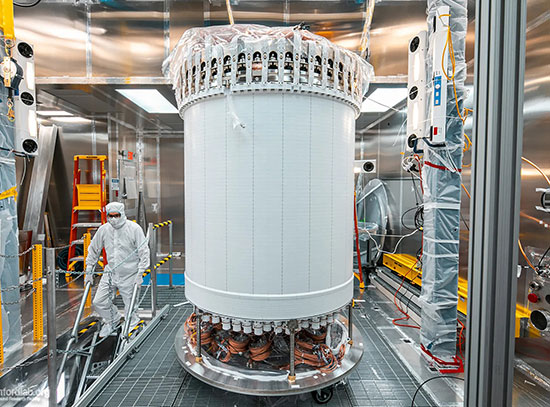
A cryostat holding magnets from Brookhaven Lab awaits testing at CERN. (Maximilien Brice/CERN)
Brookhaven National Laboratory is supported by the Office of Science of the U.S. Department of Energy. The Office of Science is the single largest supporter of basic research in the physical sciences in the United States and is working to address some of the most pressing challenges of our time. For more information, visit science.energy.gov.
Follow @BrookhavenLab on social media. Find us on Instagram, LinkedIn, X, and Facebook.
2026-23081 | INT/EXT | Newsroom