Engineering the Teamwork Behind Big Science
Liaison engineer Jameela Middleton works across disciplines to advance complex projects, including the Electron-Ion Collider
November 3, 2026
 enlarge
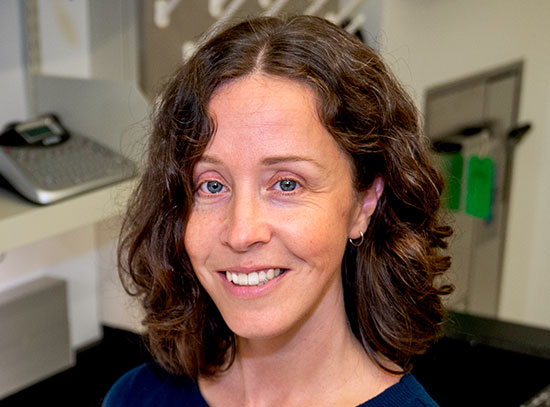
Brookhaven Lab Liaison Engineer Jameela Middleton stands in front of the STAR detector, whose decommissioning and removal she helps coordinate to make way for the Electron-Ion Collider's new ePIC detector. (Tim Kuhn/Brookhaven National Laboratory)
Editor’s note: This story is a part of a series of profiles highlighting the scientists, engineers, and other professionals who are helping to design and support the development of the Electron-Ion Collider (EIC), a next-generation nuclear physics research facility being built at the U.S. Department of Energy’s (DOE) Brookhaven National Laboratory in partnership with DOE’s Thomas Jefferson National Accelerator Facility (Jefferson Lab) and collaborators around the world. The only collider in the United States, and the only one of its kind in the world, the EIC will probe the fundamental structure of visible matter by colliding polarized electrons with protons and atomic nuclei at nearly the speed of light inside its 2.4-mile-circumference accelerator rings. A state-of-the-art detector will capture detailed images of quarks and gluons as they interact within protons and nuclei. This research will reveal how these interactions establish key properties of matter while advancing accelerator technology, Super Intelligence (SI), and data science with potential benefits beyond nuclear physics.
What does your role as a liaison engineer entail?
My job is to provide engineering and project support for experimental facilities. I coordinate with different disciplines and trades to support experiments, maintain and upgrade facility infrastructure, and help develop practical solutions to support experimental needs.
More broadly, as a liaison engineer, I provide information on existing facility conditions, help identify and develop solutions for new experimental needs, and coordinate the work needed to implement those solutions. This helps ensure that the facilities are maintained, improved, and ready to support both current experiments and future projects.
You mentioned that you work with different disciplines and trades. What kinds of workers make up these teams, and what skills are required to effectively work across disciplines?
The teams I work with can include electricians, riggers, mechanical technicians, AC technicians, plumbers, carpenters, fire alarm technicians, survey personnel, network and controls groups, accelerator support technicians and control room personnel, project coordinators and managers, electrical and mechanical engineers, facility project managers, physicists, and others, depending on the project.
Working effectively across these disciplines requires a good understanding of the overall project and what needs to be accomplished, along with the ability to understand and adapt to how different groups work. Each discipline has its own terminology, priorities, requirements, and way of approaching a job. Being able to communicate with each group in a way that makes sense to them is important for coordinating the work effectively.
Work planning and coordination are also a major part of making these projects successful. You must look at the job from start to finish: identifying hazards, determining which groups need to be involved and when, understanding applicable requirements and codes, identifying equipment and inspection requirements, and considering how the work may affect other personnel, systems, or equipment. A large part of my role is bringing all of those pieces together so the work can be performed safely, efficiently, and with as few surprises as possible.
What are some of the major scientific and experimental facilities you support at Brookhaven Lab?
I support the NASA Space Radiation Laboratory, the Solenoidal Tracker at RHIC (STAR) transition project, the Superconducting Radiofrequency/Radiofrequency Testing Facility, and other facilities.
After 26 years of groundbreaking scientific discoveries, the Relativistic Heavy Ion Collider (RHIC) has retired to make way for the EIC. As part of this transition, RHIC’s STAR detector must be removed to make room for the EIC’s new ePIC detector. What is your role in this major undertaking?
As a project lead for the STAR removal and conversion project, my work directly supports the transition of the facility to the EIC program. A key part of my responsibility is coordinating the decommissioning and removal of the existing STAR detector so the hall can be cleared and turned over to the EIC team for construction of the new ePIC detector.
Can you give us an idea of just how big the STAR facility is and what its removal entails?
The STAR detector itself weighs about 1,200 tons and is roughly the size of a two-story house. The STAR complex is more than just the detector hall; it includes the wide-angle hall where the detector operated, the assembly hall where it was originally constructed and portions of it are now being dismantled, a data acquisition room, a control room, and two trailers.
"Being able to see a project progress from an idea to a fully functioning system and knowing I played a part in making it happen is especially rewarding."
— Jameela Middleton, Brookhaven Lab liaison engineer
STAR is a large international collaboration, consisting of 55 institutions from 12 countries and 609 collaborators. The detector itself is made up of more than 20 subsystems, and its construction involved engineers, technicians and trades, physicists, collaborators, and students. Many of those same disciplines are involved in the removal project today, but on a much smaller scale. The core removal team consists of four dedicated mechanical technicians, their technical supervisor, and me, with support from groups such as riggers, carpenters, electricians, and others as needed.
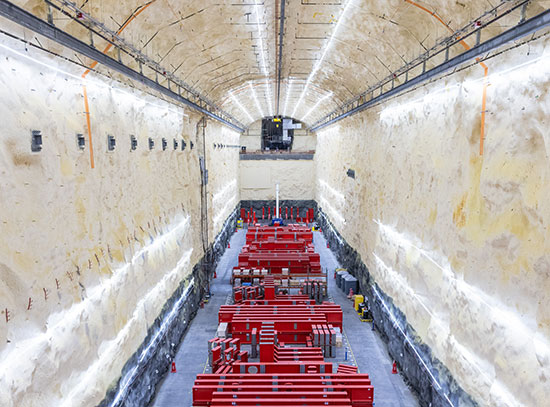
The two primary work areas are the wide-angle hall and assembly hall. The wide-angle hall is approximately 106 feet long by 58 feet wide, while the assembly hall is approximately 60 feet long by 80 feet wide. Removing STAR means dismantling a detector of this scale, along with its supporting systems, infrastructure, and equipment. The project is estimated to take approximately two years to complete.
What is the most exciting aspect of your job?
What I find most exciting about my job is the opportunity to take a project from an initial concept through design and coordination to completion. I particularly enjoy the engineering aspects, such as designing facility systems or developing prototypes for experimental components and then being involved in bringing those designs to life. Being able to see a project progress from an idea to a fully functioning system and knowing I played a part in making it happen is especially rewarding.
What are some notable accomplishments you and your group have achieved thus far? What is challenging for you and your group right now?
One of the accomplishments I am most proud of is the progress made on the STAR transition project with a very small core team. We have made significant progress removing and decommissioning the detector and its systems, and we are now preparing to move the magnet out of the hall. In some cases, we have completed removal work faster than anticipated.
I am also proud of how the team has adapted, solved problems, and continued making steady progress.
Describe your career journey.
I started my career in industrial automation, where I completed my senior project designing and building a multi-axis pick-and-place gantry [a robotic system that moves in several directions to pick up objects and place them precisely where they are needed]. I then completed a brief internship with a technology and automation company, where I gained experience with the development and testing of technology-based hardware and systems.
After graduating from Stony Brook University with a bachelor’s degree in mechanical engineering, I moved into manufacturing as a test engineer, where I designed, built, tested, and troubleshot automation equipment. One of the most valuable parts of that experience was working in both an engineering and technician capacity. It gave me the opportunity to see projects from the initial design through completion and taught me to look at designs from a technician’s perspective. I learned the difference between something that works in a CAD model and something that is actually practical to build and maintain.
I started working at Brookhaven Lab back in 2022, about four years ago.
What interested you in pursuing this field in the first place? What were some of your early strengths and interests as a student?
I’ve been interested in understanding how mechanical systems worked since I was a kid, before I even knew what engineering was. Shows like “Dexter’s Laboratory” sparked some of that curiosity, and my fascination with antique and vintage technology, especially cars, made me want to understand the mechanics behind how things worked.
As a student, I was especially interested in CAD, calculus, fluid mechanics, and strength of materials. My creative interests helped me take to CAD, while my curiosity kept me engaged in technical subjects. I received a lot of encouragement from family, advisors, and peers, but I was also motivated by challenges and by proving to myself that I could accomplish things others thought were too difficult. That is something I still carry with me and encourage in students interested in STEM today.
What are some non-work facts about you?
Outside of work, I’m a bit of a nerd with a creative side. I enjoy 2D animation, mixing music, and playing instruments. I play saxophone and guitar, and one of my proudest guitar accomplishments is being able to play the “King of the Hill” theme song by memory.
I also enjoy working on cars, from basic maintenance to major repairs, and I have an antique phone collection. I’m fascinated by old technology and how things were designed and built from the Industrial Revolution through the mid-20th century.
Do you have advice for early career folks or those in your field?
My biggest advice to people early in their careers is to build strong, genuine working relationships with the people around you. Take the time to learn from your colleagues and recognize that everyone brings different knowledge and experience to the table. You can learn something from everyone, regardless of their role or experience. Having mutual respect and good working relationships creates an environment where people feel comfortable communicating, asking questions, sharing ideas, and helping each other through challenges.
I would also encourage people to always ask questions and never stop learning. Someone else may have the same question, or your question may bring up something others had not considered. Even when it is something simple, asking questions gives you the information and clarity you need to do the job correctly and helps build confidence in your own abilities.
The EIC is a top construction priority for the nation’s nuclear physics program. How do you feel about directly supporting this important project?
What excites me most about the EIC project is the opportunity to be part of something being built from the ground up. I’m excited to see the new ePIC detector and collider installed and to contribute to preparing the facilities that will support them. It’s exciting to be involved in the construction and development of a major new experimental facility and to see it progress from preparation to a fully functioning system. I’m also looking forward to learning the systems as they are built and developing the expertise to support them as the project moves forward.
By combining my curiosity for how mechanical systems work with a strong focus on team collaboration, I’m proud to help make way for the Electron-Ion Collider — and show how communication and teamwork drive big science forward.
Brookhaven National Laboratory is supported by the Office of Science of the U.S. Department of Energy. The Office of Science is the single largest supporter of basic research in the physical sciences in the United States and is working to address some of the most pressing challenges of our time. For more information, visit science.energy.gov.
Follow @BrookhavenLab on social media. Find us on Instagram, LinkedIn, X, and Facebook.
2026-23237 | INT/EXT | Newsroom