


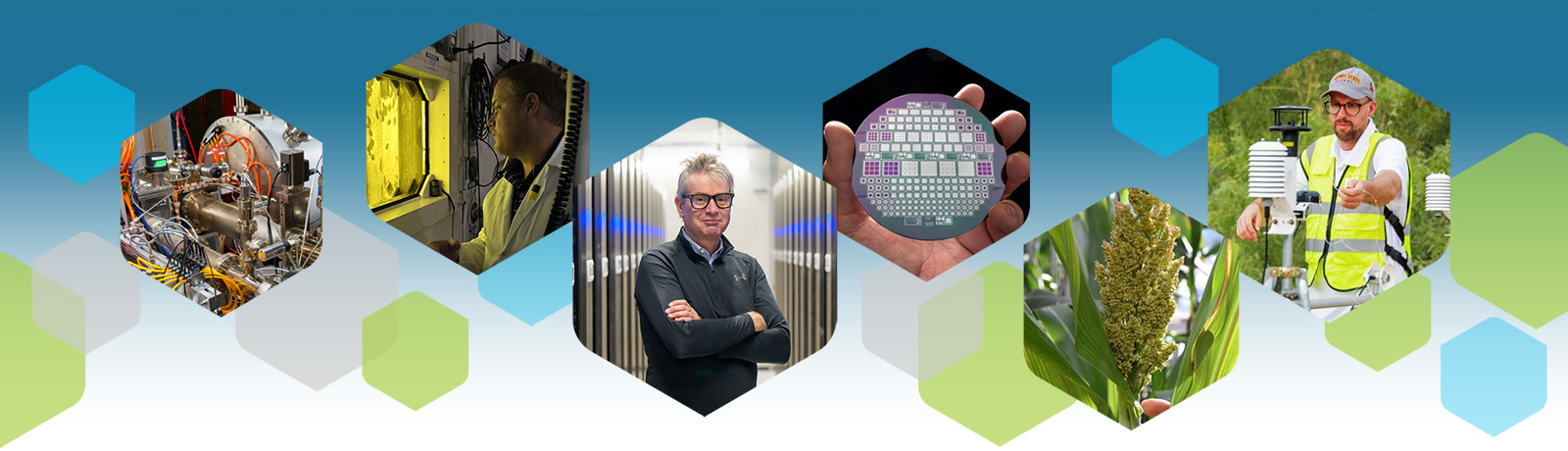
The Innovation, Science, and Security Directorate integrates world-class expertise in biology, environmental science, microelectronics, quantum information science and technology, accelerator science, detector science, instrumentation, isotope production, artificial intelligence, nuclear science, and national security to accelerate scientific discovery, technology innovation, and solutions to society's most pressing challenges.
Signature Research Areas

Advanced accelerator science and applications

Next-generation microelectronics and scientific instrumentation

AI and machine learning for scientific discovery and energy systems

Biotechnology and bioengineering for sustainable manufacturing and critical minerals

Atmospheric science supporting resilient energy infrastructure

Isotope production and radiochemistry

Nuclear science, safeguards, and nonproliferation

Quantum information science and sensing

Radiation effects testing for space and defense systems

Integrated national security technologies
Research Divisions
Offices
Active Research Projects
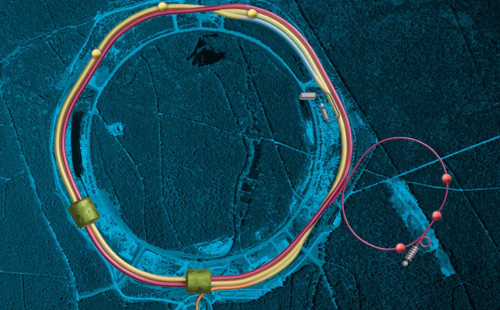
Electron Ion Collider
The Electron-Ion Collider, a new facility for nuclear physics research to be located at Brookhaven Lab, will allow scientists from across the nation and around the globe to peer inside protons and atomic nuclei to reveal secrets of the strongest force in nature. Research at the EIC will take our understanding of matter to the next level
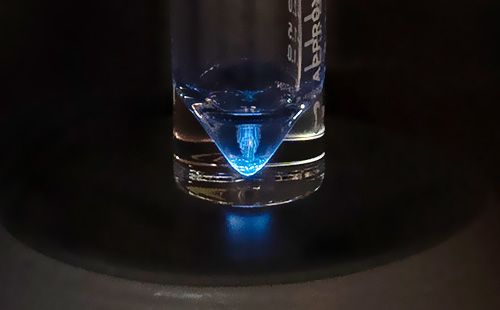
DOE Isotope Program
Brookhaven’s particle accelerator complex makes the Lab a national leader in the research, production, and processing of commercially unavailable radioisotopes. These isotopes have widespread applications in medicine, from disease diagnosis to treatment, as well as in national security.
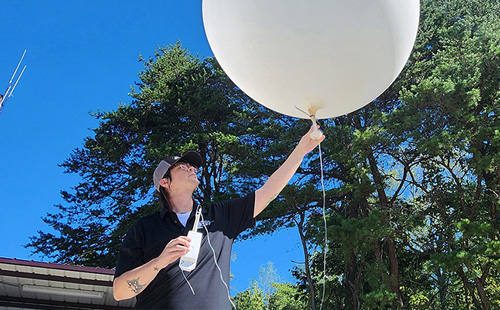
Atmospheric Radiation Measurement
Collecting long-term, detailed observations of the atmosphere to improve understanding and prediction of clouds, aerosols, precipitation, radiation, and their interactions with Earth’s weather system.
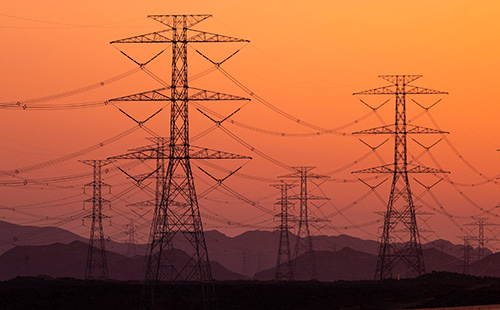
Grid AI Foundation Models
Rresearch to develop a next-generation AI system that can rapidly simulate scenarios for adding new loads to the electric grid. The project aims to significantly accelerate grid expansion planning with optimal accuracy, affordability, and efficiency in operations.
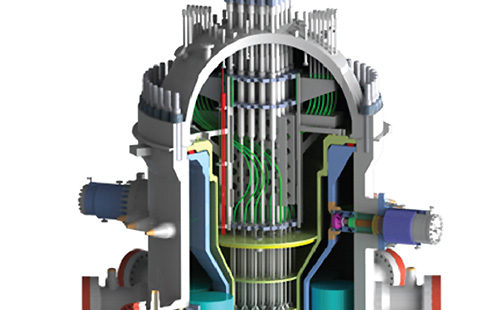
Nuclear Technology
Recognizing the important role nuclear energy plays in providing reliable, carbon-free electricity, our scientists are committed to research that continues to advance the field.
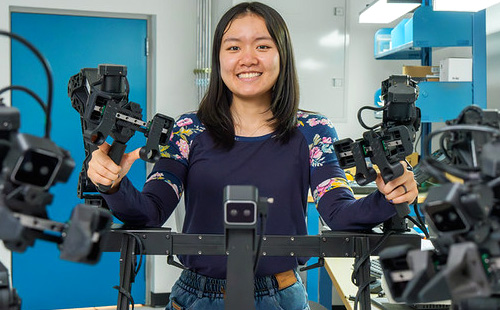
AI-enabled Biotechnology
Brookhaven Lab is at the frontier of applying robotics to complex tasks, providing AI agents with a sophisticated, dexterous “body” to carry out experiments and lab operations entirely on their own.
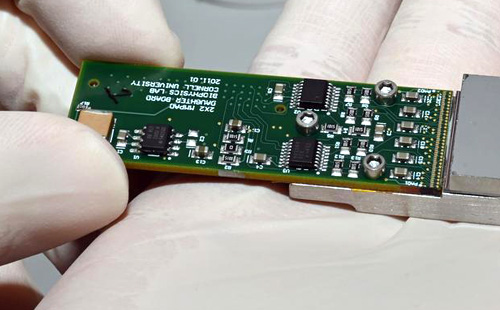
Advanced Microelectronics
Quantum sensing and advanced microelectronics and instrumentation development; accelerator technology supporting future scientific facilities

External Collaborations
Collaborations supporting commercial fusion, semiconductor, aerospace, biomedical, and energy industries.
Research Facilities
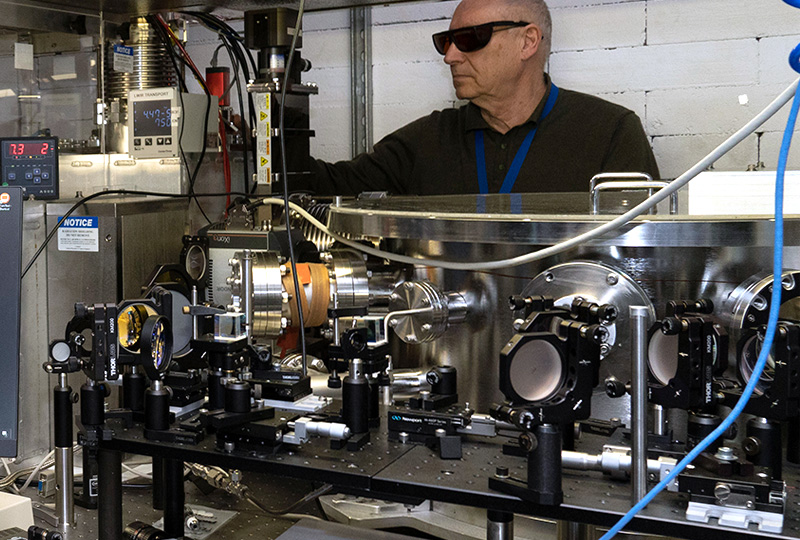
Accelerator Test Facility
The Accelerator Test Facility (ATF) is a U.S. Department of Energy Office of Science User Facility makes particle accelerator technology available for science and industry and to support the development of accelerators that meet national needs. At the ATF, research teams can develop transformational capabilities to support the fields of energy and environment, medicine, industry, national security, and discovery science. Free access is provided to academic and government users whose proposals successfully pass a merit-based program advisory committee review. Industrial users can conduct proprietary research via a full cost-recovery model.
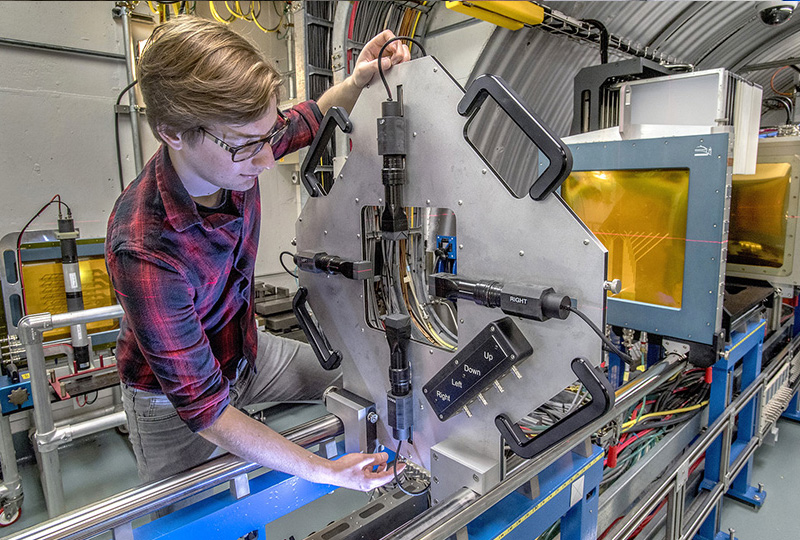
NASA Space Radiation Facility
The NASA Space Radiation Laboratory (NSRL) is a NASA-funded beam line and associated user-support building designed to carry out research on the effects of space radiation on biological systems, primarily, as well as on electronics and materials. NSRL delivers protons and heavy ions at space-relevant energies, serving a mostly NASA-supported community of researchers, with a small but growing group of non-NASA users testing electronics and investigating radiation therapy. NASA users who pass review by both NASA and Brookhaven Lab are granted beam time paid for by NASA. All others must pay on a full cost-recovery basis.
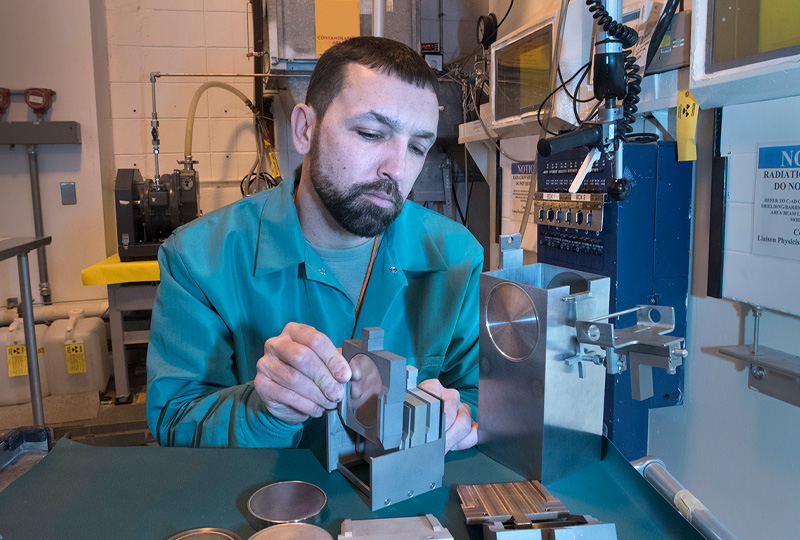
Brookhaven Linac Isotope Producer
The Brookhaven Linac Isotope Producer (BLIP) and the associated hot-cell complex (target processing laboratory and radiochemistry laboratories) produce isotopes—radioactive forms of chemical elements—for medical, environmental, and industrial applications. BLIP consists of a high-energy proton accelerator beamline and target area for generating radioisotopes already in high demand and for developing those required at the frontiers of nuclear medicine and for other applications.
Other facilities include atmospheric observation systems supporting the DOE ARM program; advanced microelectronics and instrumentation design, fabrication, testing, and characterization clean rooms and laboratories; environmental monitoring and cloud chamber facilities; nuclear data and safeguards laboratories; AI and Grid Foundation Model development platforms; and numerous specialized laboratories supporting biology, materials science, radiochemistry, and national security technologies.
