


Collaborators Capture ePIC Progress
November 10, 2026
The Electron-Proton/Ion Collider (ePIC) Collaboration brings together hundreds of scientists and engineers from institutions around the world to design, build, and operate the first experiment at the Electron-Ion Collider (EIC). Their work will help unlock the mysteries of the fundamental building blocks of matter.
Beyond the science, the collaboration holds a photo contest during its collaboration meetings, inviting members to capture the people, activities, and experiences behind the EIC. Members submit photographs highlighting their work and scientific community, with winning entries selected through a collaboration-wide vote.
Launched in January 2025, the contest celebrates creativity while documenting the progress of the ePIC experiment and the people helping bring it to life.
See below for the latest winners.
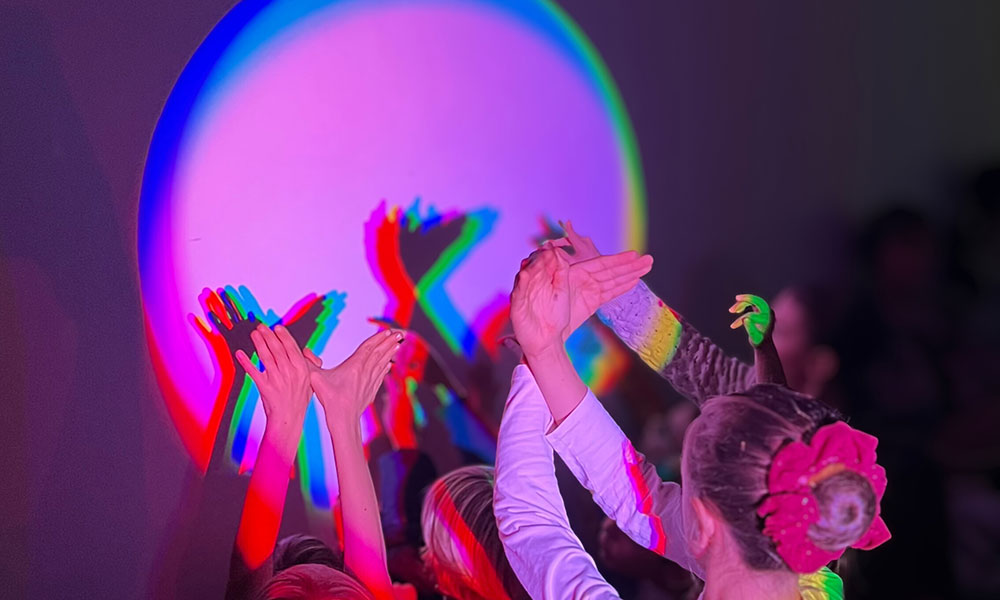
Roberto Preghenella of the Italian National Institute for Nuclear Physics (INFN) in Bologna, Italy, and a member of the ePIC Collaboration, captured this photo of young participants exploring light and color during a science outreach event. The activity demonstrates the red, green, and blue components of visible light while drawing a connection to research at the EIC, where scientists will study color charge, a property of quarks and gluons associated with the strong force that binds matter together.
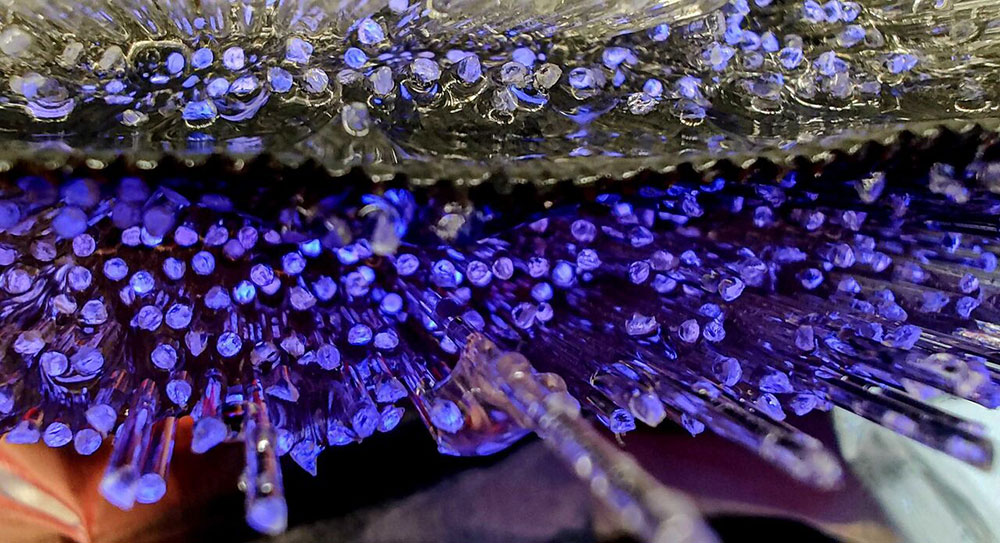
Kevin Bailey, a mechanical engineer at Argonne National Laboratory and member of the ePIC Collaboration, captured this image of illuminated scintillating fibers used in a test piece for the Barrel Imaging Calorimeter, a key component of the ePIC detector for the future Electron-Ion Collider (EIC). Embedded between layers of lead, the fibers will help measure the energy of particles produced during EIC collisions. Developing these detector components is a hands-on, labor-intensive process that involves carefully assembling layers of lead and fibers, using epoxy to bind them together.
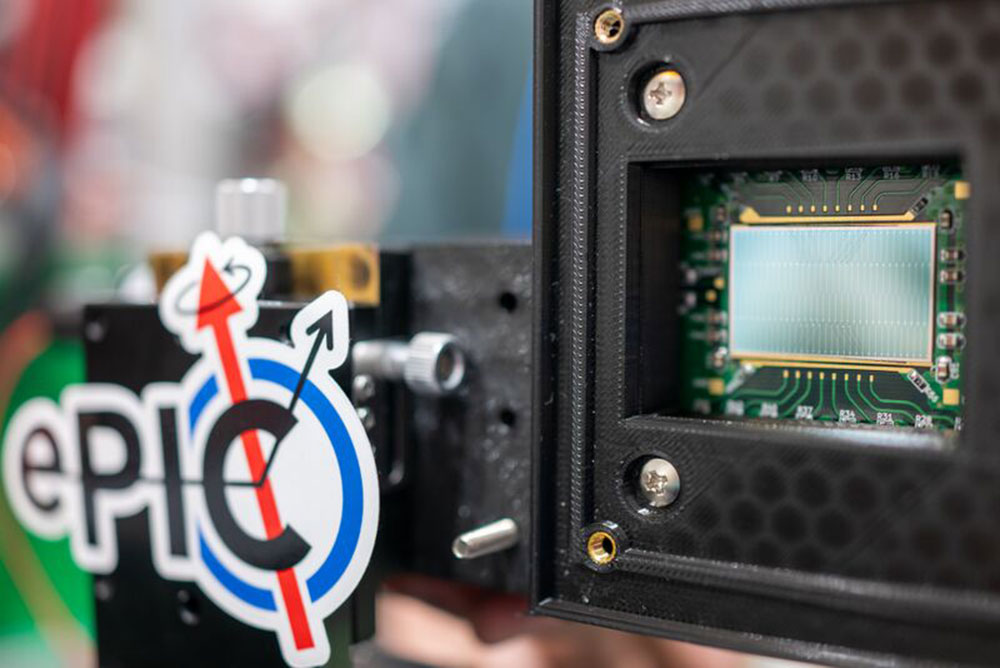
Bong-Hwi Lim of the University of Tokyo and a member of the ePIC Collaboration captured this photo of an AC-coupled Low Gain Avalanche Diode sensor prototype being developed for the future EIC. The sensor is designed to measure particle timing with a target precision of 35 picoseconds (trillionths of a second), helping scientists distinguish among different particles produced during EIC collisions.
