Meet Rey Cruz Torres: Designing Detector Technologies for Particles — and Fraud
Simulating detector components for the Electron-Ion Collider planted seeds and honed AI skills for protecting credit card transactions
September 14, 2026
 enlarge
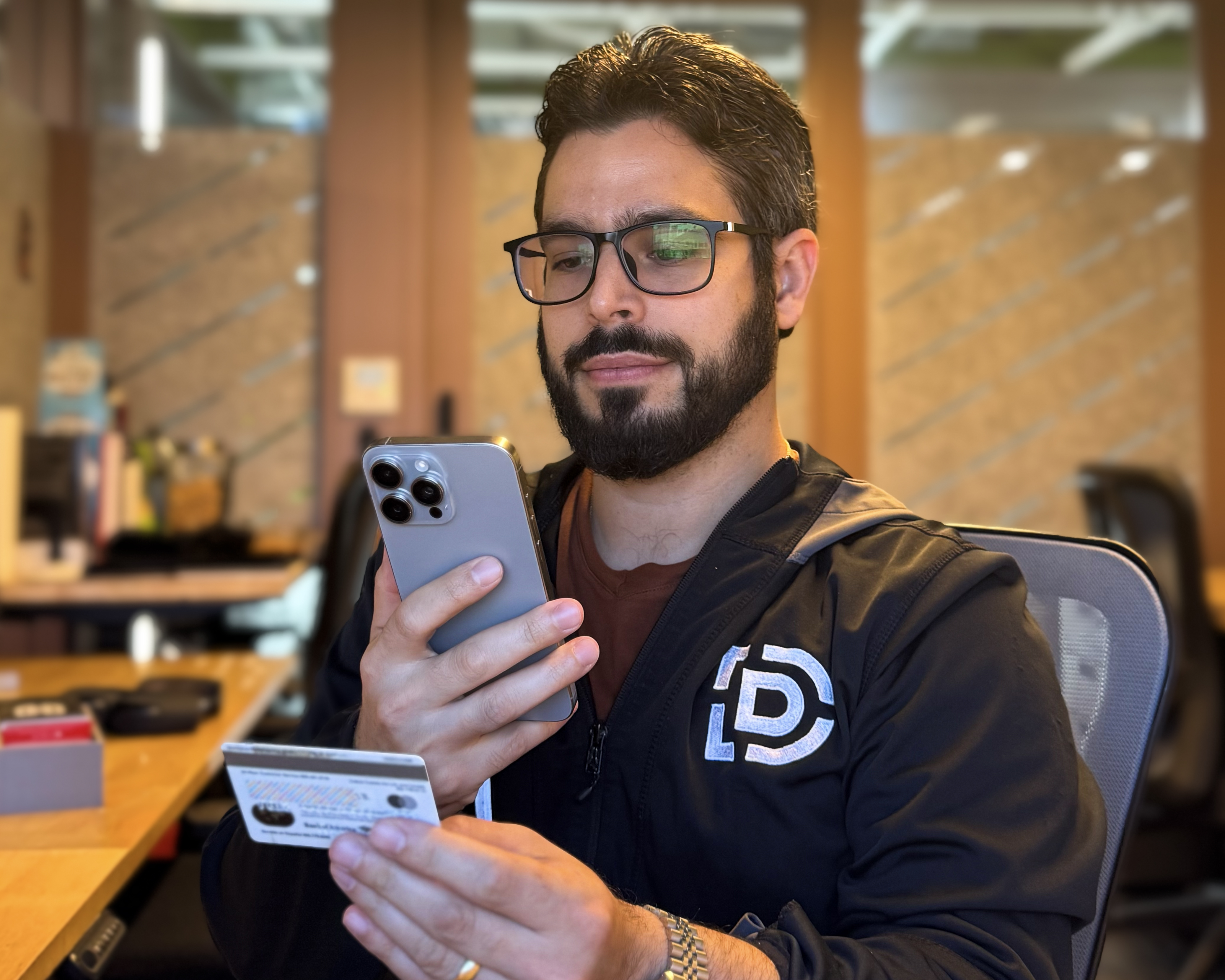
Rey Cruz Torres testing Dyneti Technologies' mobile credit card scanner before publishing the application to production. The deep learning engineer says that skills he developed while designing detectors for particle collisions translate to AI applications that protect credit card transactions from fraud. (Courtesy of Rey Cruz Torres)
Finding clues to discoveries in the particles streaming from collisions at the future Electron-Ion Collider (EIC), a nuclear physics research facility under construction at the U.S. Department of Energy’s (DOE) Brookhaven National Laboratory, could be likened to spotting subatomic needles in a messy haystack. As a Ph.D. physics student and then a postdoc, Rey Cruz Torres analyzed data and tested detector designs for teasing out such subtle signals. Now he applies his detection skills in the high-stakes environment of credit card fraud. Learn about his journey from fundamental physics to his job building artificial intelligence/machine learning models and writing software programs that verify or block transactions in real time.
How did you first become involved with Brookhaven Lab and the EIC project?
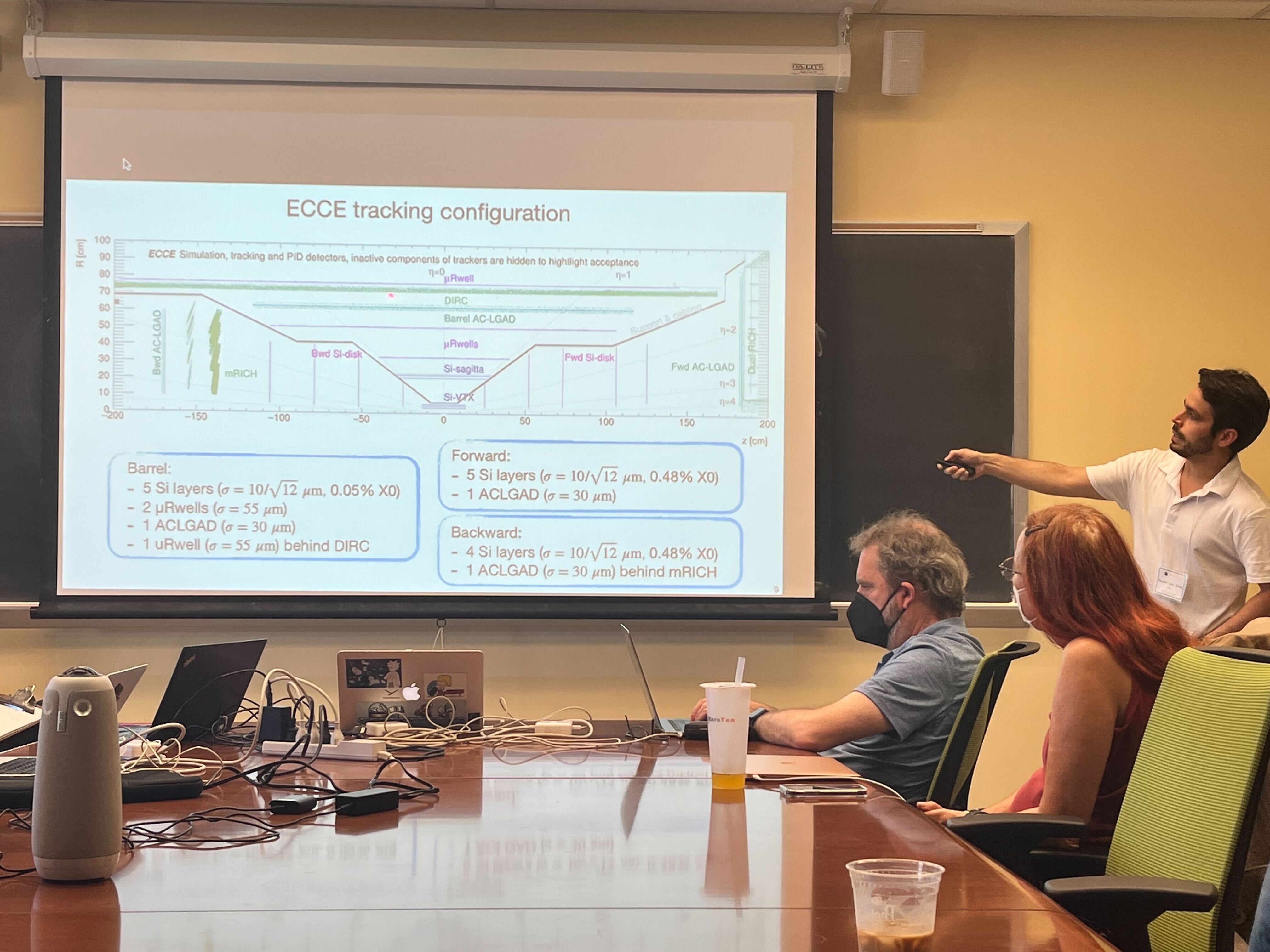
My connection to Brookhaven National Laboratory and the EIC specifically came through my postdoctoral research at DOE’s Lawrence Berkeley National Laboratory, where I worked under Barbara Jacak from 2020 to 2023. Part of that work involved simulating detector designs for the EIC. I focused on the tracking detectors — the instruments that record the paths of particles flying out of a collision. I simulated different detector geometries and evaluated how well various designs, including the size of individual silicon pixel sensors, could reconstruct particle tracks accurately.
 enlarge
Rey Cruz Torres presents on possible tracking detector configurations for the Electron-Ion Collider (EIC) at an EIC Consortium Meeting at the University of California, Davis, July 18, 2022. (Courtesy of Rey Cruz Torres)
Were you always interested in physics?
I was born and grew up in Cuba. In 2005, my mother won a lottery visa to come to the United States, but the Cuban government didn't allow us to leave until 2011 when I was 20 years old. By then, I had attended college for two years. The university system there was highly specialized. Unlike in the U.S., where students typically have time to explore different fields before choosing a major, students in Cuba take aptitude exams and are admitted directly into a specific program. Based on those exams, I’d been accepted into the nuclear physics program.
But when we left Cuba, the early years here were hard. Like most immigrant families, we went through a rough stretch economically. And while I had learned enough English to communicate in everyday situations, I had never learned how to "speak mathematics" in English. So, professionally, I basically had to start from scratch. When I applied to the University of Florida, they initially rejected me because they assumed I was applying with no physics or math background at all. Once I pointed out the oversight, they accepted me, but I had to retake some foundational courses. That turned out to be a blessing in disguise. Because I knew the core material, I was able to devote more of my attention to building my scientific vocabulary and adapting to a new academic environment. Through a lot of hard work, and with tremendous support from my parents — who have their own stories in the U.S. that I'm extremely proud of — I graduated from the University of Florida and went on to MIT for my Ph.D., from 2015 to 2020. At MIT, I studied under Or Hen, whose research focuses on the strong force, nuclear matter, and other science related to the EIC. That work pulled me into the broader nuclear physics world connected to the Relativistic Heavy Ion Collider (RHIC) and the EIC. That’s what eventually led me to the detector and data work I did for the EIC as a postdoc.
Can you share some more details about your postdoctoral work at Berkeley Lab?
First, I studied particle collision data from the ALICE experiment at the Large Hadron Collider in Europe. I was focused on understanding jet substructure. That’s the internal spray pattern of particles produced when a high-energy quark or gluon — one of the building blocks of protons and neutrons — flies apart.
Then, I worked on detector research and development for the EIC's tracking system. I ran computer-based simulations to compare different detector layouts and pixel-sensor designs. The idea was to test which components and configurations would work best before any hardware was built. As part of that role, I also supervised and mentored undergraduate students working in the group.
How did you go from nuclear physics to detecting credit card fraud?
During my postdoctoral work, I began thinking about how I wanted to apply my quantitative skills over the long term. I realized I was drawn to environments where I could work on challenging problems with immediate impact and see the results of my work more quickly. I'm currently a deep learning engineer and technical lead at Dyneti Technologies, where I build machine learning models and write the software that scans credit card transactions in real time to detect and prevent fraud. This field relies on many of the same skills I had developed as a physicist but in a setting where the pace is faster and the problems evolve constantly.
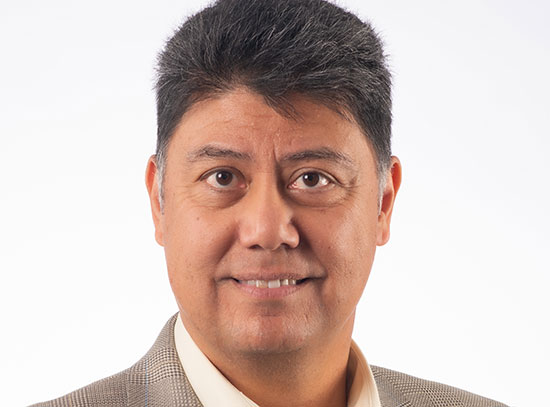
 enlarge
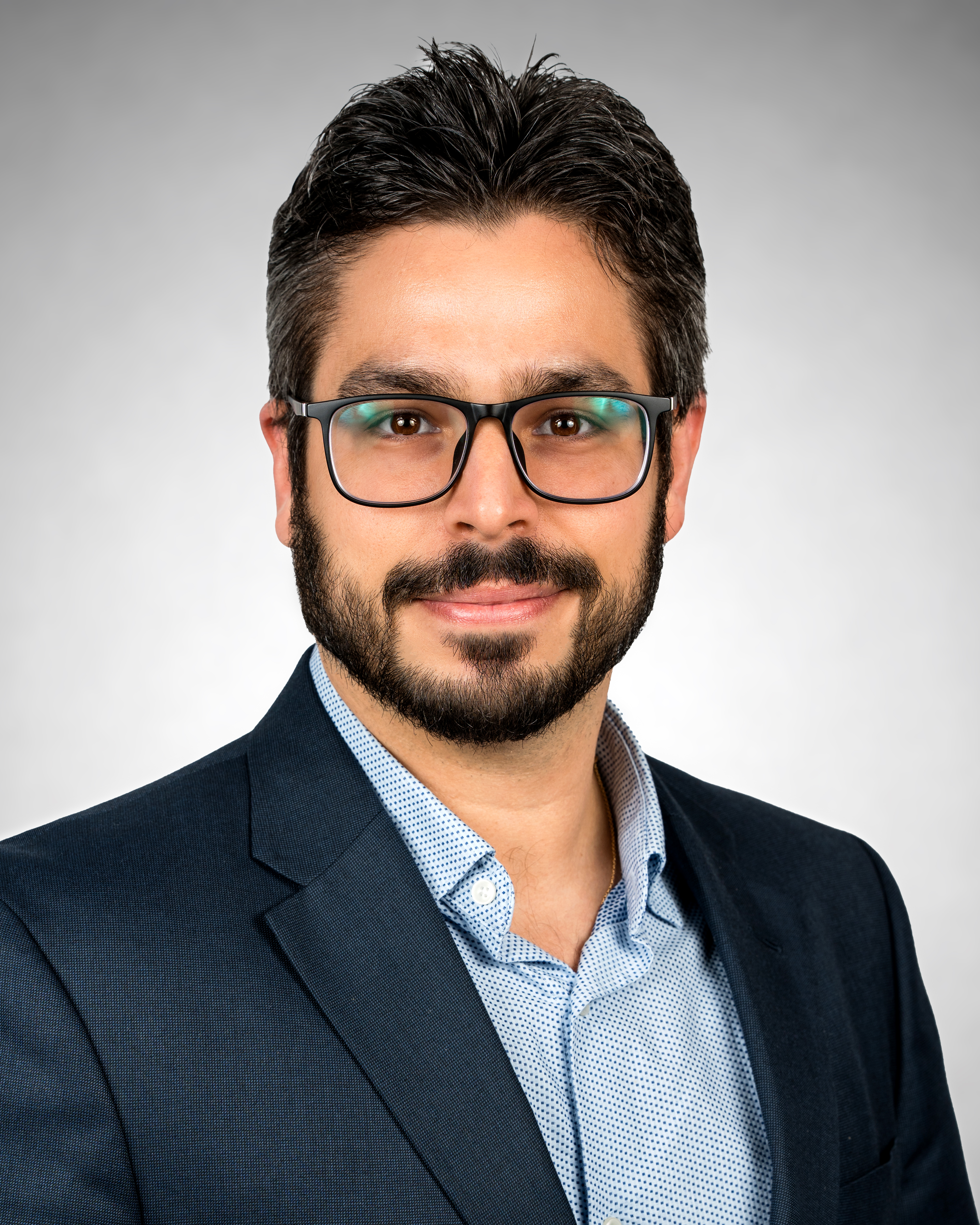
Rey Cruz Torres is a deep learning engineer at Dyneti Technologies, Inc. His background in physics and detector technology laid the foundation for his role developing software applications that scan credit card transactions in real time to detect and prevent fraud. (Courtesy of Rey Cruz Torres)
What particular skills from your time in fundamental physics have proven to be valuable in your current career?
The core skill that carried over most directly is pattern recognition in large, noisy datasets. In nuclear and particle physics, you're constantly trying to find a faint, meaningful signal —a particular particle interaction, a subtle detector effect — buried in an overwhelming amount of background “noise.” You have to be rigorous about not fooling yourself into seeing something that isn't there. Fraud detection is the same problem in a different domain. Genuine fraud is rare, transaction data is messy, and the cost of both false positives and false negatives matters. The statistical thinking and skepticism I built up analyzing collision data transfers almost one-to-one.
The detector simulation work was also great training for building and testing complex systems where you can't just try something on real hardware first. Designing a silicon tracker for a physics detector means simulating many candidate geometries before committing to a physical build. Because building the real thing is expensive and slow. Building machine learning systems is a similar process. You simulate, test, and validate models extensively offline before anything touches real transactions, because any mistakes that make it into production would have real costs.
Beyond the technical side, I also picked up skills I didn't fully appreciate at the time. Supervising undergraduate students during my postdoc was my first real experience managing people. That has carried directly into my current role, where I manage engineers. Working in Barbara Jacak's group also taught me how to run a group effectively and how to work well with the people around me. And having to give presentations every week in working groups made me a far better communicator. That’s a skill I now rely on constantly, whether I'm explaining a model to non-technical stakeholders or leading a team.
When people look at your current career, what would surprise them most about your background being in physics?
Most people probably don’t realize that the same techniques used to design detectors that search for quarks and gluons inside the proton are, in a roundabout way, related to the software that flags a fraudulent credit card charge. Both come down to pulling a rare, real signal out of an enormous, noisy stream of data. The other surprise is probably the “soft skills” connection. I first learned a lot of what I use to manage a team of engineers today while mentoring undergrads and giving weekly talks in a physics working group.
Please feel free to share anything else that would help to tell your story!
I currently live in the San Francisco Bay Area with my wife — who is also from Cuba and has an amazing story of her own in the U.S. — and our nearly two-year-old son.
Brookhaven National Laboratory is supported by the Office of Science of the U.S. Department of Energy. The Office of Science is the single largest supporter of basic research in the physical sciences in the United States and is working to address some of the most pressing challenges of our time. For more information, visit science.energy.gov.
Follow @BrookhavenLab on social media. Find us on Instagram, LinkedIn, X, and Facebook.
2026-23127 | INT/EXT | Newsroom