543rd Brookhaven Lecture: Making Particles Dance at the EIC
October 16, 2026
Some particle accelerators are tools for medical treatments and diagnostics. Some are used for industrial processes, including electronic chip production. Other accelerators enable cutting-edge science and research.
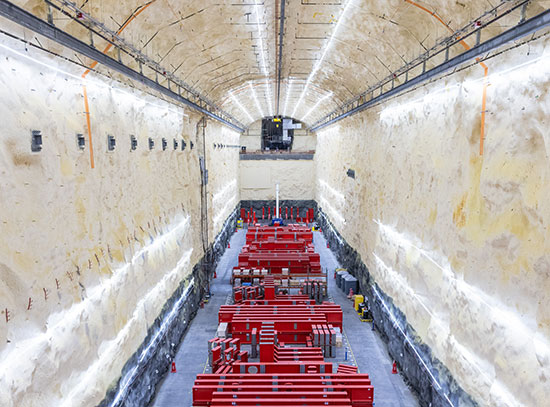
At the U.S. Department of Energy's (DOE) Brookhaven National Laboratory and Thomas Jefferson National Accelerator Facility as well as institutions across the country and around the world, scientists and engineers are preparing to build the Electron-Ion Collider (EIC). This discovery machine will accelerate electrons and ions that collide, so scientists can unlock secrets of the "glue" that binds the building blocks of visible matter in the universe.
Accelerators move "beams" of charged particles such as electrons and ions. Magnets and radiofrequency (RF) cavities help push those beams along. RF cavities also manipulate beams, splitting and compressing the particles within.
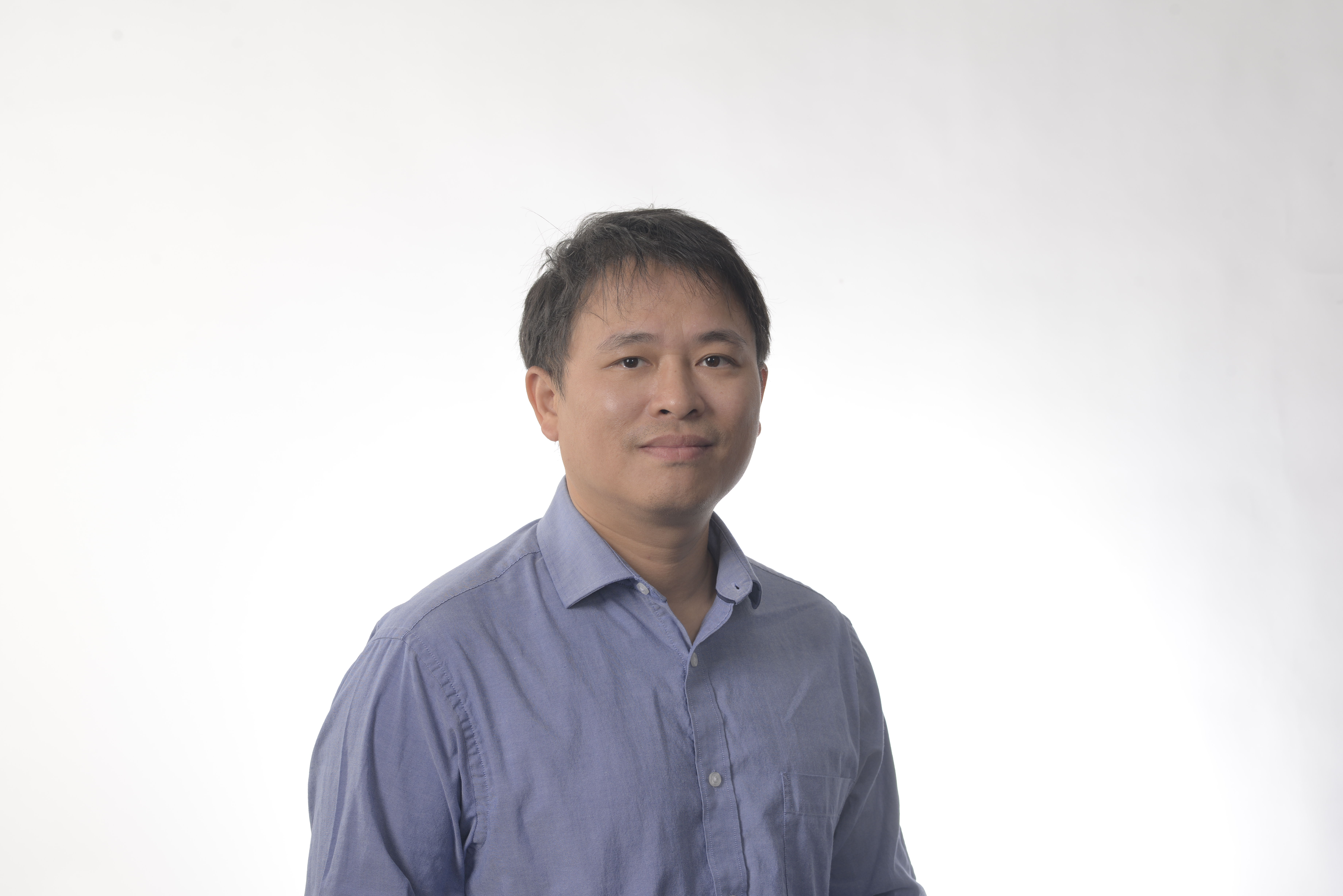
All are invited to join Binping Xiao of the EIC when he presents the 543rd Brookhaven Lecture on Wednesday, Oct. 21, at 4 p.m. EDT. His talk is titled "Making Particles Dance: The Many Roles of Radiofrequency Cavities at the Electron-Ion Collider."
Attendees can join:
- In person at the Center for Functional Nanomaterials (CFN, map) in the seminar room on the second floor
- Virtually on Zoom (passcode: 034194)
During his talk, Xiao will introduce the RF systems in development that will manipulate beams for the EIC. He will then explain how these systems work together to precisely control and shape particle bunches for collisions to enable future discoveries.
CFN, where this Brookhaven Lecture will be held, is a DOE Office of Science user facility at Brookhaven Lab.
About the speaker
Xiao arrived at Brookhaven Lab as a postdoc in the Collider-Accelerator Department in 2012. He was named a physicist in 2014 and joined the Electron-Ion Collider in 2021.
He was a Ph.D. student research assistant in the Superconducting Radiofrequency group at Thomas Jefferson National Accelerator Facility from 2005 to 2012, when he completed his Ph.D. in material science at the College of William and Mary. He earned a Master of Engineering in 2005 and a Bachelor of Science in accelerator physics in 2002 at Peking University.
About the Brookhaven Lecture Series
The Brookhaven Lecture Series began in 1960.
In the foreword to the first lectures, Brookhaven physicist Gertrude Scharff-Goldhaber wrote, "The Brookhaven Lectures, held by and for the Brookhaven staff, are meant to provide an intellectual meeting ground for all scientists of the Laboratory. In this role, they serve a double purpose: They are to acquaint the listeners with new developments and ideas not only in their own field but also in other important fields of science, and to give them a heightened awareness of the aims and potentialities of Brookhaven National Laboratory."
That tradition continues today.
Brookhaven National Laboratory is supported by the Office of Science of the U.S. Department of Energy. The Office of Science is the single largest supporter of basic research in the physical sciences in the United States and is working to address some of the most pressing challenges of our time. For more information, visit science.energy.gov.
Follow @BrookhavenLab on social media. Find us on Instagram, LinkedIn, X, and Facebook.
2026-23219 | INT/EXT | Newsroom