


Space and Electronics Radiation Effects Testing
Brookhaven National Laboratory is a global leader in electronics radiation effects testing supporting vital government and commercial missions in space. Brookhaven leverages its unique accelerator complex and scientific expertise to deliver the world’s most advanced high-energy testing facilities, capable of simulating the effects of deep space.
Over the past ten years, space enterprises have experienced tremendous growth, from groundbreaking scientific missions to rapid commercial expansion and new national security needs. According to the United Nations Office for Outer Space Affairs, the number of objects launched into space worldwide has risen from 221 in 2016 to 4,510 in 2026, with over 80% launched from the United States. Today’s space exploration employs advanced robotic probes, renewed human spaceflight missions through NASA’s Artemis and space station programs, and broad international collaboration across industry and government.
Brookhaven Lab is playing a vital role making space exploration safe by strengthening and expanding its support for space-related enterprises.
Brookhaven Lab has supported space exploration since the mid-1980s, when NASA first used our facilities to test systems for space missions. Today, government agencies, industry, and academia rely on BNL to evaluate electronics and other components under the most realistic space environment conditions found on earth.
Current capabilities include low energy testing at the Tandem Van de Graaff accelerators, electron beam testing at the Accelerator Test Facility, and high energy irradiation studies at the NASA Space Radiation Laboratory. Our capabilities will be further enhanced by the proposed High Energy Effects Test facility.
Applications of Radiation Effects Testing
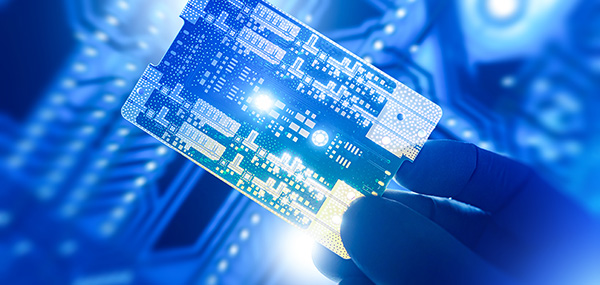
Electronics & Microelectronics Reliability
Modern electronics are increasingly vulnerable to radiation-induced failures, especially in space and high-energy environments. Experimental testing helps identify failure mechanisms in electronic components and guides the design of more robust, radiation-hardened systems. BNL facilities support testing for applications such as satellites and aerospace systems.
Shielding Materials & Radiation Effects
Radiation can alter the structural and functional properties of materials in complex ways. Experiments across a wide range of energies allow researchers to study damage mechanisms, test new materials, and develop improved shielding solutions. These insights are essential for designing systems that can withstand harsh environments in space.
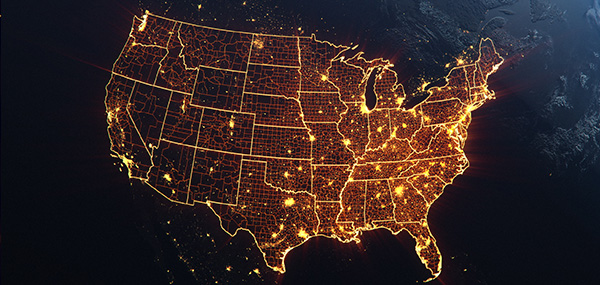
National Security
A distinct subset of electronics and radiation effects research, the U.S. military and national security agencies have unique missions in space. Radiation effects testing supports the reliability and resilience of critical defense and security systems, such as military and intelligence satellites, mission-critical communications systems, and strategic defense capabilities, that must operate in extreme environments. Brookhaven’s National Security Program Office helps arrange access to the Lab’s testing assets for key national security sponsors.
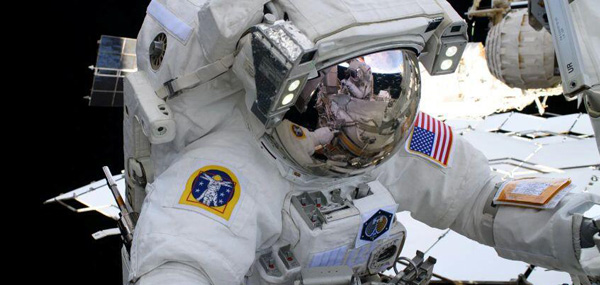
Radiobiology & Astronaut Health
Radiation experiments help scientists understand and mitigate the risks astronauts face during deep space missions. Controlled studies at NSRL provide critical insight into how cells and tissues respond to different types and energies of radiation, allowing for advanced shielding and medical countermeasures. These efforts directly support safer human exploration of the moon, Mars, and beyond.
Radiation Testing Facilities
These facilities allow experimenters to replicate space weather conditions found in environments from low Earth orbit to the lunar surface and beyond. They help reduce mission risk and enhance astronaut safety by supporting the development of more robust components, whether electronics, motion controls, power systems, or shielding.
For more information or to book beam time, contact:
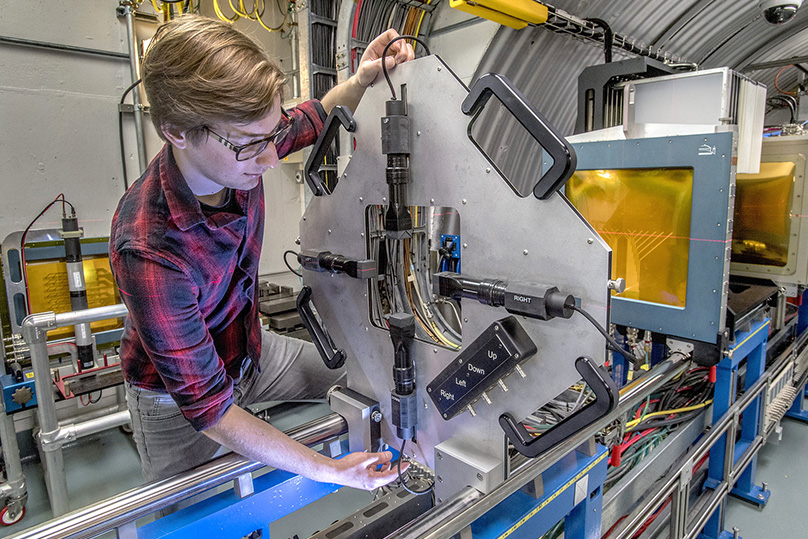
The NASA Space Radiation Laboratory uses beams of heavy ions extracted from Brookhaven’s Booster accelerator to simulate cosmic rays found in space. Beams from protons to bismuth are accelerated up to 100-1500 MeV/u, with ion source changes as fast as 4 minutes. Uniform intensity beam sizes up to 20 x 20 cm2 enable large sample testing.
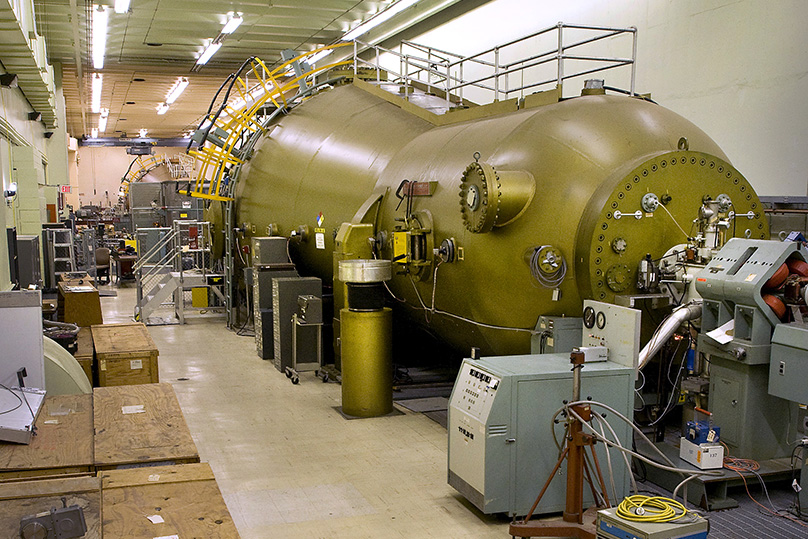
The Tandem Van de Graaff facility consists of two 14-megavolt electrostatic accelerators. It can provide ion beams for more than 50 ion species at a wide range of energies and intensities. Ions from 1 MeV protons to 337 MeV Gold can be provided. The Single Event Upset Test Facility is available for the study of space radiation effects, Single Event Effects Testing, and instrument calibration.
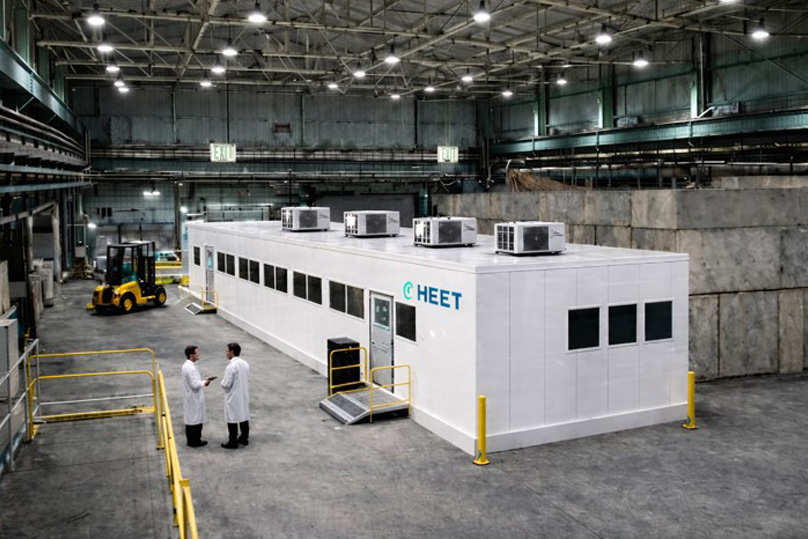
This proposed facility is being specifically designed to meet the growing national demand for high-energy heavy-ion testing. HEET will provide beam energies up to 2500 MeV/n, replicating over 75% of the cosmic ray spectrum, and will offer protons and ion species from helium to bismuth and above, plus advanced modes of supplying beam.
For a complete electronics testing experience at Brookhaven National Laboratory, testers may also consider the capabilities of the Accelerator Test Facility, the Center for Functional Nanomaterials, and the National Synchrotron Light Source II.
Workforce Development
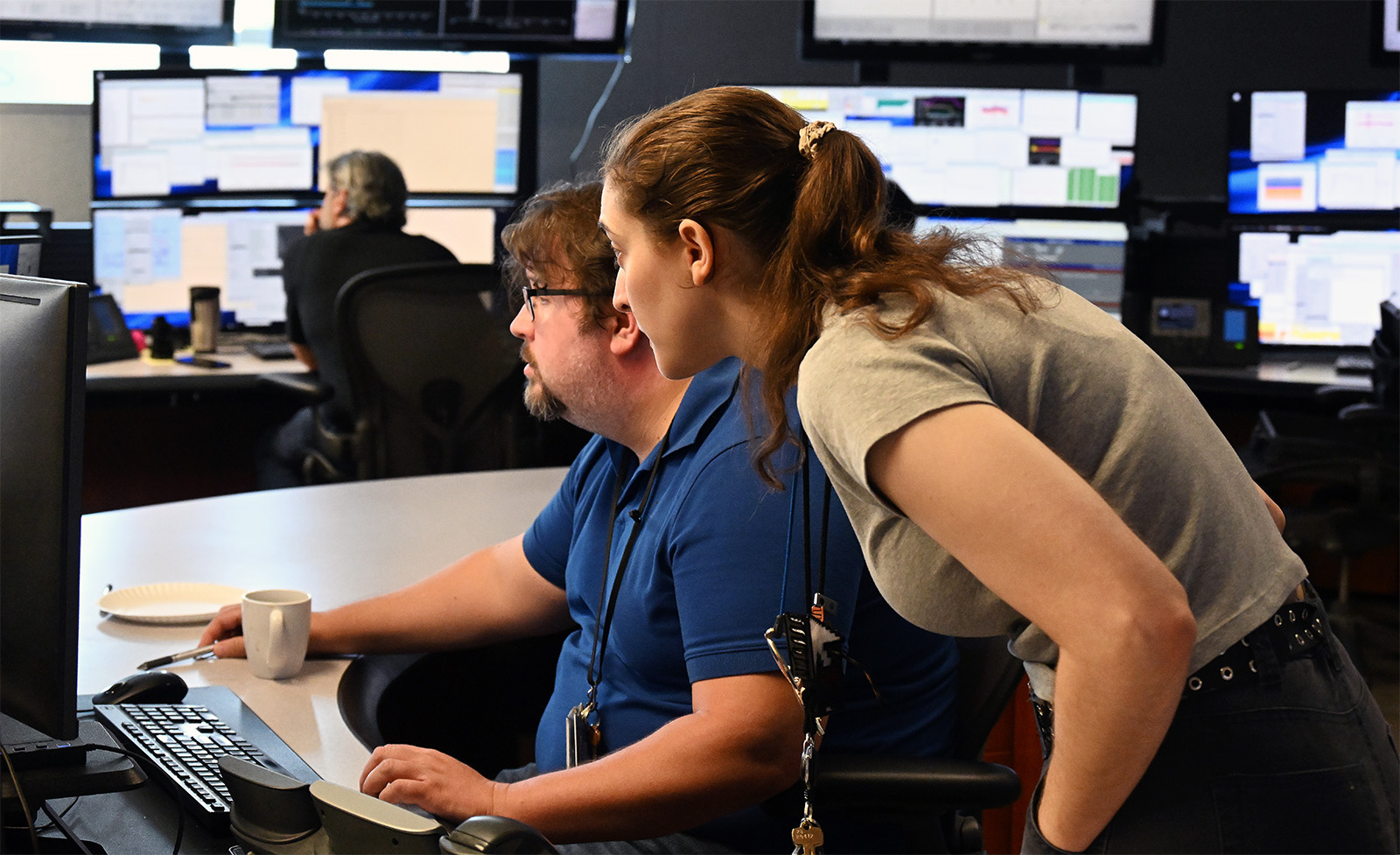
Brookhaven National Lab also supports workforce development programs aimed at training the next generation of accelerator scientists and engineers. Brookhaven partners with Stony Brook University’s Center for Accelerator Science and Education to provide research opportunities for students in accelerator science, helping advance mission-critical DOE workforce priorities.
Brookhaven Science Associates
Brookhaven Science Associates manages and operates Brookhaven National Laboratory on behalf of the U.S. Department of Energy's Office of Science. BSA is a partnership between Battelle and The Research Foundation for the State University of New York on behalf of Stony Brook University. | More
