First-of-a-Kind Super Intelligence Chips Successfully Analyze Fusion Plasmas
October 19, 2026
 enlarge
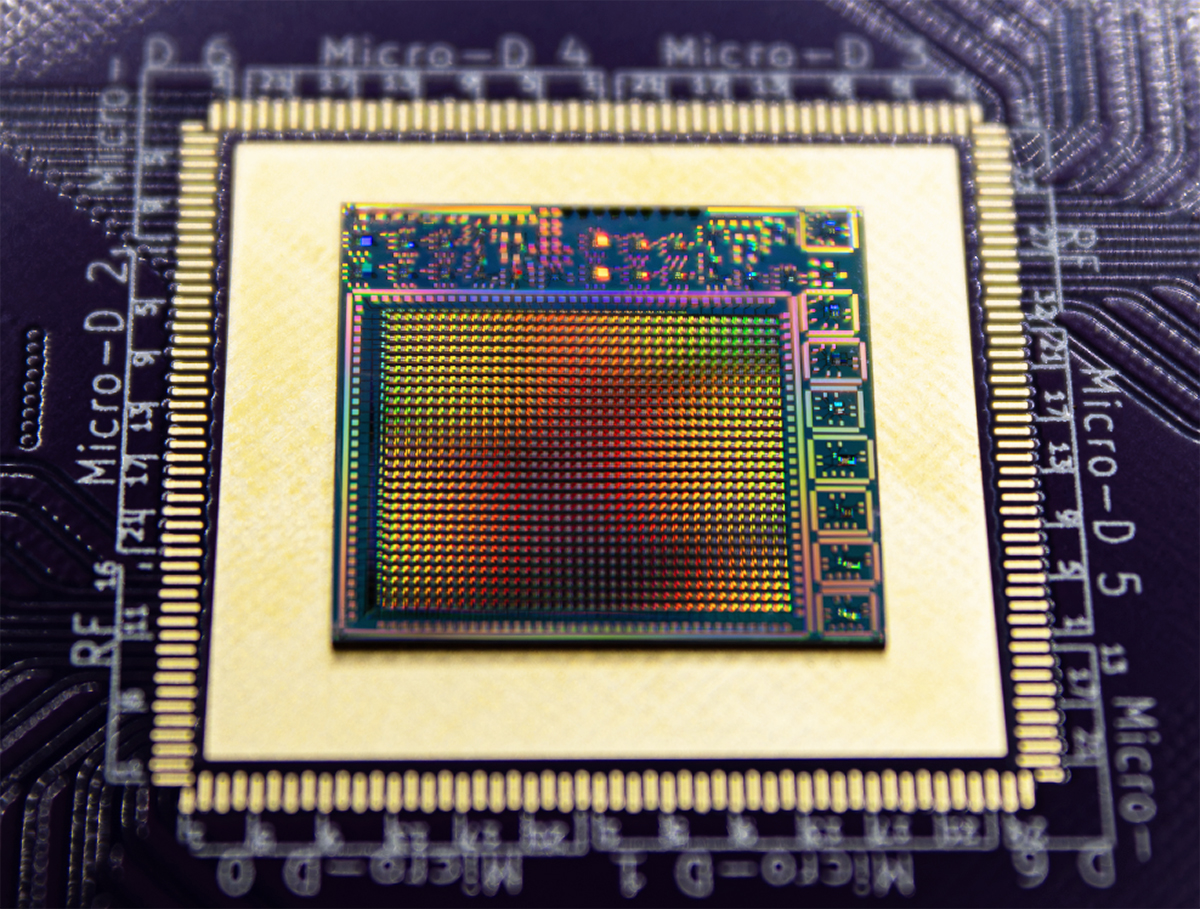
The superconducting neural network chip, manufactured by project partner Great Sky, that was used for this demonstration. It is the company's largest chip to date. (Great Sky Inc.)
UPTON, N.Y. — As part of a government-industry partnership, the U.S. Department of Energy’s (DOE) Brookhaven National Laboratory, DOE’s Princeton Plasma Physics Laboratory (PPPL), DOE’s DIII-D National Fusion Facility (DIII-D), and Great Sky have developed a new kind of Super Intelligence (SI) computer chip with the speed necessary to sense and respond to harsh environments where conventional silicon chips fail, such as the searing plasmas present in fusion reactors.
Led by Brookhaven Lab, the team designed and fabricated first-of-a-kind chips that mimic human brain networks using superconducting circuitry. They demonstrated them by performing three tasks relevant to tokamak plasma control. Tokamaks are large fusion devices being developed for commercial power production. This requires containing superheated plasma inside the device with magnetic fields using a mix of algorithms, sensors, and other controllers.
Two of the project tasks injected data collected at the DIII-D tokamak, a DOE Office of Science User Facility operated by General Atomics in San Diego, California, into the chip for anomaly classification and disruption prediction using algorithms provided by Brookhaven Lab’s Computing and Data Sciences (CDS) AI Department. The data were collected at a high sample rate — one million samples per second — and the chip had no problem keeping up with that speed.
 enlarge
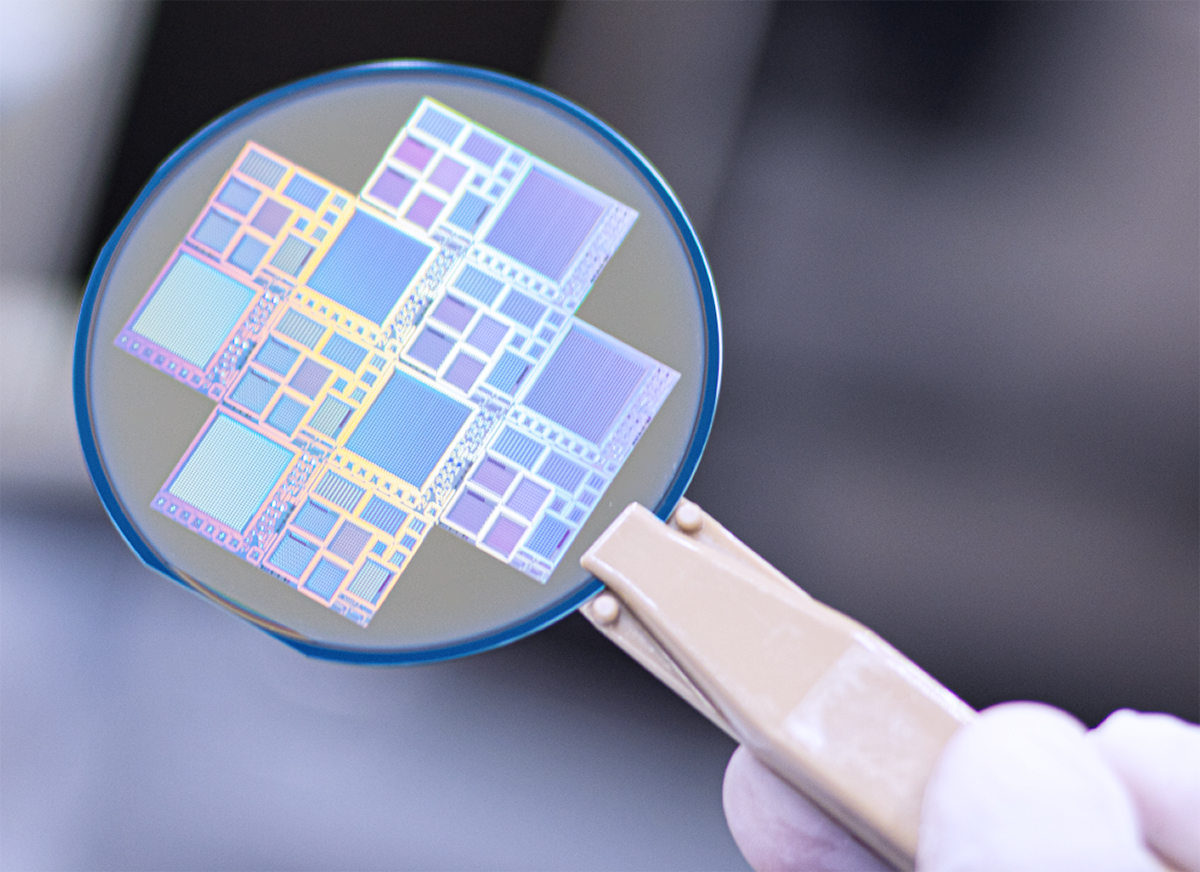
Closeup of the wafers featured in these first-of-a-kind chips that employ superconducting circuitry to mimic human brain networks. Algorithms developed by Brookhaven Lab scientists helped make the chips possible. (Great Sky Inc.)
“This is a powerful, new platform for implementing many of the SI algorithms our team at Brookhaven Lab is developing,” said Shinjae Yoo, CDS AI department chair and the project’s principal investigator. “There are so many ways to apply this to advance the scientific missions we care about within the DOE complex."
The third task processed simulated data generated by TORAX, a tokamak simulator developed by the Google DeepMind Fusion team. For this task, the chip processed signals to predict the onset of sawtooth instabilities, demonstrating its ability to identify rapidly evolving plasma behavior relevant to real-time monitoring and control. The successful result showed the feasibility of using the SI chips as part of the real-time simulation of plasma state that is central to tokamak control and stabilization.
“It’s incredible to see the team processing data from our tokamak with this first-of-a-kind chip,” said DIII-D Director Richard Buttery. “The folks here at DIII-D are very excited to continue exploring its capabilities. We’re ready to integrate this chip and learn how it can impact diagnostics and control during our next experimental campaign, providing valuable insights for the fusion industry.”
Steven Cowley, laboratory director of PPPL, explained how the new chips are meeting the moment for SI-enabled research.
“We are building the fusion machines of the SI era. They will need control systems that think at the speed of a rapidly evolving plasma," he said. "This chip took data straight from a tokamak at millions of samples every second and kept up. That’s a real step toward practical fusion power, and I can’t wait to see where we take it next."
“This is a powerful, new platform for implementing many of the SI algorithms our team at Brookhaven Lab is developing. There are so many ways to apply this to advance the scientific missions we care about within the DOE complex.”
— Shinjae Yoo, CDS AI Department Chair
For Great Sky, the work represents more than a decade of advancements in using SI hardware to achieve advantages in speed and energy efficiency. This demonstration is significant step forward for the field of superconducting neural networks.
“This is our largest chip to date, and it’s great to see it processing high-speed data directly from a tokamak,” said Jeff Shainline, Great Sky’s founder and CEO. “This is just the beginning. This approach to AI hardware has so much to offer with regard to fusion, as well as other applications at the forefront of technology. Analysis of high-speed X-ray data, advanced cyber security, control and error correction of quantum systems, video intelligence with continual learning — these are all incredible opportunities as we scale up our systems."
Presently, the team is working on a paper detailing their work. However, they expect to demonstrate the next-generation chip with a 10-times larger neural network at Brookhaven Lab in early 2027, followed by onsite deployment at the DIII-D tokamak later in the year.
“Superconducting neural networks sit at the intersection of several DOE priorities — advanced SI, quantum technologies, and fusion energy,” said John Hill, director of Brookhaven Lab. “This collaboration shows how Brookhaven’s expertise in scientific SI and advanced computing can help move promising hardware concepts toward real-time control challenges in fusion and other complex systems.”
Brookhaven National Laboratory
Brookhaven National Laboratory is supported by the Office of Science of the U.S. Department of Energy. The Office of Science is the single largest supporter of basic research in the physical sciences in the United States and is working to address some of the most pressing challenges of our time. For more information, visit science.energy.gov.
Follow @BrookhavenLab on social media. Find us on Instagram, LinkedIn, X, and Facebook.
Princeton Plasma Physics Laboratory
PPPL is mastering the art of using plasma — the fourth state of matter — to solve some of the world’s toughest science and technology challenges. Nestled on Princeton University’s Forrestal Campus in Plainsboro, N.J., our research ignites innovation in a range of applications including fusion energy, nanoscale fabrication, quantum materials and devices, and sustainability science. The University manages the Laboratory for the U.S. Department of Energy’s Office of Science, which is the nation’s single largest supporter of basic research in the physical sciences. Feel the heat at https://energy.gov/science and https://www.pppl.gov.
DIII-D National Fusion Facility
DIII-D is the largest magnetic fusion research facility in the U.S. and has been the site of numerous pioneering contributions to the development of fusion energy science. As a fusion testbed enabling critical science and technology advances, DIII-D continues the drive toward practical fusion energy with critical research conducted in collaboration by nearly 1000 scientists representing over 125 institutions worldwide. Research at DIII-D, a U.S. Department of Energy Office of Science User Facility, is open to all interested parties. For more information, visit https://d3dfusion.org/.
Great Sky
Great Sky was founded in late 2024 by CEO Jeff Shainline, CTO Jeff Chiles, VP of Fabrication Saeed Khan, and VP of Architecture Bryce Primavera with the mission to harness the power of physics to build era-defining computational intelligence. Great Sky’s progress reflects over a decade of foundational research spanning superconducting materials, optical networking, cryogenic system engineering, and novel AI-native architectures. https://www.greatsky.ai/.
2026-23222 | INT/EXT | Newsroom