Reflections on the End of RHIC Operations
Folks involved in research at the Relativistic Heavy Ion Collider (RHIC) offer personal thoughts during the runup to final collisions
February 6, 2026
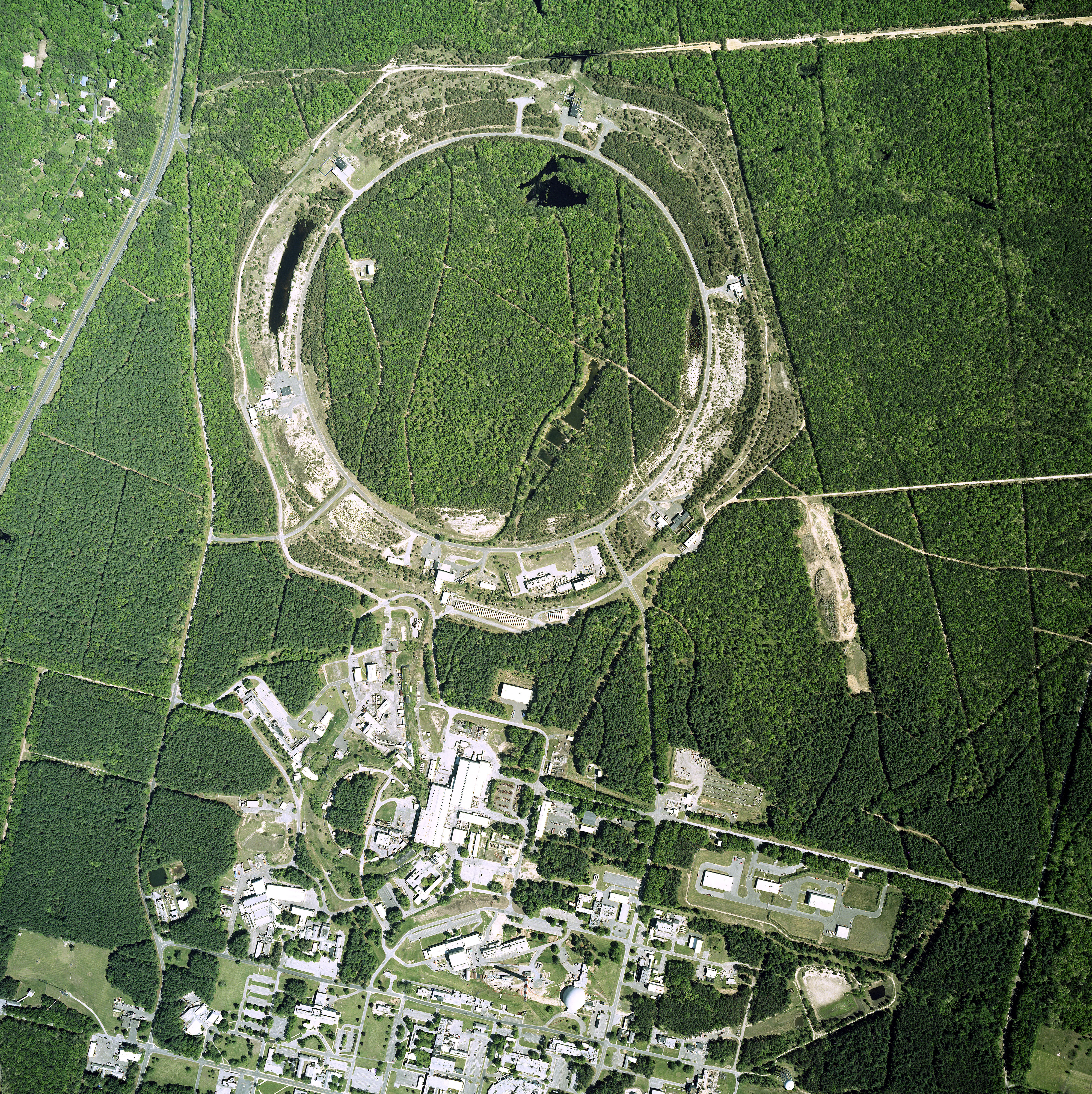
Editor's note: While working on a story marking the RHIC program’s final collisions, Brookhaven Lab science writer Karen McNulty Walsh reflected on her time covering the science and asked others involved to share their thoughts.
Karen McNulty Walsh, Brookhaven Lab science writer
“The end of operations at the Relativistic Heavy Ion Collider (RHIC) marks a milestone for me as a science writer at Brookhaven Lab. I came to the Lab in September of 1999, just as physicists were commissioning RHIC in anticipation of first collisions. I’d been writing science stories for kids up to that point in my career, and I didn’t have any formal training in physics. Any physics-focused stories I’d written tended to be about classical topics — how the motion of objects like airplanes or skateboards was affected by air resistance, or how the vibrations of guitar strings or electric keyboards produced the tunes young people were listening to back in the 1990s. As physicists were fine-tuning their ability to control RHIC’s beams, I dove deep into a world of subatomic particles and invisible forces I’d never known before. Looking back, it’s been an incredible journey — and an education! It has been such an honor to witness and write about this incredible machine, from its first collisions in the summer of 2000 to the amazing discoveries and accelerator advances that have expanded our understanding of the world all around and within us over the past 25 years!”
 enlarge
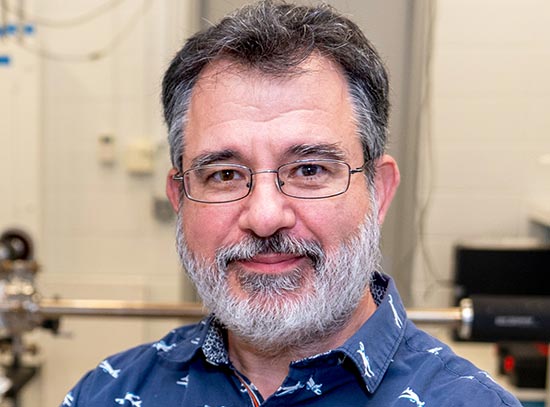
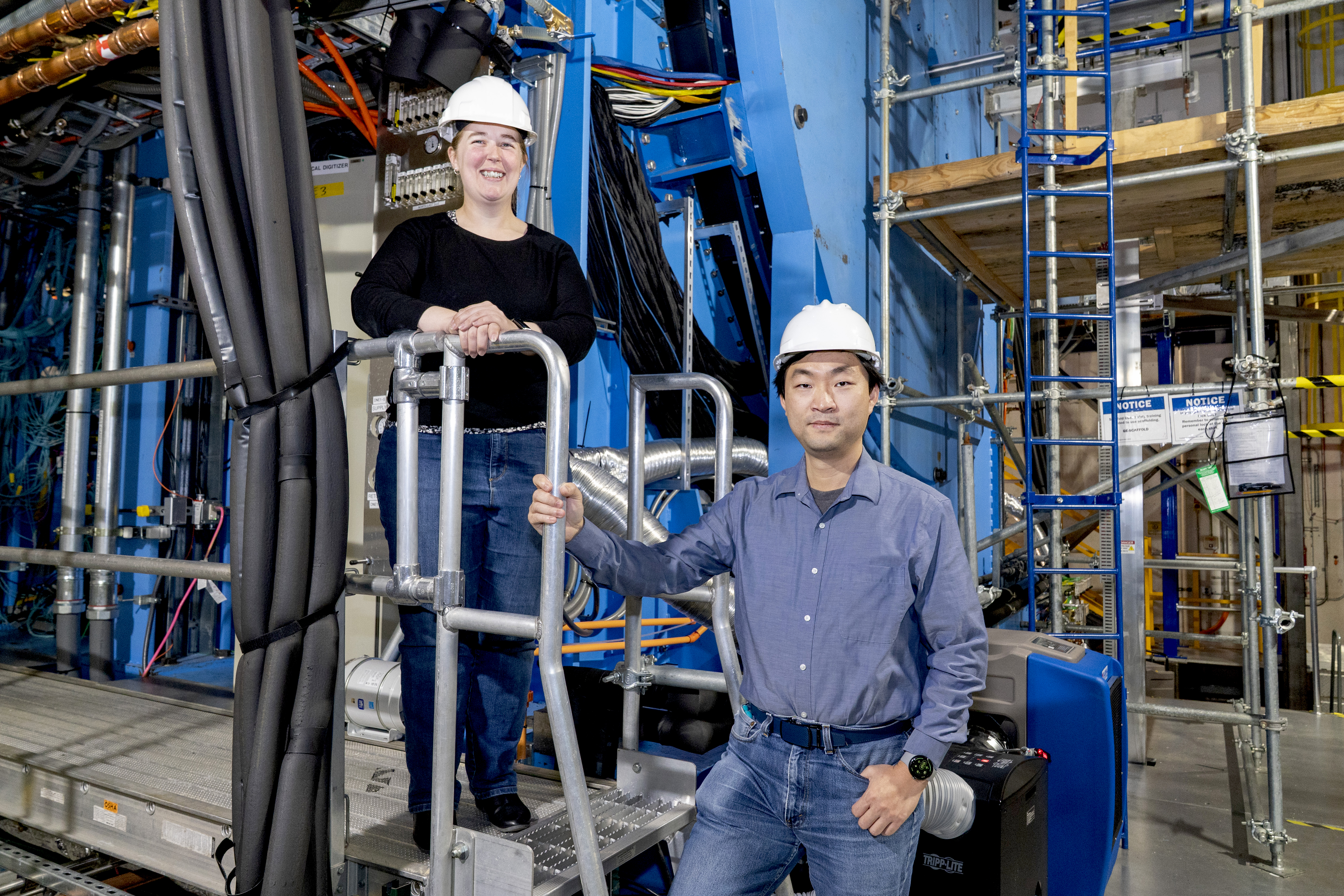
Megan Connors and Jin Huang at the sPHENIX detector, 2025. (David Rahner/Brookhaven National Laboratory)
Jin Huang, Brookhaven Lab physicist and co-spokesperson for the sPHENIX Collaboration
“The evolution of RHIC has been nothing short of extraordinary. From its groundbreaking discoveries in creating and characterizing the quark-gluon plasma to its role in nurturing talent across the globe, RHIC has not only expanded the frontiers of nuclear science but also cultivated a deep, collaborative spirit among researchers.”
Megan Connors, Georgia State University physicist and co-spokesperson for the sPHENIX Collaboration
“I joined the PHENIX experiment as a graduate student 20 years ago. The amount of physics RHIC’s versatility has been able to deliver over that period of time, as well as the number of scientists trained, is incredible. I am extremely proud to be a part of the RHIC program and am looking forward to the rich physics results yet to come, especially from the recently collected sPHENIX data.”
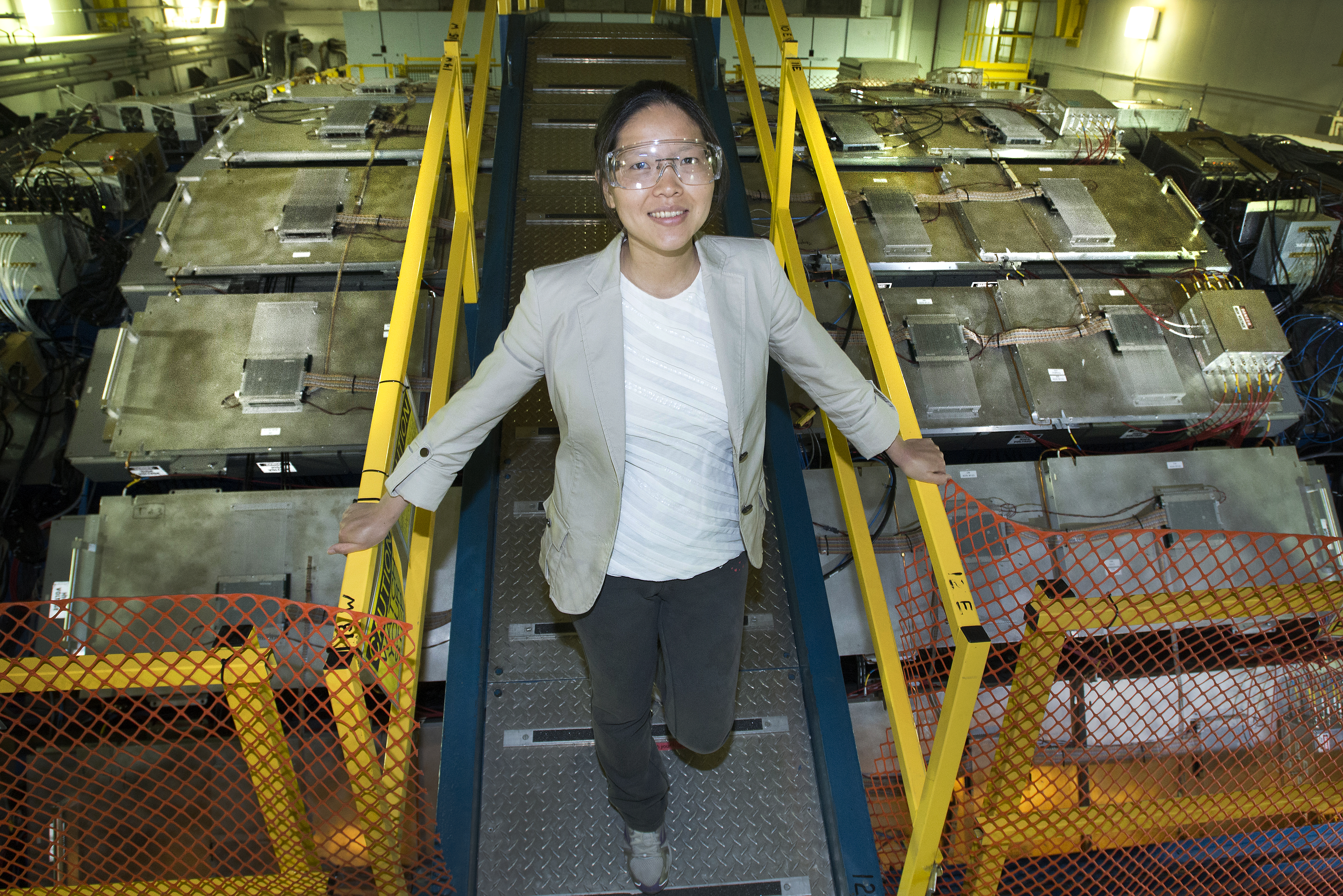
Lijuan Ruan, Brookhaven Lab physicist and co-spokesperson for the STAR Collaboration
“It has been a great honor to be part of STAR and a privilege to serve as co-spokesperson. In fact, STAR has been my only experiment throughout my professional career. Among the many roles I have held over the years, the most memorable were during my early career, when I worked closely with students, postdoctoral researchers, technicians, and engineers on the “time-of-flight” and “muon telescope detector” systems. I spent many long hours in the STAR hall commissioning these detectors, and those experiences remain among the most rewarding and enjoyable of my career.”
Frank Geurts, Rice University physicist and co-spokesperson for the STAR Collaboration
“The end of Run 25 marks the resounding end of an impressive era of almost continuous data-taking by the STAR Collaboration. Looking back at the many weeks I spent at or around the detector and in the control room, each run brings back great memories. Every time I visit Brookhaven Lab, I go to the experimental area to look at the detector. It never fails to amaze me, thinking about all the science that it has brought us throughout the past 25 years. I have spent most of my professional career working with the STAR detector, analyzing its data, and helping others to get the best out of this marvelous machine.”
Yasuyuki Akiba, researcher at RIKEN, a national research and development institute of Japan, and spokesperson of the PHENIX Collaboration
“It is a great honor for me that I was able to participate in experiments at RHIC from the start to the end. I participated in PHENIX from its conceptual design through construction, from the start of data taking in 2000 through its completion in 2016, and subsequently I have been working on publication of PHENIX results. I was also able to participate in sPHENIX from its inception in the 2010s, contributing to its design and construction and data-taking operation from start to finish. This was made possible thanks to my country, Japan, participating in the international collaboration at RHIC. RHIC was a tremendous success in terms of its scientific achievements, such as the discovery of the quark-gluon plasma. It was simultaneously a great success for international collaboration.”
 enlarge
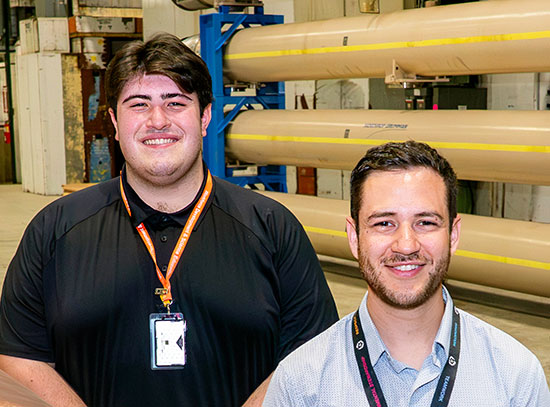
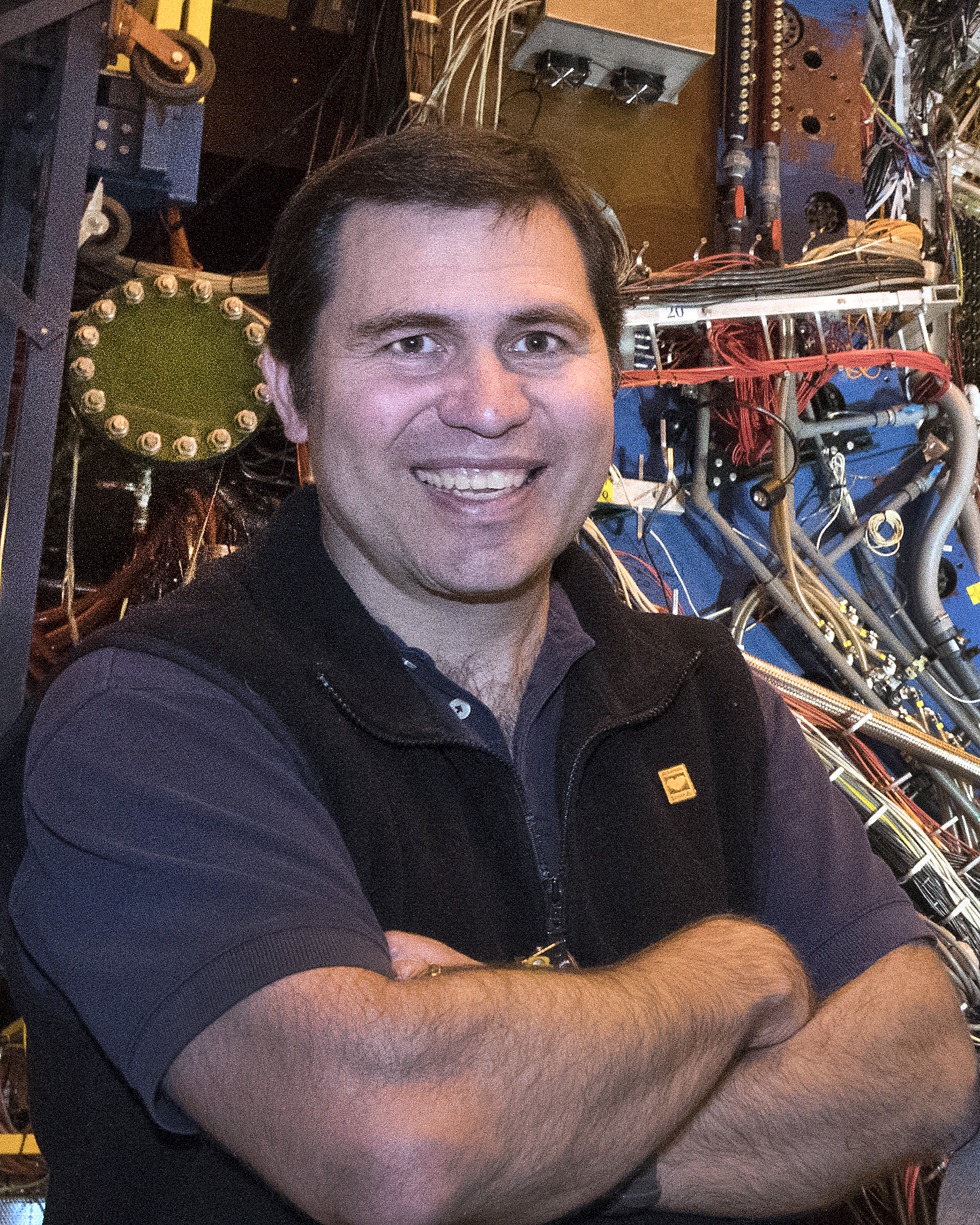
Gene Van Buren at the STAR detector, 2018. (Roger Stoutenburgh/Brookhaven National Laboratory)
Gene Van Buren, Brookhaven Lab physicist and computing expert for the STAR Collaboration
“Our world moves forward through exploration and education, and RHIC has been such a grand tool in those endeavors! While pursuing the science, thousands of students have come through on their way to becoming the next generation of creators and doers. Tens of thousands of others have visited to witness how nuclear science is done, and many more have seen or heard of RHIC's research. My own journey in STAR has provided the bulk of my career and brought me a wealth of connections and relations that reach far beyond the experiment.”
Peter Jacobs, Lawrence Berkeley National Laboratory physicist, member of the STAR Collaboration from inception to present, and former member of the RHIC Program Advisory Committee
“RHIC has been central to my scientific career. I contributed to the initial proposal in the early 1990s that became the STAR detector and had the privilege to be part of the RHIC community throughout its entire lifetime. RHIC has likewise been central to the careers of many brilliant colleagues, some who stayed in the field and others who went on to do other great things. RHIC physics lies at the intersection of nuclear and particle physics, and when we started, much of it was terra incognita. That allowed us extraordinary freedom to explore new concepts and approaches, in a way that I think generates a bit of envy in people working in sister fields that have more firmly established conceptual frameworks and questions. While the RHIC machine may no longer be running, the physics it has generated will continue to be vibrant and at the scientific forefront for many years.”
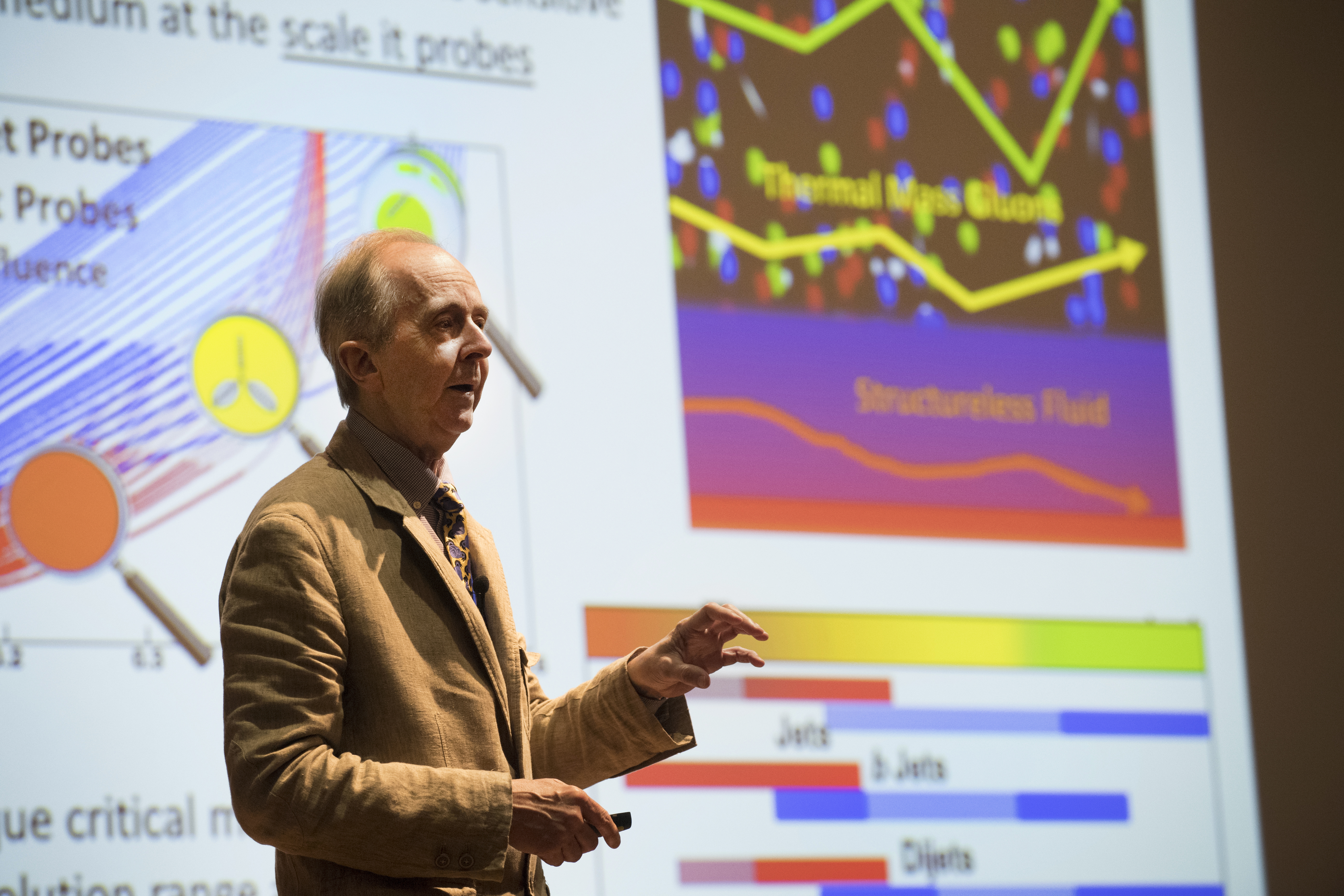
Berndt Mueller, Duke University theorist and former associate laboratory director for nuclear and particle physics at Brookhaven Lab
“I made my home in this country in 1990 because of the prospect of RHIC. It still amazes me what a success story it has been, opening up a whole new domain of physics — the study of matter that filled the infant universe — and generating totally unexpected, seminal discoveries. Who would have predicted that the universe was once filled with the most “perfect” fluid allowed by nature? But above all, RHIC is a success story of collaboration, by scientific visionaries who conceived it, engineers who designed it, technical specialists who constructed and maintained it, and the many physicists who built the detectors, took and analyzed the data, and theorists who helped interpret them. Many unexpected improvements helped the machine produce data of a range and precision that were unimaginable when RHIC started operations 25 years ago. Its scientific and technical achievements will forever be a milestone in the scientific discovery story of the 21st century. It has been an honor and a joy to have been part of this story.”
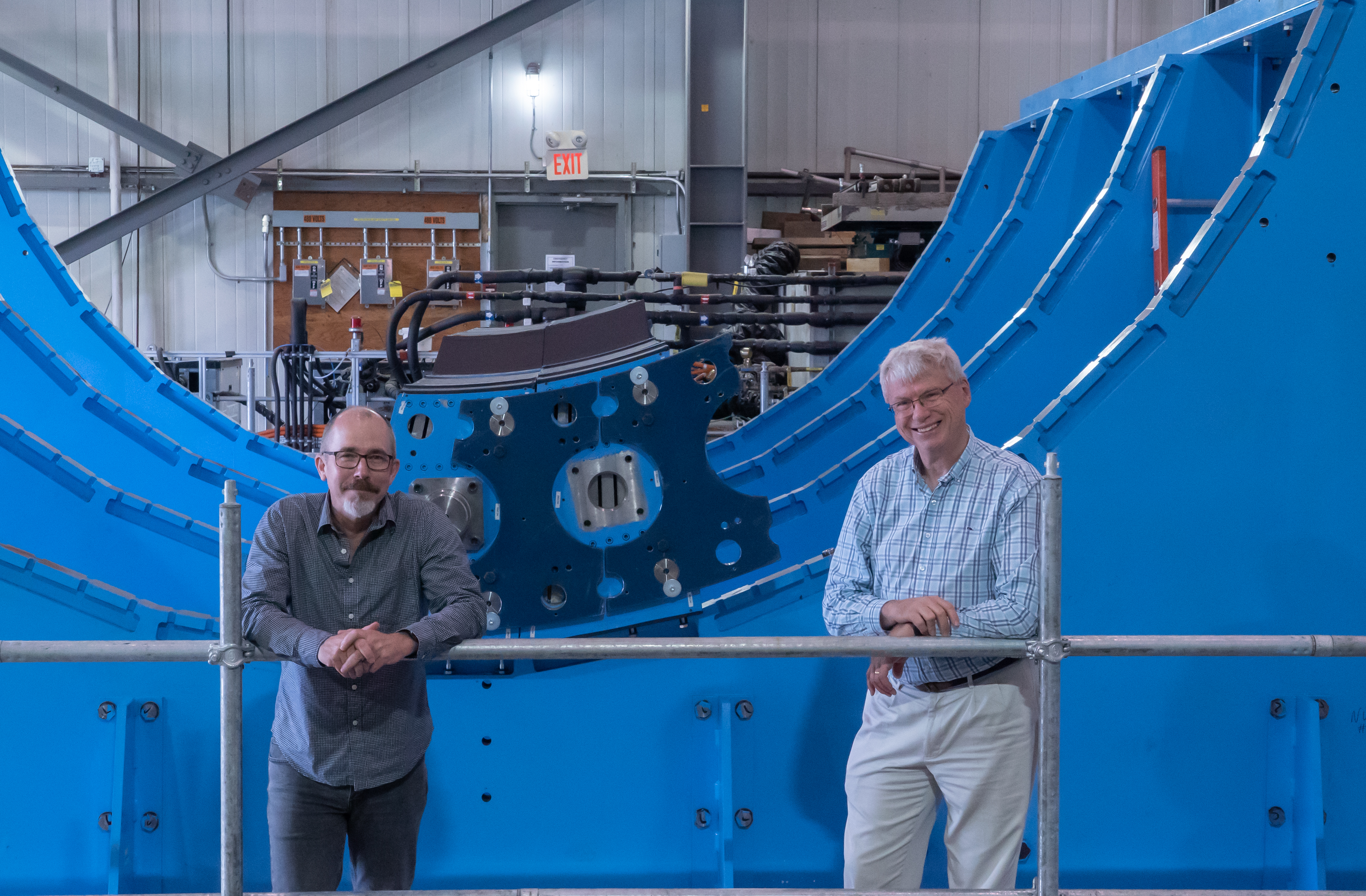
Ed O’Brien, Brookhaven Lab physicist, assistant chair of the Physics Department, and sPHENIX Collaboration member who was also an original member of the PHENIX Collaboration and former project director for sPHENIX
“When I first was hired by Brookhaven Lab in the late 1980s, RHIC was still in the planning stages and not yet approved by the Department of Energy. Now, over 35 years later, RHIC is completing its mission to discover and characterize the quark-gluon plasma. You have to be very fortunate to be able to participate in a scientific endeavor as historically significant as RHIC. I consider myself very lucky to have contributed in a small way to the great success of RHIC and Brookhaven.”
John W. Harris, Yale University physicist and founding spokesperson of the STAR Collaboration
“It is with great pleasure that I reflect on the extraordinary scientific success of STAR and RHIC over the past two and a half decades and how it all came to be. The discovery and characterization of the quark-gluon plasma (QGP) at RHIC reshaped nuclear physics worldwide, deepened our understanding of the early universe, and established high-temperature quantum chromodynamics as a cornerstone of what would become the CERN Large Hadron Collider program. The decade leading up to the start of RHIC operations was an exceptionally exciting period, marking a decisive break from the past: Instead of small teams operating modest detector systems, hundreds of physicists, engineers, and technicians came together to conceive, design, and integrate large-scale detectors into comprehensive experiments, supported by entirely new governance structures. What initially seemed a daunting challenge was ultimately driven by a generation of creative, energetic, and deeply committed scientists working in a then-fledgling field. With its first collisions, RHIC delivered unique results that ignited worldwide interest in the physics of the QGP and the early universe. Those of us who participated — experimenters and theorists alike — can take lasting pride in the profound and enduring impact of the discoveries that emerged.”
William A. Zajc, Columbia University physicist and former spokesperson of the PHENIX Collaboration
“I have had the extraordinary good fortune to spend the majority of my career working at RHIC, from the first days of detector proposals leading to the challenging construction efforts, closely followed by the spectacular discoveries and insights RHIC provided into the quark-gluon plasma, to this endpoint commemorating 25 years of RHIC operations. RHIC is the most versatile collider ever constructed, and its successes in both the heavy-ion and spin physics programs would not have been possible without the superb work of the Collider-Accelerator Department's world-class personnel. That very versatility means that there is additional physics that could be realized at RHIC, but we can take comfort in the certainty that the new knowledge from RHIC’s 25 years of operation will guarantee its place in history.”
Helen Caines, Yale University physicist and member and former co-spokesperson of the STAR Collaboration
“Working at RHIC from first collisions until the last has been an amazing journey both personally and scientifically. We are now able to perform studies we weren’t dreaming of when RHIC first started. This is due to the ingenuity and collaborative work of everyone at RHIC and the continually evolving facility. STAR, for example, has had more than 20 upgrades during its lifetime. The end of RHIC running is bittersweet. While I look forward to first data from the EIC, STAR has been a major part of my scientific career, and I will miss the annual scientific debates about what collisions to study next.”
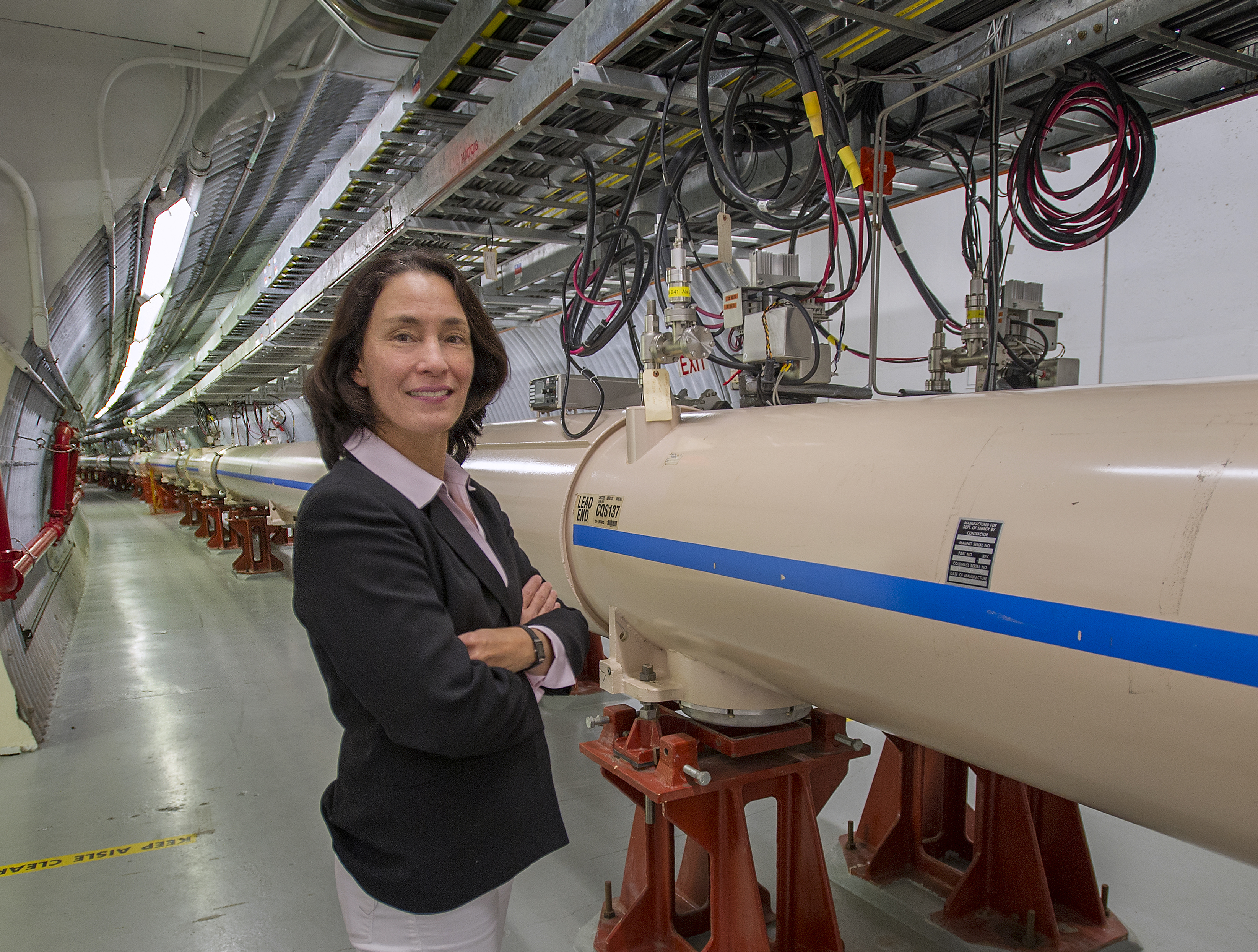
Michiko Minty, Brookhaven Lab accelerator physicist who heads the accelerator operations and research division of the Collider-Accelerator Department
“Advancing accelerator science together with an exceptionally talented community of engineers, technicians, and scientists has been deeply rewarding for everyone involved. Through technological innovation and sustained optimization of accelerator operations, we collectively pushed the boundaries of collider performance and maximized the scientific output of RHIC. A broad program of experiments underpinned these successes and provided critical input to the design and operation of the future Electron-Ion Collider.”
Research at RHIC is funded primarily by the DOE Office of Science.
Brookhaven National Laboratory is supported by the Office of Science of the U.S. Department of Energy. The Office of Science is the single largest supporter of basic research in the physical sciences in the United States and is working to address some of the most pressing challenges of our time. For more information, visit science.energy.gov.
Follow @BrookhavenLab on social media. Find us on Instagram, LinkedIn, X, and Facebook.
2026-22795 | INT/EXT | Newsroom