Meet Jordan Ziegler: Air Force Test Pilot and Former RHIC Operator
High-pressure, data-intensive particle-collider operations role lays groundwork for career putting airplanes and fighter pilots through their paces
July 15, 2026
 enlarge
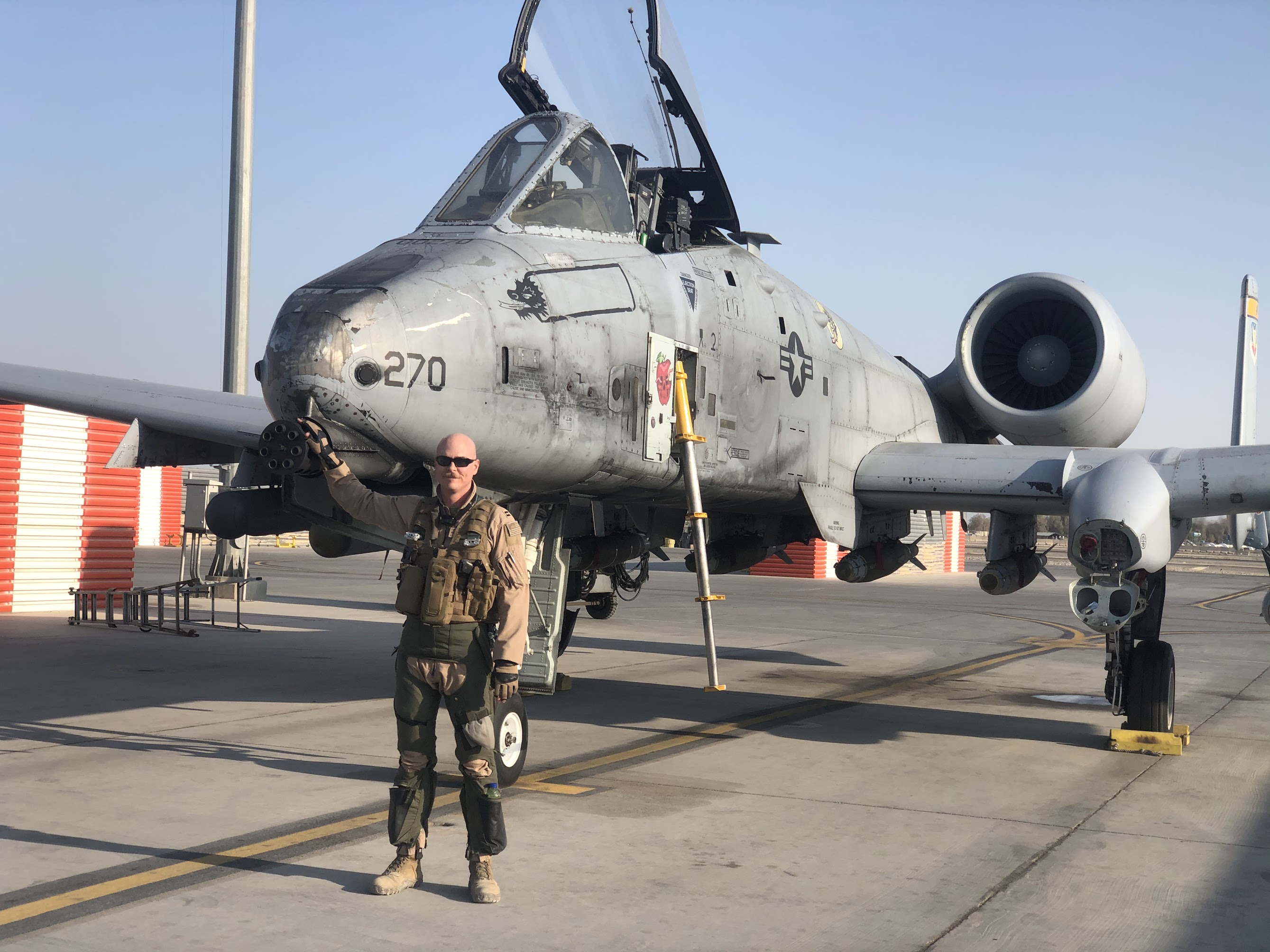
U.S. Air Force Major Jordan Ziegler stands in front of an A-10 fighter jet during a deployment to Afghanistan with the 354th Fighter Squadron in 2019-2020. Ziegler is a former Collider-Accelerator Department operator for the Relativistic Heavy Ion Collider at Brookhaven National Laboratory, where he developed a passion for mission-driven teamwork and skills that serve him well as a military test pilot. (Courtesy of Jordan Ziegler)
Flying combat sorties over Afghanistan, training pilots, and pushing airplanes to their limits may bear little resemblance to the science that takes place at the Relativistic Heavy Ion Collider (RHIC), a U.S. Department of Energy (DOE) Office of Science user facility for nuclear physics research at DOE’s Brookhaven National Laboratory. But for Major Jordan Ziegler, a U.S. Air Force fighter/test pilot and evaluator, a four-and-a-half-year stint as a RHIC operator provided skills and a taste of the teamwork that would serve him in his challenging career. Learn more about what brought Ziegler to Brookhaven and how his experience steering ions moving close to the speed of light connects to his current life.
How did you first become involved in physics?
I originally had no interest in going to college, but my friends were going so I went to Florida Gulf Coast University, not knowing what I wanted to study. I took an astronomy course, and it just blew my mind. I thought this is what I want to do with my life. I had to switch to Florida Atlantic University to study physics because FGCU didn’t have a physics major. I was not great at physics at first; I had to catch up on many things. Then, I learned about and applied to the Undergraduate Research Experience at CERN, the European Organization for Nuclear Research, and somehow, I got in. That was my first experience with particle accelerators. Later, at New York University earning a master’s degree, I worked in their experimental particle physics group and spent another summer at CERN working on things related to the ATLAS detector at the Large Hadron Collider.
 enlarge
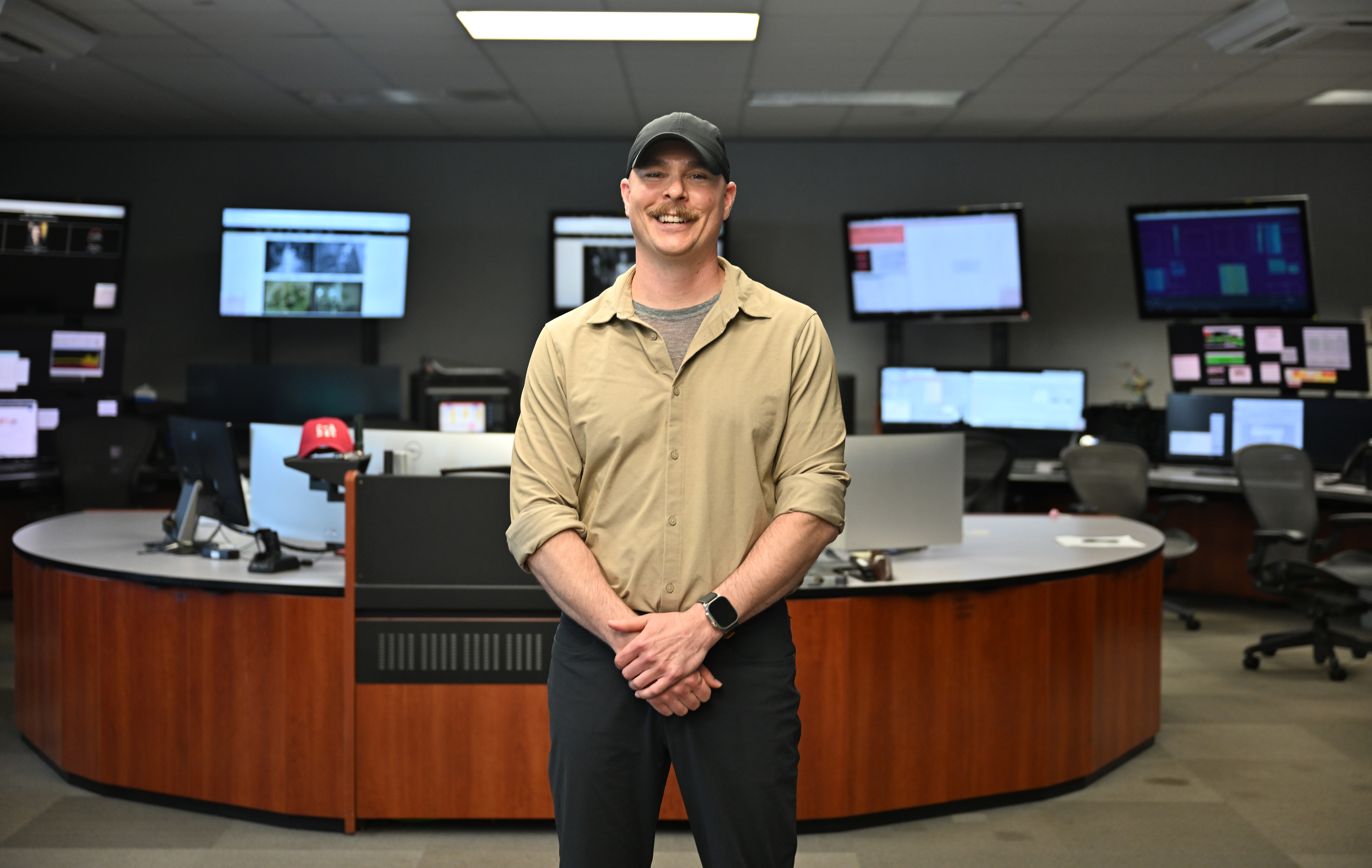
Jordan Ziegler, a former Collider-Accelerator Department operator for the Relativistic Heavy Ion Collider (RHIC), visited the Main Control Room at Brookhaven National Laboratory on June 17, 2026. He recalled how his experience as a RHIC operator and running experiments to improve accelerator performance have helped him in his current career as a U.S. Air Force test pilot. (Kevin Coughlin/Brookhaven National Laboratory)
Is that how you learned about Brookhaven Lab and RHIC?
Not exactly! When I was finishing at NYU, I was considering going into military service — something I’d been thinking about for years. But I’d just gotten married, and I figured we should have a few more years before I made that leap into a military career. So, I started looking for science jobs in the New York area and came across Brookhaven Lab. You’d think I would have known about the Lab, but I didn’t until I saw the job listing. I was like, “Wait, there’s a particle accelerator? Just like the one I was just working on, but it’s right on Long Island?” It seemed too good to be true. I started at the Lab as a RHIC operator in 2009.
What memories from that time stand out in your mind?
It’s very interesting being an operator — and fun. The role primarily consists of 24/7 shift work keeping the accelerator complex running smoothly, setting up stable beams, and controlling personnel access to parts of the accelerator. There’s a certain stress involved working through that and working overnight shifts — and excitement, too, being part of a tight-knit team dedicated to a singular mission. One time, a severe blizzard hit while I was on shift. The snow accumulation was so high that driving home became impossible, so the team took turns working and sleeping in temporary on-site lodging. One morning, when my car was snowed in, I scavenged a few large trash bags, pulled them over my legs to keep dry, and trekked through the deep snow to the Main Control Room.
 enlarge
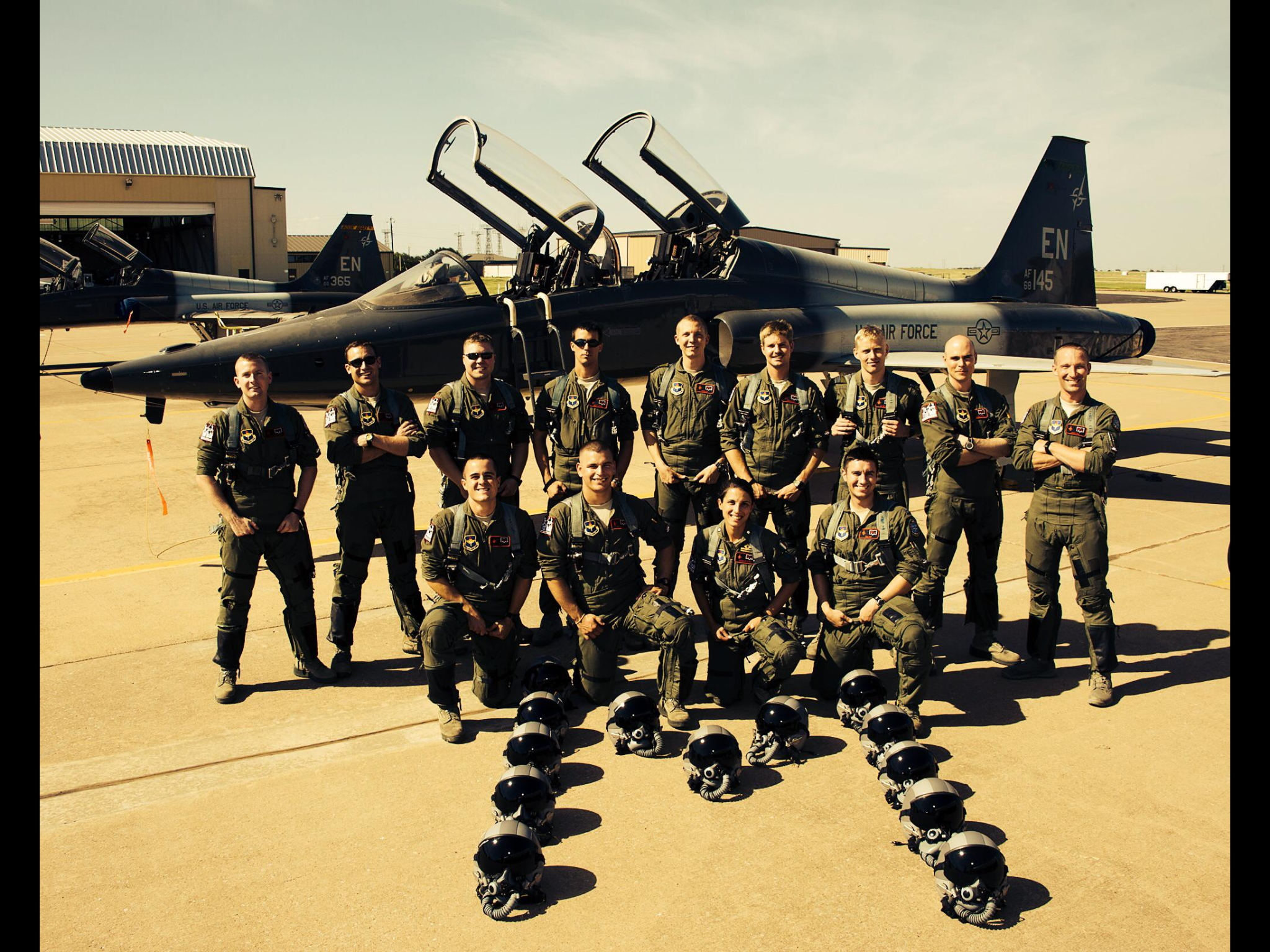
Jordan Ziegler (back row, second from right) poses with fellow students in the Euro-NATO Joint Jet Pilot Training Program at Sheppard Air Force Base in Texas. The photo was taken in front of a T-38 Talon jet in 2014. (Courtesy of Jordan Ziegler)
I also had opportunities to work on a research project with Todd Satogata, who was an accelerator physicist at Brookhaven and is now at DOE’s Thomas Jefferson National Accelerator Facility. I’ll never forget that when I showed up in Todd’s office, looking for project ideas, he had really prepared for our meeting. He listed his top ideas for projects, and he had drawn pictures on the board. It was just this awesome mentor experience where he really showed that he was interested.
The idea was to find something that could be done during dedicated “track time” when physics operations were paused so researchers could test new accelerator theories and beam dynamics. One project I worked on involved beam position monitors, which monitor the position of the beam as it travels around the accelerator. I did a lot of scripting — writing code — and ran some experiments to collect data to improve the accuracy of the monitors. This project gave me an opportunity to dive into some technical problems, analyze data, work independently, and even publish a few scientific papers.
What did these experiences teach you — about technical stuff or yourself?
The blizzard experience taught me a great deal about my own professional motivations and the kind of high-stakes, team-oriented environment I wanted for my career. It solidified my desire for mission-driven teamwork, ultimately tipping the scales in favor of joining the military, where combat deployments later provided that same sense of communal striving on an even larger scale.
Meanwhile, the research project gave me confidence in my independent abilities. It proved I could make tangible progress on a project of genuine interest to the wider scientific community while working with more autonomy than typical during daily control room operations.
Tell us a bit about your current career.
When I left Brookhaven, I accepted a commission and a pilot training slot in the United States Air Force (USAF). The ensuing 13 years have been incredibly full. I have served as a T-38 instructor pilot and an A-10 pilot with a combat deployment to Afghanistan. I’m also a graduate of the USAF Test Pilot School and an experimental test pilot, which means I’m involved in testing any new capabilities that are installed in the aircraft — new weapons systems, flight instruments, new software, and much more. Because of the nature of flight, if something goes wrong, there’s not much of an escape route apart from landing. So, when you are introducing new functionality, you want to put it through pretty rigorous testing.
What skills or other things you learned during your time at RHIC have proven to be valuable in your military aviation work?
 enlarge
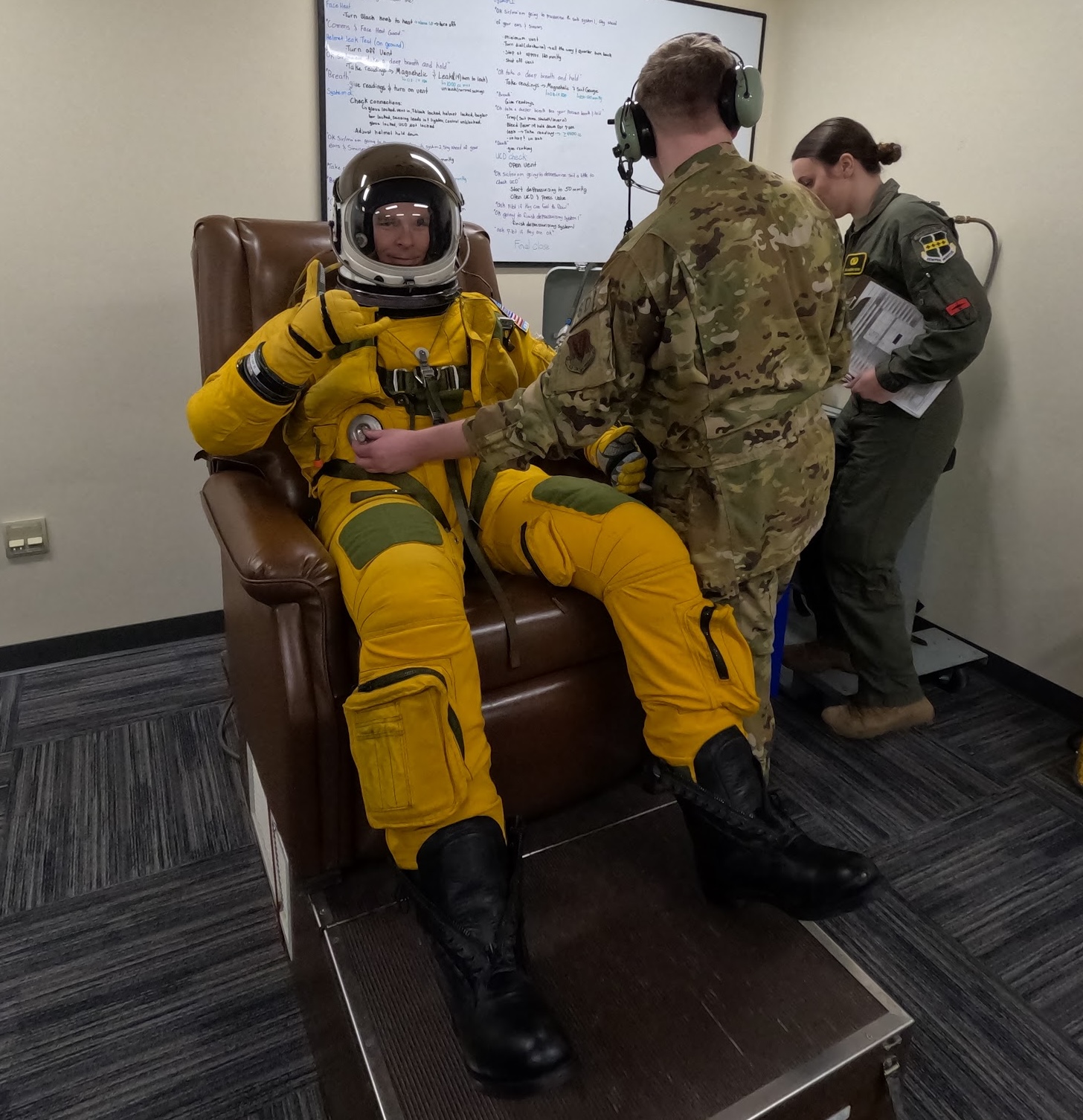
Jordan Ziegler suits up for a flight in a U-2 Dragon Lady, a plane that can fly so high that protective suits are required. The U-2 is just one of about 25 aircraft Ziegler piloted during his time in the Air Force's test pilot school. (Courtesy of Jordan Ziegler)
After doing physics here at Brookhaven, I kind of jumped into a different world, and there’s not a terrible amount of overlap between them. But by applying to and then attending test pilot school, I sort of merged the two back together. The scientific and engineering skills I sharpened at Brookhaven were helpful in my acceptance to and success at earning my Master of Science in flight test engineering in that yearlong program. You fly many different types of aircraft — around 25 — and manage a bunch of test projects, writing test plans, collecting and analyzing a lot of data. So, having the academic background and the practical experience working at Brookhaven, even some of the coding I did, gave me an advantage there.
The rigorous shift work at Brookhaven was also my first true exposure to working closely with a small team under stressful, fatigue-inducing conditions, such as back-to-back night shifts. High-pressure environments inevitably generate interpersonal friction. Navigating those dynamics professionally and with emotional intelligence is a learned skill; I began developing that baseline in the Brookhaven control room, and it has served me exceptionally well across numerous high-stress environments in the Air Force.
Thinking back specifically to my deployment in Afghanistan, it was an incredible experience to work that closely with a small group of dedicated people who were like a family when we were there, doing very difficult work. I sort of got a taste of that while working as a RHIC operator on the shift schedule. There are some very big differences. But it’s sort of like a mini deployment when you are doing a physics run and your goal is to keep the accelerator running no matter what.
Do you have any parting words of advice?
I think at every stage of life it makes sense to just apply, take chances, share your dreams and goals with anyone who will listen, and work hard, even if at first you think you might not be qualified.
###
Brookhaven National Laboratory is supported by the Office of Science of the U.S. Department of Energy. The Office of Science is the single largest supporter of basic research in the physical sciences in the United States and is working to address some of the most pressing challenges of our time. For more information, visit science.energy.gov.
Follow @BrookhavenLab on social media. Find us on Instagram, LinkedIn, X, and Facebook.
2026-23051 | INT/EXT | Newsroom