


Building the Synchrotron of Tomorrow
NSLS-II Director Elke Arenholz explores future-facing technologies and infrastructure at NSLS-II, new ways of engaging with AI/ML, and highlights from the recent NSLS-II and CFN Users' Meeting.
May 22, 2026
Dear Colleagues,
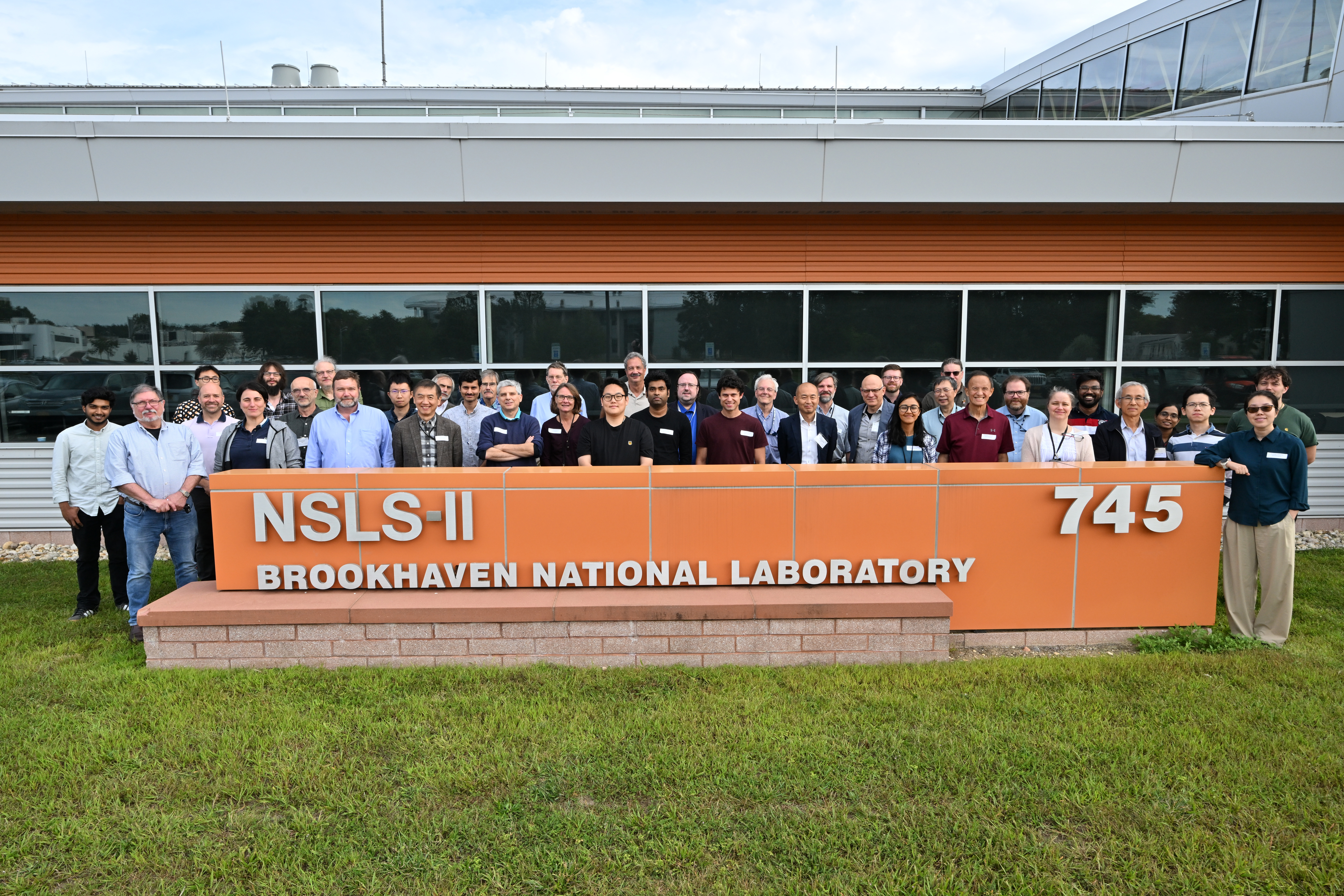
It was wonderful to see so many of you at this year’s Users’ Meeting! Over the course of five days, 14 workshops, and many cups of coffee, hundreds of you connected on a variety of current topics and ideas in synchrotron science. Sitting in on some of these workshops and hearing the constructive discussions they sparked was very encouraging. Meeting up in person at the NSLS-II/CFN Users’ Meeting is a great way to exchange ideas and perspectives regarding the research and development that we are so passionate about.
Thank you to everyone who attended and participated, and congratulations to this year’s award winners. I would also like to extend a special thank you to the Users’ Executive Committees and organizers for their hard work and dedication to making this meeting possible as well as this year’s exhibitors and sponsors.
Opportunities in AI/ML
Many of our staff and users have been deeply engaged in developing proposals supporting the U.S. Department of Energy’s Genesis mission and I want to thank everyone involved for your dedication and hard work.
At NSLS-II, we are launching a new AI Campaign Pilot Program focused on AI-enabled scientific discovery through coordinated experimental campaigns and collaborative research. The pilot program will bring together user teams and NSLS-II staff to tackle high-impact scientific questions by generating “AI-ready” datasets.
The deadline for submission of AI Campaign Pilot proposals through the NSLS-II PASS system is Sunday, May 31, 2026 at 11:59 PM ET.
NEXT-III beamline progress
Last fall, 274 attendees from 88 institutions participated in our strategic planning workshop series to help conceptualize the NEXT-III beamlines for Subproject C. Building on these discussions, we invited staff and users to submit preproposals addressing emerging scientific challenges and gaps in the current beamline portfolio. Ten concepts were selected for further development into full proposals and presented during a well-attended webinar earlier this year.
Last month, these proposals were presented to two diverse review panels organized by scientific focus area. We look forward to receiving their reports later this month as we prepare for Scientific Advisory Committee prioritization and work toward defining the project scope with DOE later this summer. All of these concepts are well thought out and address key topics in materials science, chemistry, biology, and earth and planetary systems.
As NSLS-II continues to evolve, we are looking not only toward new beamlines and infrastructure, but also toward new ways to support experiments, accelerate discovery, and make data and scientific knowledge more accessible. We are approaching this holistically, from source to sample, through advances in accelerator design, optics, and detectors alongside autonomous sample preparation, dynamic sample environments, and increasingly intelligent approaches to data acquisition and analysis.
Artificial intelligence and machine learning will play an important role in many of these efforts. Like other transformative technologies before it, AI is reshaping how science is done, and we have been actively exploring how these tools can best support research at the light source.
Thank you for your participation, engagement, and contributions to NSLS-II’s success. I look forward to continuing to collaborate with all of you.
— Elke Arenholz, NSLS-II Director
