


Energy Systems and Security
Understanding atmospheric processes to improve prediction of atmospheric phenomena relevant to water and energy
The Energy Systems and Security Group advances the science and engineering of technologies that strengthen U.S. energy security, critical infrastructure, and industrial competitiveness. Its research spans combustion, hydrogen and alternative fuels, fuel flexibility, thermal energy systems, emissions characterization and control, and system performance across residential, commercial, and industrial applications.
The group combines laboratory experiments, field studies, advanced diagnostics, sensing, and systems analysis to understand energy-conversion processes and evaluate emerging technologies under realistic conditions. Working with DOE applied offices, state and federal agencies, industry, and academia, it develops, tests, and validates technologies that improve efficiency, reliability, resilience, and affordability. The resulting measurements, models, and performance data support informed decisions about heating and power systems, fuel transitions, grid-responsive buildings, emissions reduction, and the modernization of energy infrastructure.
-
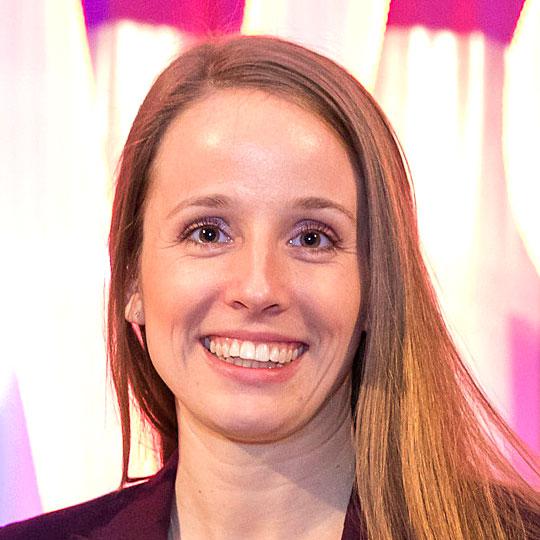
Rebecca Trojanowski
(631) 344-5149, rtrojanowski@bnl.gov
Facilities and Capabilities

Labs for testing heating and power equipment, evaluating fuel compatibility and storage stability, and measuring gaseous and particulate emissions from conventional fuels, biofuels, and biomass. Includes a Biomass Conversion Lab and capabilities for testing solid oxide fuel cells.

Numerical modeling tools, spanning scales from direct numerical simulation of cloud and precipitation droplets to the entire Earth system are leveraged for research across the environment-energy interface. Expertise in multimodal and embodied AI enables integration of observations, experiments, and simulations, support of the ARM user facility and associated science to furthering understanding of the environment and energy.

The Center for Multiscale Applied Sensing (CMAS) is a multi-disciplinary center that focuses on acquiring, analyzing, and interpreting measurements from networks of sensors in highly heterogeneous areas, including complex urban and coastal locations and renewable energy facilities.

The Tracer Technology Group developed the use of perfluorocarbon tracers (PFTs) as tools for studying long range atmospheric transport and dispersion in the early 1980s. We are world leaders in the use of PFTs for solving diverse research and engineering problems in the atmospheric sciences, the energy production and utility industries, and building characterization.
The Environment and Energy Division is part of Brookhaven National Laboratory's Innovation, Science, and Security Directorate.
