BSA Distinguished Lecture: Little Bangs at RHIC, Big Bang Before
May 11, 2026
 enlarge
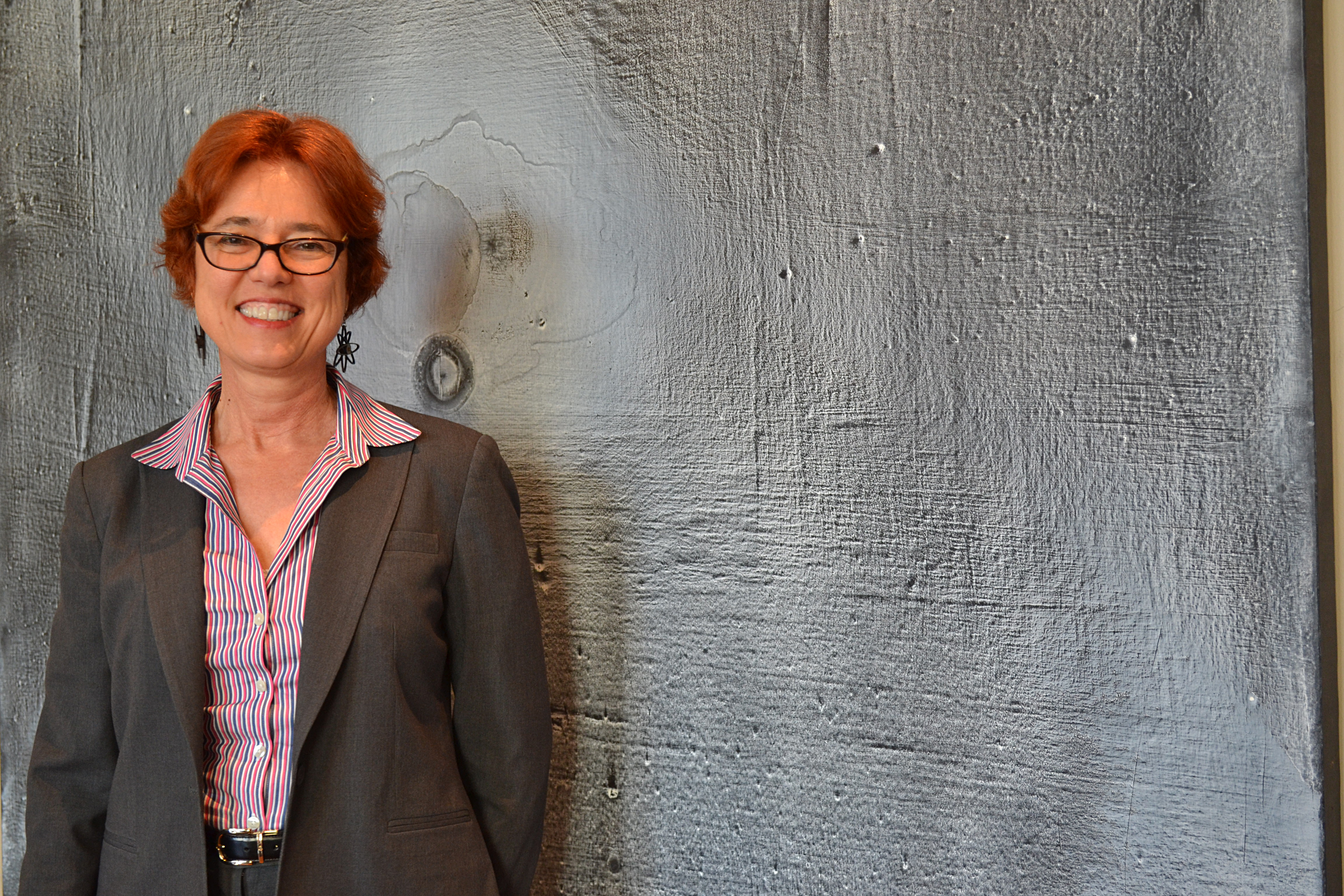
Barbara Jacak of the University of California, Berkeley, is a former spokesperson for the PHENIX Collaboration at the Relativistic Heavy Ion Collider. (Berkeley Lab)
Physicist Barbara Jacak will give a talk, titled “Little Bangs at RHIC and the Big Bang at the Beginning,” at the U.S. Department of Energy’s (DOE) Brookhaven National Laboratory on Thursday, May 14, at 5 p.m. EDT.
Jacak is a former spokesperson of the PHENIX experiment at the Relativistic Heavy Ion Collider (RHIC). Her talk, a BSA Distinguished Lecture, is part of a two-day symposium celebrating RHIC’s quarter century of operations as a DOE Office of Science user facility. The symposium and lecture follow the annual meeting of RHIC users at Brookhaven Lab.
Two options are available for attending Jacak’s BSA Distinguished Lecture:
- In person at the Lab’s Science & User Support Center (Bldg. 101)
- Virtually on Zoom
These lectures are free and open to the public. Visitors to the Laboratory ages 16 and older must bring valid, government-issued REAL-ID-compliant photo ID. Digital IDs and copies cannot be accepted. Maps and directions to Brookhaven Lab are available on this webpage.
Lecture description: Recreating the dawn of time
RHIC is a 2.4-mile circular particle collider at Brookhaven Lab that operated from 2000 until this February. As part of its primary mission, RHIC accelerated the nuclei of heavy atoms such as gold close to the speed of light and smashed them together at the center of house-sized detectors such as PHENIX. The energy of the collisions essentially melted the atoms' protons and neutrons and recreated the conditions that existed in the very early universe, just after the Big Bang.
During her lecture, Jacak will describe how scientists used RHIC’s detectors like giant digital cameras to capture snapshots of the collisions — and what they learned about the soup of early universe matter recreated in the smashups.
About the speaker
Barbara Jacak is a distinguished professor in the Department of Physics at the University of California (UC), Berkeley. Her research focuses on experimental study of the “quark-gluon plasma” formed in relativistic heavy ion collisions. She is using fast quark and gluon probes of the plasma, following the fate of energy they lose as they traverse the plasma, in experiments at both RHIC and the Large Hadron Collider at CERN, the European Organization for Nuclear Research.
Jacak received her bachelor's degree at UC Berkeley and her Ph.D. at Michigan State University, where she did one of the first experiments at the K-500 Superconducting Cyclotron. Her research career includes 12 years at Los Alamos National Laboratory’s Physics Division, where she was a J. Robert Oppenheimer Fellow and scientific staff member. She spent 18 years as a professor of physics at Stony Brook University, including six years as spokesperson of the PHENIX Collaboration at RHIC. She moved to UC Berkeley in 2015, and also served as director of the Nuclear Science Division at DOE’s Lawrence Berkeley National Laboratory until 2022.
Jacak is a fellow of the American Physical Society, American Association for the Advancement of Science, and American Academy of Arts and Sciences. She is a member of the National Academy of Sciences and the American Philosophical Society.
Brookhaven National Laboratory is supported by the Office of Science of the U.S. Department of Energy. The Office of Science is the single largest supporter of basic research in the physical sciences in the United States and is working to address some of the most pressing challenges of our time. For more information, visit science.energy.gov.
Follow @BrookhavenLab on social media. Find us on Instagram, LinkedIn, X, and Facebook.
2026-22952 | INT/EXT | Newsroom