



Energy Storage and Grid Modernization
Developing new types of energy storage provides a path to electrification of transportation and grid resilience. Brookhaven Lab is advancing this vision by developing new materials, new electrochemical storage systems, understanding the mechanisms of function and degradation, and by studying their integration into real-world, grid-scale energy distribution systems.
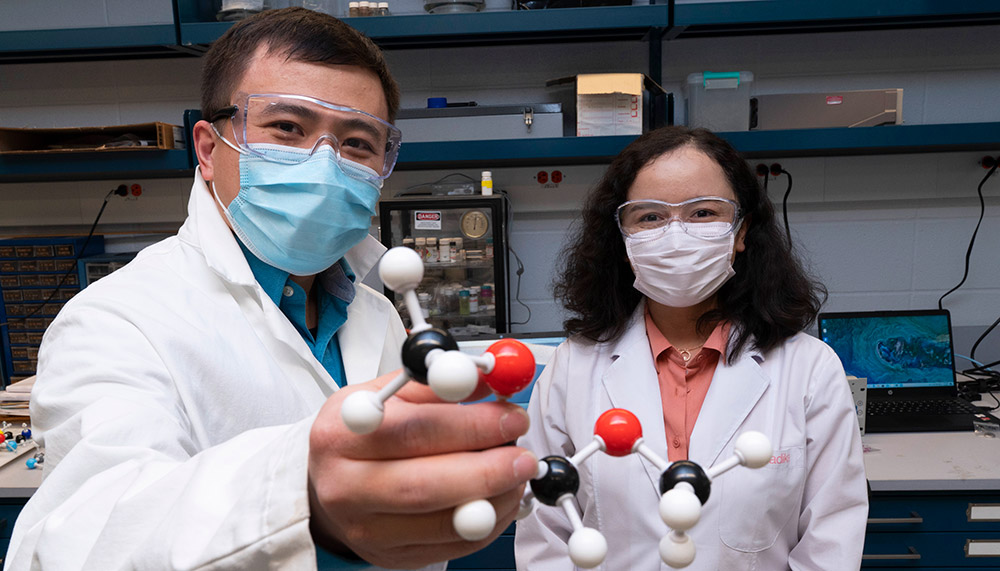
Brookhaven chemists Enyuan Hu and Zulipiya Shadike with a molecular model of a solvent for lithium metal battery electrolytes.
Energy Storage News


The science behind better batteries—from vehicle technology to grid scale
Scientists at Brookhaven are working on multiple projects to improve the storage capacity of batteries, reduce the time needed to recharge them, and using more sustainable materials and processing methods. In addition to making our cell phones and laptops more reliable, better batteries will keep electric vehicles on the road longer and allow for rapid recharges. They’ll also provide the storage capacity needed to provide a resilient grid and integrate renewable energy sources. Battery studies at Brookhaven span basic fundamental -science to application specific use cases, tracking the electrochemical processes that occur in anode and cathode materials under real-world operating conditions using tools in our Interdisciplinary Science Building, National Synchrotron Light Source II (NSLS-II) and Center for Functional Nanomaterials (CFN).
Capabilities
- Understanding the chemical processes in new battery materials by in operando experiments at the NSLS-II
- Expertise in the CFN Theory and Computation Group in applying theory, computational modeling, and data analytics to gain a fundamental understanding of the structure-function relationship in energy storage materials.
- State-of-the-art microscopes equipped with spectroscopic capabilities in the CFN Electron Microscopy Facility to determine how the structure and chemistry of battery materials evolve after multiple charge/discharge cycles
- Developing enabling technologies for large-scale battery solutions for grid applications
- The Battery 500 Consortium —a DOE-sponsored consortium led by Pacific Northwestern National Laboratory—leverages Brookhaven Lab’s characterization and diagnostic abilities to understand new electrode and cell architectures to reduce or prevent performance-limiting side reactions in the batteries chemical processes.
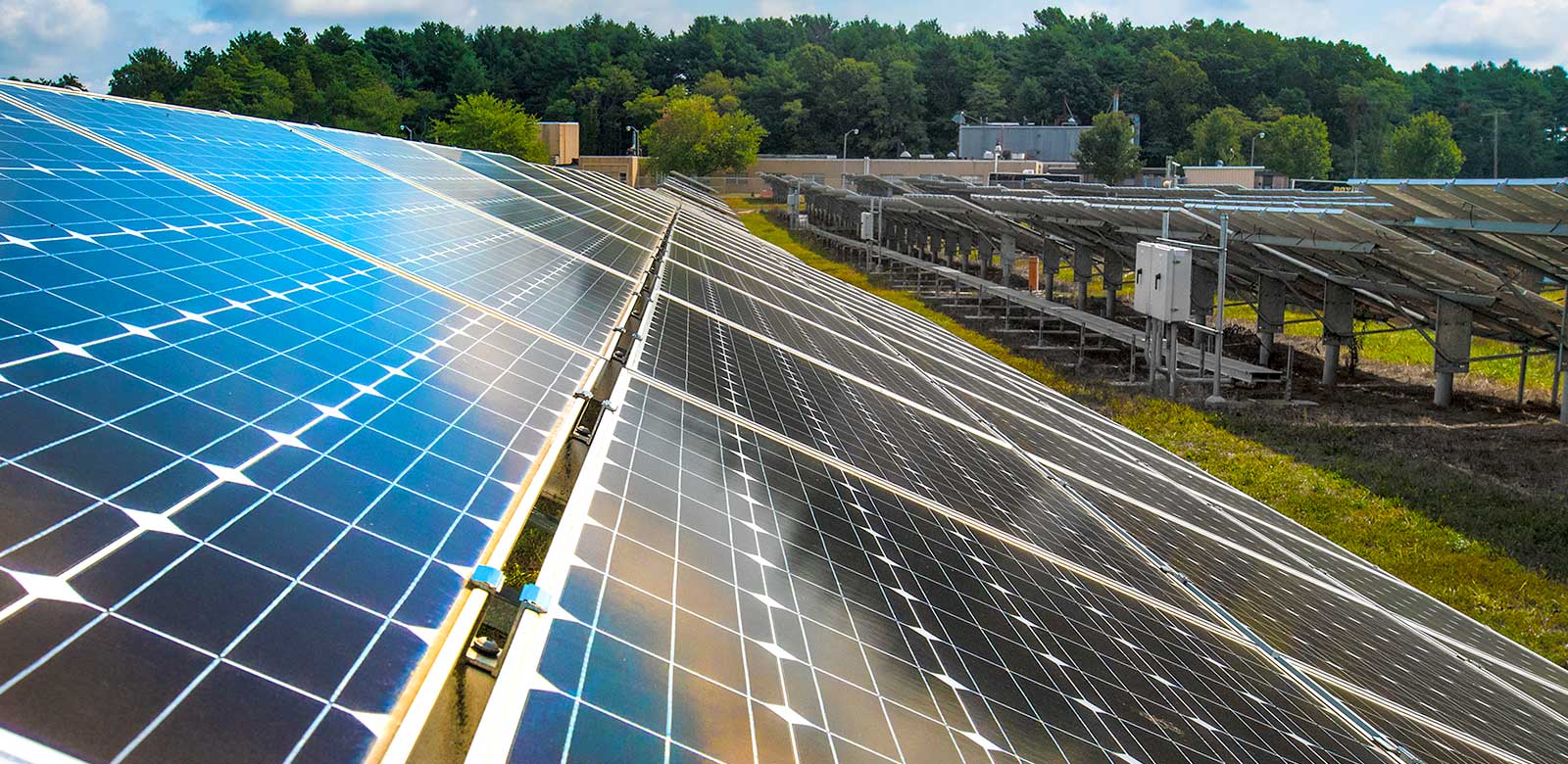
The Northeast Solar Energy Research Center (NSERC) is a multi-purpose Department of Energy research and test facility for the solar and electric grid industry.
Integrating Energy Storage into the Power Grid
Brookhaven Lab is developing new methods and technologies to advance energy security, integrate renewables, and enable the next generation smart grid. Two major themes are developing energy storage systems to address the challenges of incorporating intermittent renewables, and grid simulation and modeling to develop and evaluate innovative control and operational technologies for grid modernization. The programs draw on our expertise in grid modeling and simulation, transmission and distribution system planning, and developing control algorithms.
Capabilities
- Grid modeling and simulation to study the impacts of integrating significant levels of new generation components as well addressing the potential disturbances from these resources.
- Developing data analytics and data-driven applications for control, damage forecasting, anomaly detection and mitigation.
- Probabilistic techniques, optimization, artificial intelligence and machine learning for grid operation and planning applications.
- Security, cyber security, reliability, and resilience assessment and enhancement of future power grid.
