


Traffic Policies & Safety
The maximum speed limit on-site is 30 miles per hour unless otherwise posted.
Brookhaven National Laboratory (BNL) roadways are shared by passenger vehicles, pedestrians, bicyclists, buses, government vehicles, slow-moving vehicles and equipment, and emergency vehicles. Wildlife is also frequently present throughout the site. All employees, guests, users, contractors, and visitors are expected to drive safely, remain alert, and follow BNL traffic requirements.
The Laboratory Protection Division manages enforcement of BNL traffic requirements, which use New York State Vehicle and Traffic Laws as a guide. Citations for traffic violations may lead to discipline.
Driver's License, Registration, and Insurance
All drivers must have a valid driver's license and be properly qualified to operate the vehicle they are driving.
Non-residents and international visitors with a valid driver's license may drive in New York State in accordance with applicable New York State requirements. Individuals who establish residency in New York State must obtain a New York State driver's license within the timeframe required by the State.
Drivers must ensure that applicable driver's license, vehicle registration, inspection, and insurance requirements are current. Documentation must be available for inspection when required.
Follow All Traffic Signs and Signals
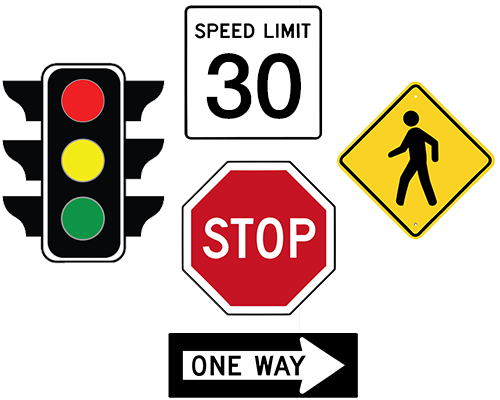
Drivers must obey all posted traffic signs, signals, pavement markings, and directions from authorized personnel.
Speed Limits: The maximum BNL site speed limit is 30 mph unless otherwise posted. Drivers must reduce their speed when road, weather, visibility, pedestrian activity, traffic, wildlife, or other conditions warrant. When traveling on undeveloped roads or firebreaks, use an appropriate vehicle and travel at a reduced speed suitable for the terrain.
Stop Signs: Come to a complete stop at all stop signs before proceeding. This means your wheels stop turning.
Traffic Signals: Obey all traffic signals and traffic-control devices.
Traffic Circles: Vehicles entering a traffic circle must yield to vehicles already traveling within the circle. Slow down as you approach, watch for pedestrians and bicyclists, and enter only when there is a safe gap in traffic. See video: tips for navigating the Laborarory's traffic circle.
Right-of-Way: Follow applicable right-of-way requirements and remain alert for other vehicles, pedestrians, and bicyclists.
Slow-Moving Vehicles — Do Not Pass
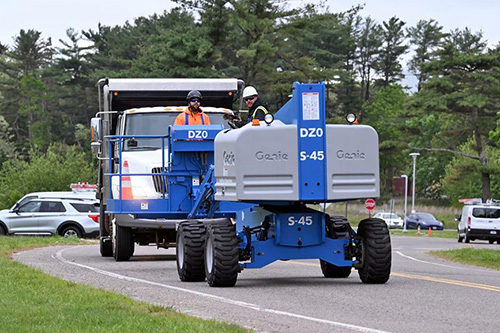
Do not pass slow-moving vehicles (SMVs) or mobile equipment on BNL roadways.
BNL roadways are regularly used by forklifts, construction and maintenance equipment, and other slow-moving vehicles. These vehicles may have limited visibility, require additional space to maneuver, or make movements that are difficult for other drivers to anticipate.
When traveling behind a slow-moving vehicle:
- Remain behind the vehicle and maintain a safe following distance.
- Do not attempt to pass, even when the roadway ahead appears clear.
- Follow the direction of escort vehicles or traffic-control personnel when present.
- Allow additional travel time and remain patient until the slow-moving vehicle leaves the roadway or you are otherwise directed to proceed.
Pedestrian and Crosswalk Safety
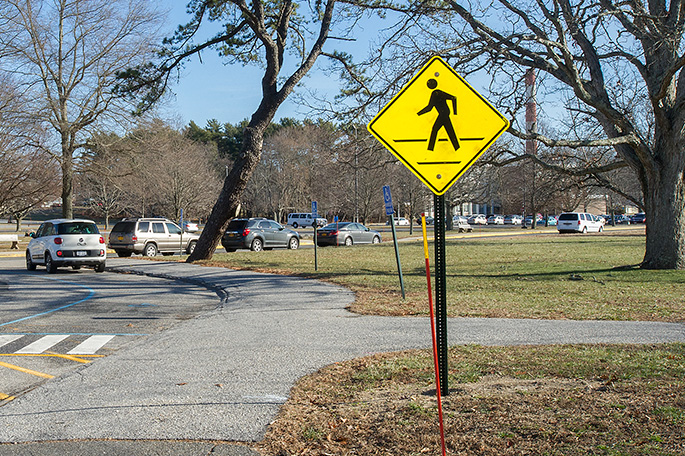
Pedestrians should use sidewalks to the maximum extent practicable and if they are unable to do so, then they should walk facing oncoming traffic to improve visibility.
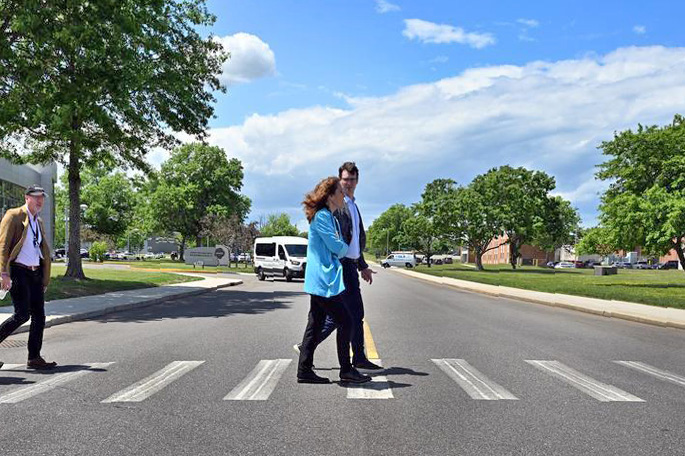
Drivers must remain alert for pedestrians and yield to pedestrians using crosswalks, both marked and unmarked. An unmarked crosswalk exists at intersections.
When approaching a crosswalk, reduce your speed as necessary and be prepared to stop.
- Pedestrians should use designated crosswalks where available and should not suddenly enter the path of a vehicle that is too close to stop safely.
- Pedestrians must follow traffic signals and pedestrian crossing signals where provided.
- Drivers must not pass another vehicle that has stopped at a crosswalk to allow a pedestrian to cross.
- Drivers should not wave or signal pedestrians or bicyclists into the roadway. A driver cannot control traffic approaching from another direction, and such a signal may unintentionally encourage someone to enter an unsafe situation.
- Drivers should use additional caution near intersections, parking lots, building entrances, and other areas with frequent pedestrian activity.
Reduce distractions while onsite by limiting use of earbuds, headphones and cellphones.
Bicycle Safety
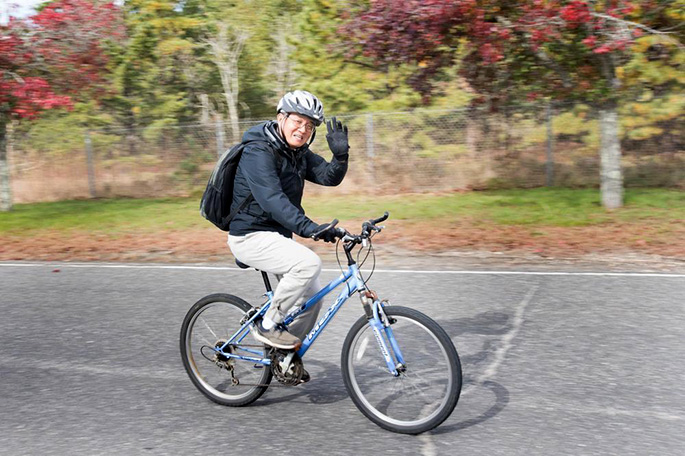
Bicyclists and motorists share BNL roadways and must follow applicable traffic controls.
Bicycle helmets are required when riding a bicycle on-site. Bicyclists must obey applicable stop signs, traffic signals, and other traffic-control devices. Motorists should remain alert for bicyclists and provide adequate space when traveling near them. Bicyclists should ride predictably and remain attentive to surrounding traffic. Drivers should not wave bicyclists through an intersection or across traffic. Each road user should proceed based on the applicable traffic control and right-of-way.
Wildlife
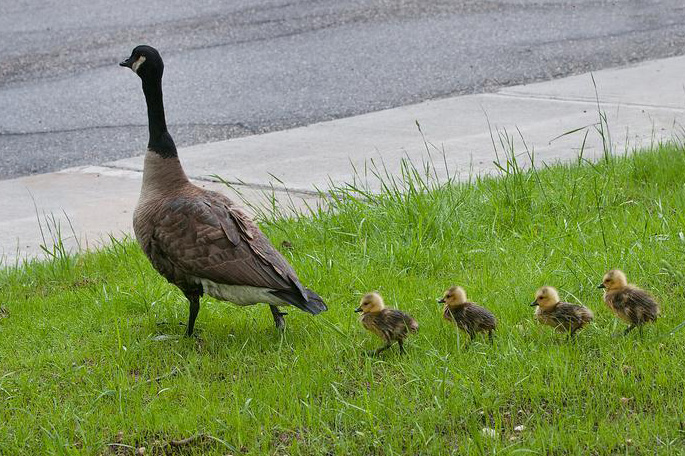
Wildlife is common throughout the BNL site, including deer, wild turkey, groundhogs and geese.
Drivers should remain alert, particularly around wooded areas and during periods of reduced visibility. Reduce speed when wildlife is present near the roadway and be prepared for animals to enter or cross the road unexpectedly.
Parking
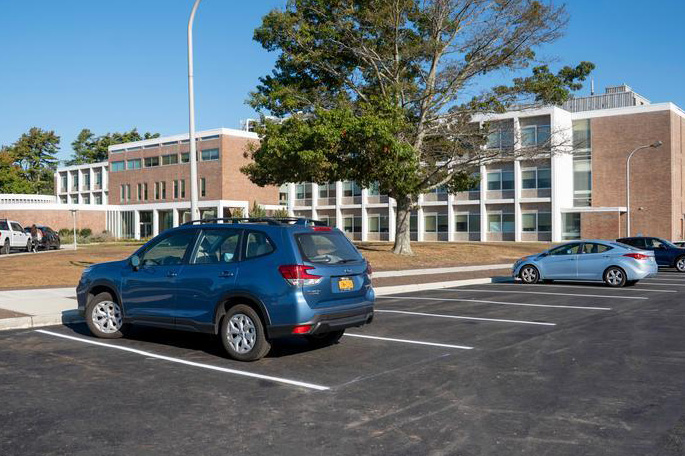
Park only in authorized paved or stone-covered areas and in locations that do not interfere with traffic, pedestrian travel, emergency access, or the movement of emergency vehicles.
Parking is prohibited:
- In designated no-parking zones identified by signs or pavement markings;
- On the wrong side of the roadway, facing oncoming traffic;
- In accessible parking spaces without the appropriate permit;
- In fire lanes; Within 15 feet of a fire hydrant;
- On grass or other unapproved surfaces except where specifically authorized; and
- Beyond posted or designated parking time limits.
Staff requiring temporary accessible parking due to a medical condition should contact the appropriate BNL organization for information regarding available accommodations.
Emergency Vehicles
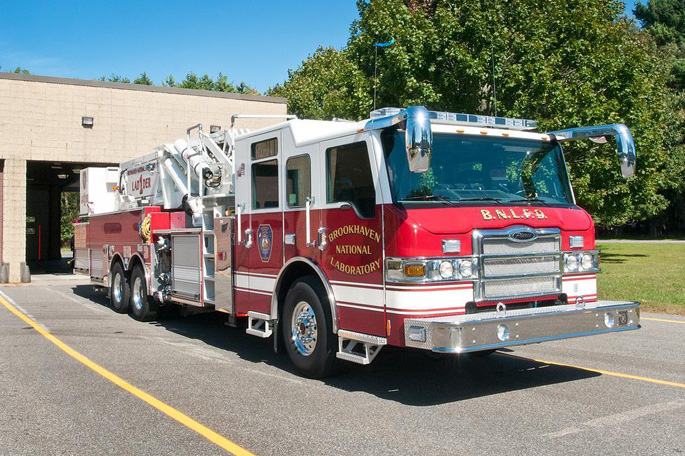
Fire apparatus, police vehicles, ambulances, and responding utility emergency vehicles have the right-of-way during an emergency response.
When an emergency vehicle approaches with emergency lights or sirens activated, safely move to the side of the roadway and stop. Remain stopped until the emergency vehicle has passed and it is safe to proceed.
Roadway Accidents
Immediately notify the Laboratory Protection Division at 631-344-2222 following any accident involving a vehicle, bicycle, or pedestrian on-site or an accident involving a BNL government vehicle off-site.
Follow any additional BNL reporting, medical evaluation, or notification requirements that apply to the event.
Drive Safely at Brookhaven Lab
Whether you work at BNL every day or are visiting the Laboratory for the first time, remember that BNL roadways are shared by many different users.
Follow posted speed limits. Come to a complete stop. Yield to pedestrians. Do not pass slow-moving vehicles. Stay alert and avoid distractions.
Safe driving is everyone's responsibility. Employees, guests, users, contractors, and visitors are expected to understand and follow BNL traffic requirements whenever traveling on-site.
